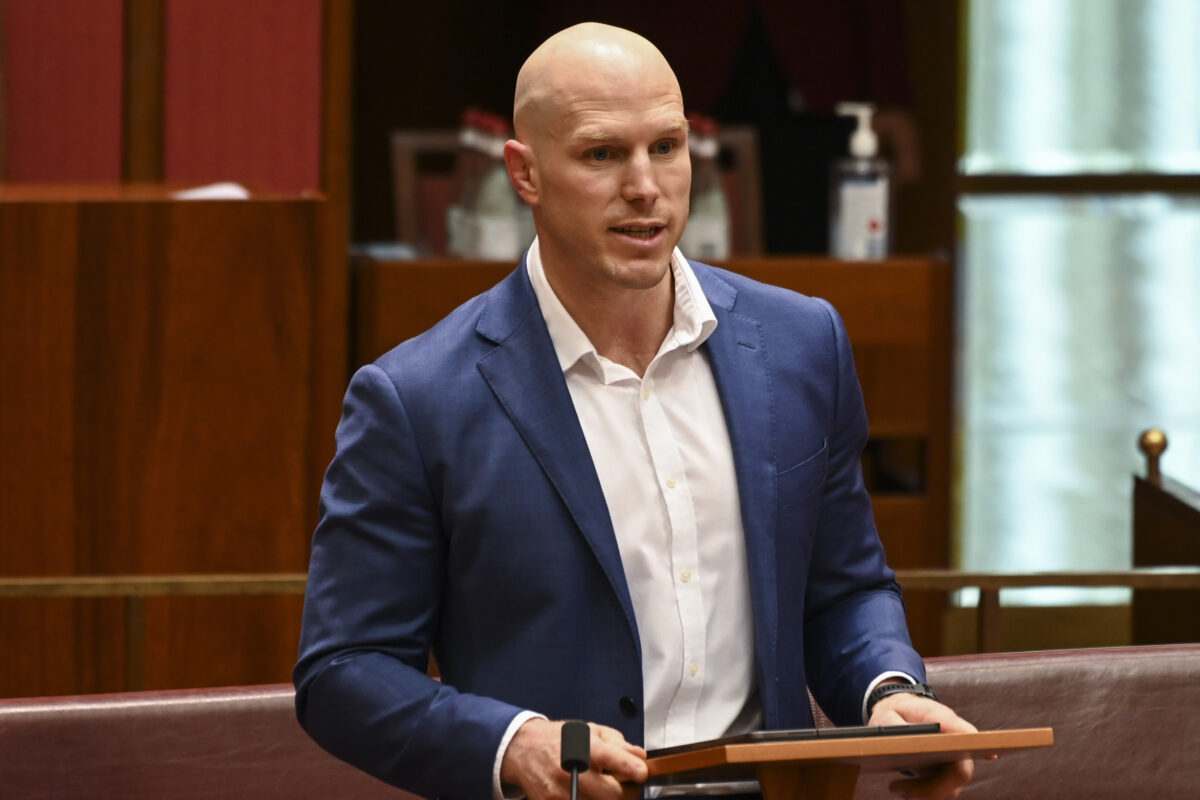

Independent Senator David Pocock’s bid to embed a legal duty of care for future generations in the nation’s climate laws has failed to secure enough votes, despite cross-bench and rare Liberal senator support for the measure.
The legislation, titled the Climate Change Amendment (Duty of Care and Intergenerational Climate Equity) Bill 2025, sought to require ministers and decision-makers to consider the health and wellbeing of children when approving projects that increase greenhouse gas emissions.
Pocock said the proposal was introduced “on behalf of young Australians” who will live with the consequences of decisions made in Parliament.
“Australians who cannot yet vote and future generations of Australians, these are not, technically, the people who sent us here to represent our states and territories, but they will inherit every decision that we make in this chamber,” he said.
Background and Purpose
The idea for the bill stems from a 2021 Federal Court case brought by Anjali Sharma and seven other young Australians, who argued the environment minister owed children a duty of care when approving new coal and gas projects.
The court initially agreed, but after an appeal by then-minister Sussan Ley, the Full Court ruled that any such duty must come from Parliament rather than the judiciary.
Pocock said his bill was drafted to close that gap.
Introduced in 2023, it would amend the Climate Change Act 2022 to make long-term climate impacts a mandatory consideration in federal environmental approvals.
During a Senate inquiry, the Environment and Communications Committee received more than 400 submissions—all but one supporting the bill, claimed Pocock.
Many of those who testified during the inquiry, including doctors, teachers, and students, urged lawmakers to consider the long-term human cost of approving new coal and gas projects.
“This is about the people and places we love,” Pocock said.
“Those who will live with the consequences of our decisions must be able to look back and say this was the Parliament that made the hard, long-term choices to look after them.”
Labor Defends Climate Record
Labor senators rejected the proposal, arguing the government is already delivering an ambitious climate program.
Senator Ananda-Rajah said Australians “understand that renewable energy is the cheapest form of energy, and they are embracing it in droves,” citing rooftop solar, home batteries, and a surge in electric-vehicle sales.
There were about “400,000 electric vehicles when we came to government, sales moribund stuck at 2 percent under those opposite.”
She pointed to the safeguard mechanism, requiring “around 215 big emitters … to reduce their emissions by 5 percent year on year,” along with the capacity-investment scheme underwriting large-scale renewables, approval of six offshore-wind zones, and creation of a Net Zero Authority.
According to Rajah, these policies are “turning the super-tanker … towards a much greener, cleaner future,” supported by six sectoral roadmaps to net zero by 2035.
“Unlike Senator Pocock, I actually am very optimistic about our future, as long as we stay the course,” she said.
“The task now is to follow through and ensure we are not swayed by nonsense from the other side.”
Greens and Crossbench Support
Green Senator Steph Hodgins-May said the bill reflected “the plain logic behind the concept of a climate duty of care.”
“The decisions we make today must reflect the interests of the children who will inherit them,” she told the Senate.
She said the proposal was “common sense and the bare minimum” for any government serious about safeguarding future generations.
Senator Fatima Payman also endorsed the legislation, saying it “puts a positive obligation on the government to consider the rights and wellbeing of future generations.”
“Our first duty is not to the next election cycle,” she said, urging genuine youth participation in policymaking and voting.
Liberal Senator Crosses Floor
In a rare move, Liberal Senator Andrew McLaughlan broke ranks to back the bill, calling it a “noble ambition.”
“I support the bill and commend Senator Pocock for bringing it to the chamber for consideration… It’s very conservative, it’s actually more conservative than a liberal progressive position to care for the environment,” he said.
McLaughlan added that Parliament should consider expanding the duties of decision-makers to “put nature first and then consider economic considerations subsequently, because nature has intrinsic value, not just because we extract it economically.”