
“We will not wait for the waves to wash away our homes and infrastructure,” Nauru’s President David Adeang told the COP29 conference in June.
And now, the 21-square-kilometre (8.1 sq mi) nation—the world’s third smallest, after Vatican City and Monaco—has launched an audacious plan that it hopes will ensure its survival: it’s selling citizenships.
According to the Multidimensional Vulnerability Index (MVI), Nauru is ranked fifth among the most “vulnerable” countries globally, and the most vulnerable in the Pacific for its heightened exposure to economic and environmental shocks.
The inhabitants of the Micronesian nation, numbering just 12,028 according to U.N. estimates, are among many deemed to be at risk from rising sea levels.
“While the world debates climate action, we must take proactive steps to secure our nation’s future,” Adeang told world leaders.
No Long Term Plan After Mining Boom
Nauru was one of three islands in the Pacific comprised almost totally of phosphate rock islands in the Pacific Ocean, the others being Banaba (Ocean Island) in Kiribati, and Makatea, in French Polynesia.

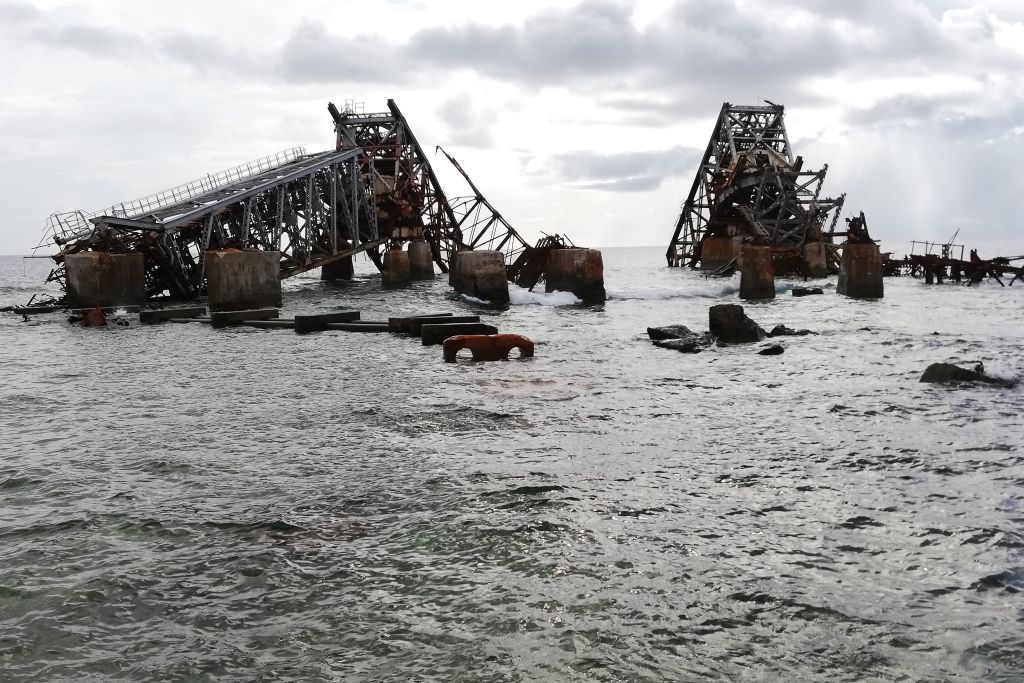
Since the discovery of the mineral in the 1900s, it was mined indiscriminately, stripping around 80 percent of the island’s land area and leaving it an uninhabitable terrain of jagged limestone pinnacles up to 15 metres (49 feet) high. Mining also destroyed an estimated 40 percent of marine life through silt and phosphate run-off.
The only area remaining that can sustain agriculture is an inland coastal strip 150 to 300 metres (490 to 980 ft) wide.
To secure a sustainable future, the country says it needs to build desalination plants, develop local food production, build new housing, implement renewable energy projects, and diversify its economy.
It’s called the Higher Ground Initiative—taking Nauru’s mostly coastal-dwelling people and relocating them to the centre of the island, safe from the rising tide. But it needs the funds to pay for it, and so has started selling citizenships.
Visas for Climate Change Action
The man heading the project is Edward Clark, a New Zealander with a background in international banking, financial crime, and compliance, who is now CEO of the Nauru Economic and Climate Resilience Citizenship Program.
“Rising sea levels encroach upon [Nauru’s] shores, not as a distant possibility, but as a present reality,” he told The Epoch Times. “Saltwater intrusion is already compromising scarce freshwater resources.”

Investors can secure Nauruan citizenship through a contribution which starts at US $105,000 for a single applicant, $110,000 for a family of two to four people, $115,000 for five or more, and thereafter $15,000 per person.
That buys them visa-free or visa-on-arrival access to 89 countries, including Hong Kong, Singapore, and the UK. The government aims to increase the number of visa-free destinations over time.
Clark says initial applicants have said they are looking for a second citizenship to provide them with a “Plan B” due to the current global political volatility, and they chose Nauru because the contribution was also going towards local climate initiatives.
Applicants undergo thorough due diligence checks and are required to attend an interview, and Clark is adamant that it takes more than money to become a citizen of the shrinking nation.
“We are committed to working closely with all stakeholders, including international law enforcement agencies, to ensure that the highest levels of due diligence and international best practices are applied in the review of each citizenship application,” Clark said.
“We want those who are passionate about the global future to become citizens because our goal is to transform Nauru from being a passive recipient of climate funding into an incubator for climate innovation.
“Climate entrepreneurs can partner with Nauru to develop new solutions [and] can benefit from the necessary seed funding to develop new technologies and solutions, and Nauru will benefit from being a testing ground for new and cost-effective solutions.”
Clark says the government is optimistic that revenue from the programme can grow to at least US$42 million a year from 500 successful applicants.
“However, this will need to be gradual as we assess for any unintended consequences or negative impact from running the program. If we can sustainably achieve this target, the citizenship by investment program will equate to 19 percent of total government revenue, based on the current FY24/25 budget.”
Prospective Nauruan citizens can find more information on the programme’s website. The Higher Ground Initiative is a long-term project, and at this stage there is no completion date.