

Australia’s Department of Home Affairs has revealed details of 12 cases where universities were at risk of being co-opted by foreign entities for their military research.
The document (pdf), disclosed on May 6 under a Freedom of Information (FOI) request, showed a range of incidents including the intimidation of staff and students, visa documentation fraud, and undisclosed employment in a foreign military.
In this case, titled “Foreign Military Industry Links,” an Australian university was approached by a foreign company, which specialised in cloud services and AI computing.
The foreign company offered to build an AI supercomputer at the university to serve local clients, including government departments. This company would also provide a workforce.
During the due diligence process, the university found the company was established and operated by several individuals with links to another country’s military-industrial complex.
The engagement was therefore stopped.
The potential impact of a concluded partnership would have included the transfer of sensitive research and know-how, and access to datasets containing sensitive details on critical infrastructure.
A potential consequence was that Australia could have served as a proxy to bypass U.S. sanctions and export control restrictions on semiconductors.
Successive U.S. administrations have implemented sanctions or restrictions on China-made semiconductor imports in recent years.
Prospective Student on Foreign TV Discussing Drones, AI
In another case, a foreign doctoral student researching AI learning in robots sought to join a joint PhD program.
An Australian academic initially agreed to supervise the student.
Yet after due diligence—triggered by a review of the applicant’s CV and full project description—significant issues were found.
They included undisclosed employment with a foreign government ministry, dual enrolment in separate postgraduate programs in different disciplines and countries, and frequent appearances on a state-run news channel discussing military and espionage-related technologies, such as killer robots, cyberwarfare, and AI-enabled assassinations.
Academic Secretly Had Employment in a Foreign Country
In another case, titled “Undisclosed Employment Threatening IP,” an anonymous complaint was made to a university alleging an academic staff member held an additional paid appointment in a foreign country and operated a commercial company there. The staff’s research was in a sensitive area that had potential dual use across civilian and military areas.
Both allegations were substantiated after investigations. However, it was not possible to determine if the staff’s company had commercialised the university’s intellectual property, as the person had left the university.
In response, the university introduced mandatory annual disclosures for all academic staff on secondary employment, sensitive research, conflicts of interest, and commercialisation activities.
A small number of staff left as a result.
Measures Taken by Home Affairs
The Department of Home Affairs says it is closely monitoring such threats to Australia’s tertiary sector.
“Universities are attractive targets for foreign interference given their world-leading research and role in shaping public debate in Australia,” a spokesperson told The Epoch Times in an email.
The Australian government is working collaboratively with the sector to produce the Guidelines to Counter Foreign Interference through the University Foreign Interference Taskforce, according to the spokesperson.
The government is also doing more to exchange information with the sector by updating the Trusted Information Sharing Network with details on foreign interference risks, as well as providing details on how to report identified threats.
Australia the ‘Testing Ground’ for Beijing
While none of the case studies name the countries and universities involved, communist China has often been linked to allegations of foreign interference in Australian universities.
In 2023, the University of New South Wales (UNSW) and the University of Sydney (USYD), two of Australia’s Group of Eight universities, were implicated in foreign interference issues related to China.
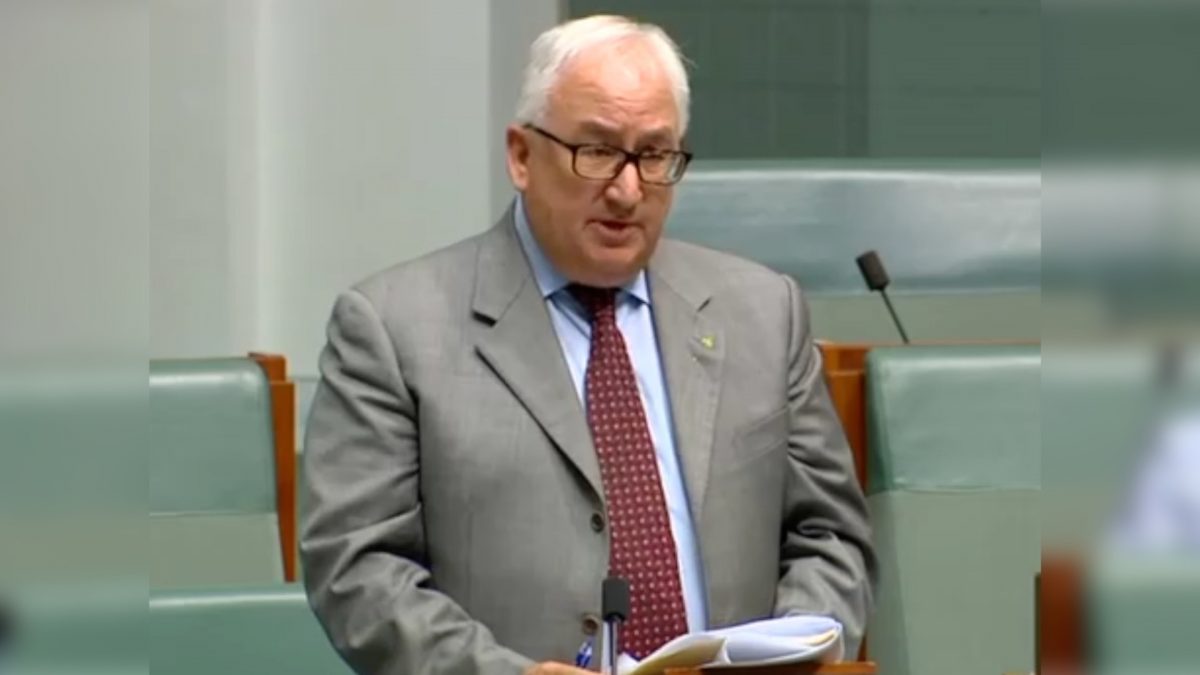
Former Labor MP Michael Danby placed half the blame on university administrators.
“Unfortunately, half the problem is the universities,” Danby said at the time.
“They’re sending off people to do projects in China. They’re co-running courses with communist institutions. And we just saw something recently at the University of Melbourne with Michael Wesley [deputy vice-chancellor] promoting this. That’s a big problem.”
The view echoes The Epoch Times’ editorial series, How the Spectre of Communism is Ruling Our World, which warns Australia could be “the weak link of the Western world” for the Chinese Communist Party (CCP) to exploit against the United States.
In Chapter 18, The CCP’s Global Ambitions, the editorial cited Australian scholar Clive Hamilton’s book, “Silent Invasion: China’s Influence in Australia,” which said the country could be a “testing ground for soft-power operations in its strategy of periphery diplomacy.”
“Australian institutions—from our schools, universities and professional associations to our media; from industries like mining, agriculture and tourism to strategic assets like ports and electricity grids; from our local councils and state governments to our political parties in Canberra—are being penetrated and shaped by a complex system of influence and control overseen by agencies serving the Chinese Communist Party,” the book says.







