
Staffers at a federal regulator said in a new report that electricity supplies should meet demand under normal operating conditions, but extreme winter weather could result in shortages in some regions.
“Several conditions may combine to create challenges for grid operators, including extreme cold events, low snowpack, continued drought, and wildfires,” staffers with the Office of Technical Reporting & Economics and Office of Electric Reliability at the Federal Energy Regulatory Commission stated in the Nov. 19 report.
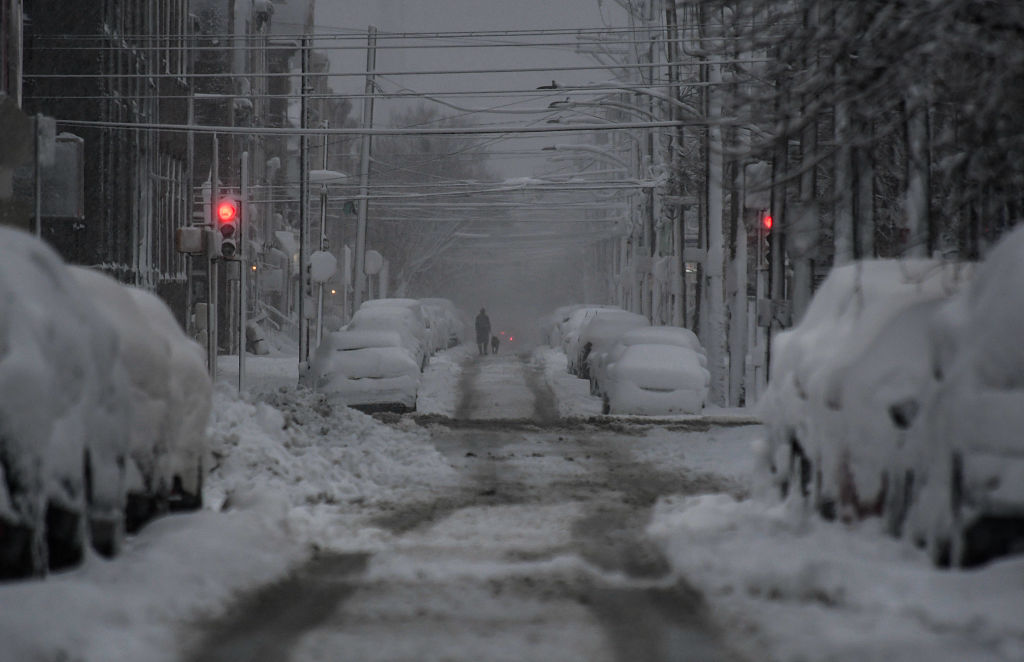
A climate pattern known as El Niño is expected to bring higher-than-average temperatures this winter for most of the United States, but shifting weather fronts could also increase the risk of polar vortex disruptions, which could lead to extreme cold in the central and eastern United States.
“Geographically widespread extreme cold temperatures can intensify stress on the electric grid by reducing the ability of neighboring systems to exchange supply while they are simultaneously facing high demand,” the report said.
“Very strong El Niño conditions can also increase the probability of storms across the southern and coastal United States including coastal atmospheric river events that enhance flooding risk. When extreme cold coincides with precipitation from storms, it can also increase transmission line outages due to icing.”
The North American Electric Reliability Corporation, a nonprofit that helps safeguard the grid, said in a separate report that it identified elevated risks to electricity reliability in parts of the Southeast, including the Carolinas, and highlighted potential vulnerabilities in New England.
If demand is above normal, operators can ask people to conserve energy, increase imports from neighboring operators, or request an emergency declaration from the government.
One factor is how much Northeast operators rely on oil, according to the Federal Energy Regulatory Commission experts, including ISO New England, which at one point used oil to supply roughly 40 percent of net generation during a peak winter hour on Jan. 25. Fuel oil inventories in the United States are low as global markets have tightened.
“Because the Northeast has little refining capacity, reliable resupply via Gulf Coast pipelines or waterborne deliveries through New York Harbor remain critical,” the staffers said in the report.
Higher electricity demand, driven in part by new data centers, is projected in the winter, according to the commission experts and the North American Electric Reliability Corporation (NERC). The commission experts noted that the Energy Information Administration projects a net increase of 75 gigawatts of generation capacity this winter, including from solar projects, and said that the deferred retirement of some coal and natural gas plants is expected to meet the increased demand.
Michelle Bloodworth, president and CEO of America’s Power, a trade organization that advocates for coal facilities, said in a statement that NERC’s conclusion that the grid is better prepared to meet electricity demand this winter is welcome news for families and businesses.
“A major reason for the improved outlook is that fewer power plants are retiring,” she said. “According to U.S. Energy Information Administration data, 16 coal units representing 6,400 megawatts of winter capacity were originally scheduled to retire in 2026. None of those planned retirements have occurred so far this year and 15 of these units have extended their planned operations through the coming winter.”