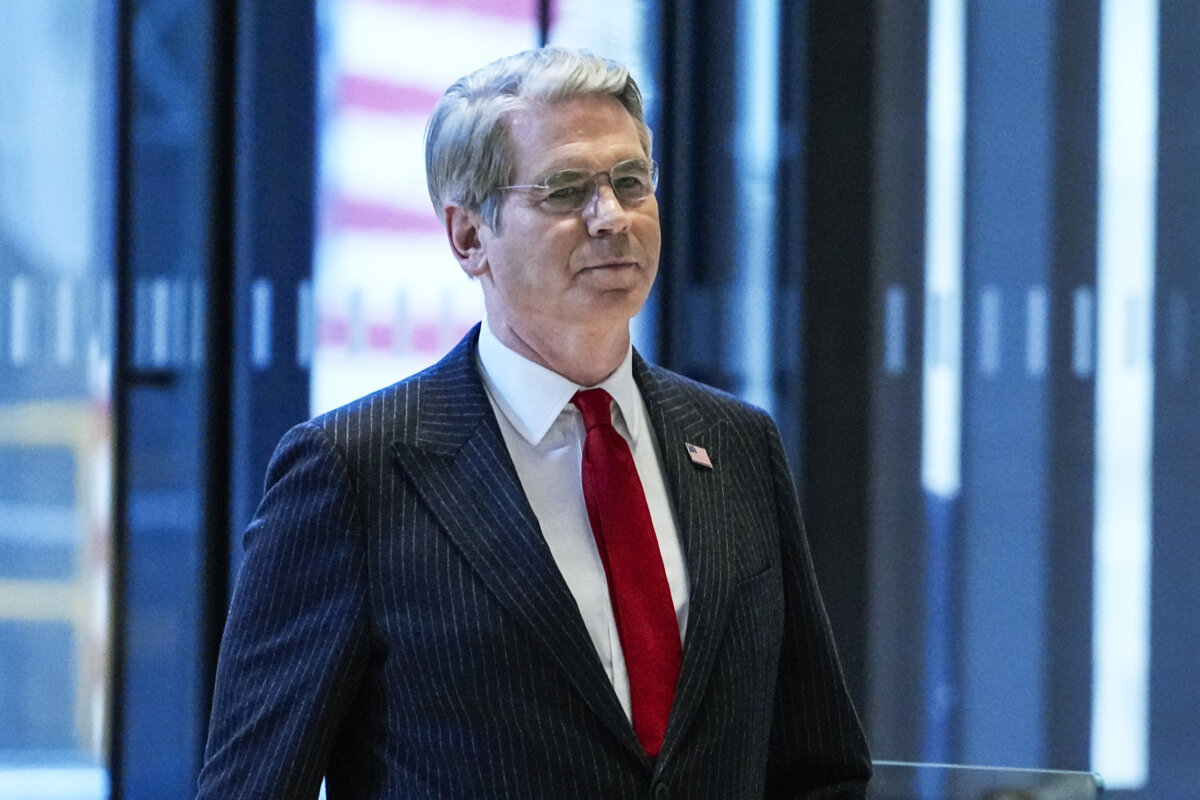

Treasury Secretary Scott Bessent on Sunday downplayed the significance of outages that hit banks earlier this month, saying financial institutions are “the most resilient” when it comes to handling potential cyberattacks.
“The banks have been at the forefront of cybersecurity for decades,” Bessent told CBS’s “Face the Nation,” responding to a question about last week’s service disruptions.
“They experience attacks every day, every week, every month, and they are by far the most resilient companies in the U.S. economy.”
Several large U.S. banks suffered outages last week, with customers reporting service disruptions at Wells Fargo, Bank of America, U.S. Bank, Chase, and others. Meanwhile, JPMorgan Chase later said that third-party vendors were targeted in a cyberattack, although the bank said it wasn’t related to the outage.
“Where customers once needed to execute transfers, AI agents could instantaneously detect yield differentials or stability signals and autonomously move funds at high speed, potentially accelerating runs that unfold in minutes, overwhelming traditional liquidity management and regulatory intervention timelines,” Michael Barr, a Federal Reserve board member, said on Nov. 16.
Bessent then referenced advances in artificial intelligence, which the Trump administration calls superintelligence—or SI—that has prompted banks to “patch their security systems,” which may cause “a glitch.”
“JP Morgan went in, and I think the American people should think of it as a vaccine,” he added. “Your arm may hurt, you may feel a little bad the next day, but it increases your long-term immunity and resiliency.”
His comments echoed remarks from Director of National Intelligence Jay Clayton, who told CNN on Sunday that the American public should expect “bumps in the road” as companies and institutions continue to patch their systems for AI-related threats.
“And we’re going to see more of that,” Clayton also told ABC News on Sunday. “And companies and the government, we should all be transparent with the American people that we have dated systems in a highly evolving environment where they need to be upgraded in order to have cybersecurity.”
Beyond the financial sector, companies including Microsoft, Apple, United Airlines, and Delta Air Lines have reported outages and service disruptions.
Notably, Microsoft’s 365 suite, including its widely used Teams and Outlook email service, went down for hours on Nov. 12. Microsoft later said it wasn’t due to a cyberattack but to a months-old glitch combined with other factors.
Microsoft executive Brad Smith echoed Bessent and Clayton, saying the public should expect disruptions in the coming months as companies implement security updates to digital infrastructure.
On Sunday, Delta flights to and from Atlanta’s Hartsfield-Jackson airport faced delays due to a problem with its automated weight and balance calculations. The airline said in a statement that it was using “manual workarounds” to safely dispatch flights. It also said automation for departing flight weight-and-balance calculations was working.
The disruption follows a U.S. router outage that triggered a Federal Aviation Administration (FAA) nationwide ground stop on Nov. 13, disrupting thousands of flights and affecting about 1 million passengers.
Reuters contributed to this report.