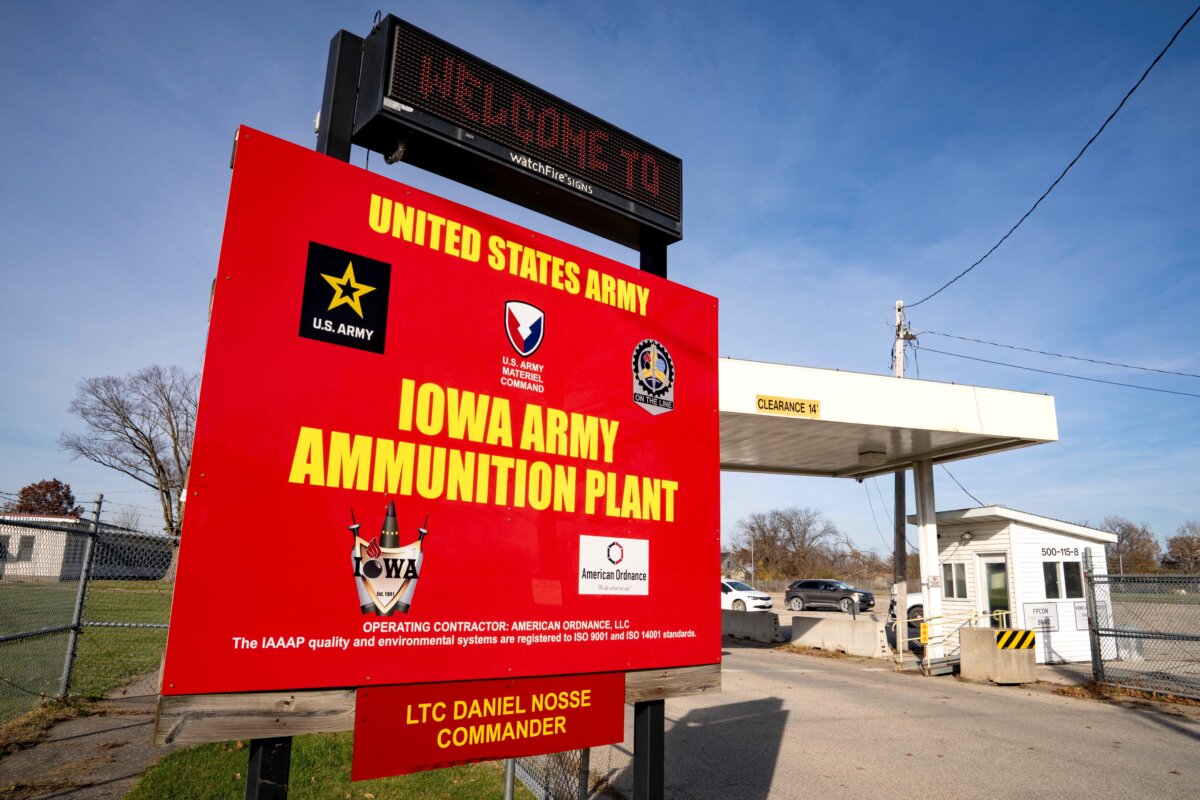

The U.S. Army intends to invoke emergency provisions to proceed with detonating lead azide in Iowa, government lawyers told a federal appeals court on Nov. 21.
This was despite the U.S. Eighth Circuit Court of Appeals earlier puting on hold a permit issued by the Environmental Protection Agency (EPA) for the detonation after environmental groups sued over its potential impact on human health and the environment.
In a court filing on Nov. 21, the government said the Army plans to move ahead with the detonation under an emergency munitions and explosives exclusion that allows it to act without the EPA permit.
The government said it needed to carry out a controlled detonation to protect the public, warning that lead azide stored at the Iowa Army Ammunition Plant could “spontaneously explode” as temperatures are expected to fall below 30 degrees Fahrenheit in the next several days.
“An uncontrolled detonation of nearly five tons of primary explosive would endanger soldiers, contractors, and the surrounding communities, all without many of the protective measures meant to minimize the risks from the blast—harm that cannot be undone,” it stated.
Government lawyers said that bunkers storing the barrels have become more vulnerable to temperature changes because the blast doors have already been removed in preparation of the controlled detonation. It noted that the blast doors cannot be replaced.
“A controlled detonation is necessary now to respond to the immediate threat of an uncontrolled explosion of military munitions at the facility. EPA’s regulations allow the Army’s planned action without the need for a permit and the Army intends to act on November 24, 2026,” it said.
The Army said in a post on X that it has scheduled the controlled detonation for Nov. 25 to allow for “optimal weather conditions” and ensure that all mitigation measures are in place.
The environmental groups that brought the lawsuit criticized the move, alleging that the Army had not demonstrated it had thoroughly explored all other safer alternatives for handling the explosive material.
The Army initially scheduled two controlled detonations at the Iowa Army Ammunition Plant on Nov. 20 to dispose of the degraded lead azide stored at the facility. The detonations were later postponed to Nov. 23, before the appeals court issued a stay on the EPA permit.
In a joint statement with the EPA and the Department of Health and Human Services on Nov. 20, the Army said agencies are taking steps to ensure the controlled detonation is being conducted in “the safest fashion possible.”
“Officials have been meticulously planning for this event since March, and all agencies involved are prepared to take the most extreme mitigation measures available to ensure there is no risk to the public and any disruptions are minimized,” it stated.
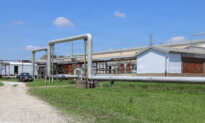
Planning for the detonation at the Iowa Army Ammunition Plant began after staff earlier this year found several dozen barrels containing lead azide that had degraded, “creating a highly unstable and dangerous situation,” according to an EPA-approved emergency permit. Moving or relocating it posed an unacceptable risk of accidental detonation, a possibility that increases in cold weather.
The Associated Press contributed to this report.