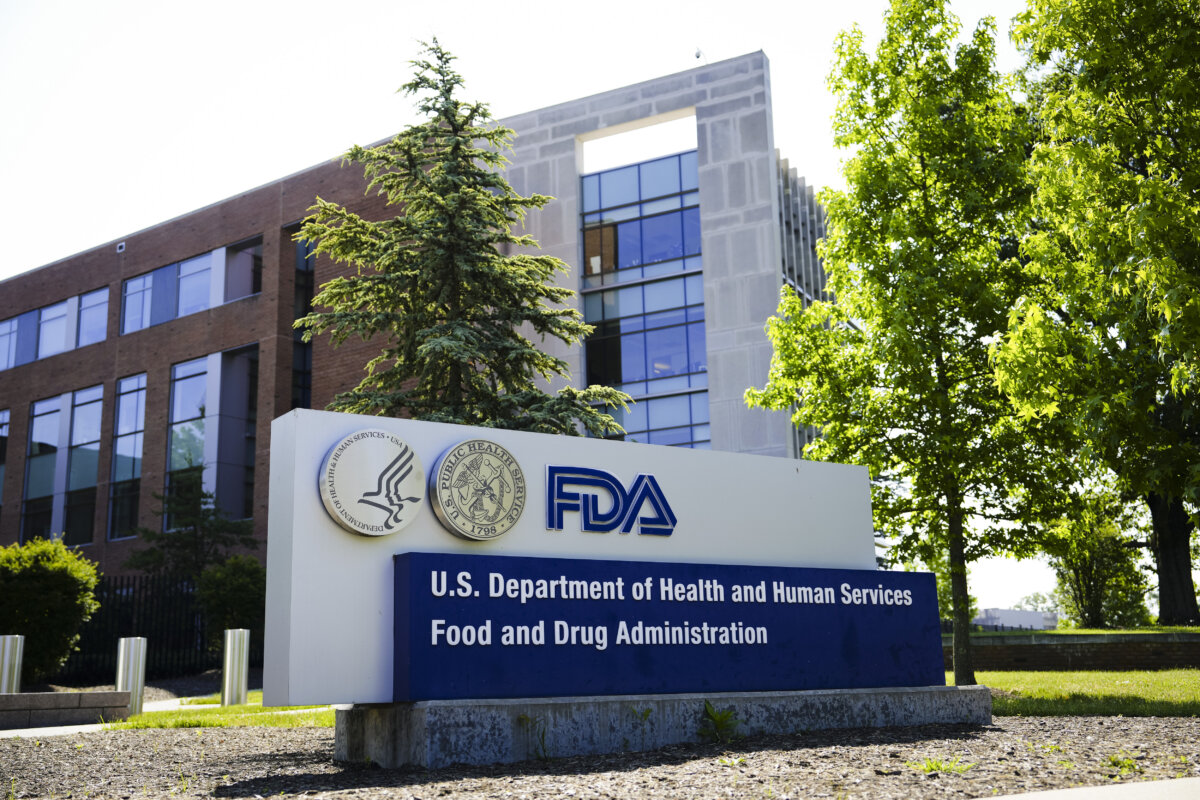

The U.S. Food and Drug Administration has declined to approve a China-developed lung cancer drug after an international clinical trial failed to establish that patients receiving the treatment accompanied by chemotherapy lived significantly longer than those receiving chemotherapy alone.
The drug, ivonescimab, was developed by Chinese biotechnology company Akeso, which licensed its development and commercial rights in the United States and other major overseas markets to U.S.-based Summit Therapeutics. Summit subsequently conducted international clinical trials and sought FDA approval.
On Nov. 15, Summit announced that the FDA had issued a response letter stating that its application could not be approved in its current form. The application sought approval to use ivonescimab alongside chemotherapy for patients with a specific form of advanced lung cancer whose disease had progressed despite earlier targeted treatment.
Although the combination delayed cancer progression, the FDA determined that the evidence did not establish a statistically significant improvement in overall survival sufficient to support approval.
Ivonescimab is designed to block two proteins involved in cancer growth—one that helps cancer cells evade the immune system and another that promotes the development of blood vessels supplying tumors.
China’s drug regulator first approved ivonescimab in May 2024 for certain patients with advanced lung cancer whose disease had progressed after targeted treatment. It subsequently approved the drug for additional lung cancer treatments in April 2025 and August 2026.
Summit’s application relied on HARMONi, an international Phase III trial involving 438 patients with advanced lung cancer carrying mutations in a gene called EGFR.
The trial tested whether adding ivonescimab to two existing chemotherapy drugs, pemetrexed and carboplatin, would improve treatment outcomes. One group received ivonescimab plus chemotherapy, while the other received the same chemotherapy with a placebo.
According to the published results, patients receiving ivonescimab went a median of 6.8 months before their cancer worsened or they died, compared with 4.4 months in the chemotherapy-only group.
Patients receiving ivonescimab survived a median of 16.8 months, compared with 14 months in the comparison group. Although the differences favored ivonescimab, it did not meet the trial’s statistical requirements for establishing a survival benefit.
The FDA had previously told Summit that such evidence was necessary. In a Nov. 4 disclosure, Summit acknowledged that the agency required a statistically significant improvement in overall survival for approval in this treatment setting.
Summit later reported more favorable survival results after following patients for a longer period. However, those additional analyses came after the trial’s primary assessment and did not persuade the FDA to approve the application.
Multibillion-Dollar China-US Drug Partnership
Akeso signed a licensing agreement with Summit in December 2022, giving the U.S. company rights to develop and market ivonescimab in the United States, Canada, Europe, and Japan. The agreement was subsequently expanded to additional regions, while Akeso retained rights in China.
Summit agreed to pay Akeso $500 million upfront, with further payments tied to regulatory approvals and sales potentially bringing the original deal’s total value to $5 billion.
On Oct. 5, British pharmaceutical giant AstraZeneca completed a $2 billion investment in Summit to support further development of ivonescimab, including testing it alongside other cancer medicines.
Ivonescimab had previously attracted international attention after a separate clinical trial conducted in China found that it outperformed Merck’s widely used cancer drug Keytruda.
In that study, known as HARMONi-2, patients receiving ivonescimab survived a median of 30.8 months, compared with 22.6 months for those receiving Keytruda, according to results released in September.
However, that study involved patients receiving their first treatment for a different group of advanced lung cancers. It also compared ivonescimab directly against Keytruda, rather than testing ivonescimab in combination with chemotherapy.
The FDA rejection concerned the separate international HARMONi trial, not the China-only study.
US Scrutiny of Chinese Clinical Trials
The decision comes as U.S. lawmakers have raised concerns about the reliability and ethical oversight of clinical research conducted in China.
In an Aug. 21 letter, Reps. John Moolenaar (R-Mich.) and Ben Cline (R-Va.) urged the FDA to stop accepting clinical trial data from China unless American regulators had inspected the trial site within the preceding 12 months.
The lawmakers cited three patient deaths, including those of two children, in experimental gene-editing studies in China and raised concerns about transparency and patient protections.
The concerns have been accompanied by documented enforcement actions. In May 2025, the FDA reported finding falsified or otherwise invalid research data at two Chinese laboratories that supplied testing information for medical device applications. The findings followed earlier inspections that uncovered failures in laboratory oversight and data management.
The FDA subsequently outlined measures to strengthen oversight of foreign clinical trials, including greater scrutiny of studies conducted where regulators face difficulties accessing research sites or verifying patients’ informed consent.
The publicly disclosed reason for the ivonescimab decision, however, was insufficient evidence of improved survival, rather than concerns about the reliability of Chinese clinical trial data.
The FDA has also continued approving drugs developed by Chinese companies. On Nov. 10, it approved pimicotinib, developed by Chinese biotech company Abbisko Therapeutics, for a rare tumor condition affecting joints and surrounding tissues.
The Epoch Times contacted the FDA and Summit Therapeutics for copies of the FDA’s original response letter and clarification of whether the agency had identified additional concerns, including those related to clinical trial data from China. Neither responded by publication time.
Summit is meanwhile pursuing another route to the U.S. market through its international HARMONi-3 trial, which compares ivonescimab plus chemotherapy against a Keytruda-based treatment in patients receiving initial treatment for advanced lung cancer.
According to the company’s latest quarterly disclosure, Summit expects the first major results from one group of patients in the fourth quarter of 2026, followed by an additional survival analysis in the first half of 2027.