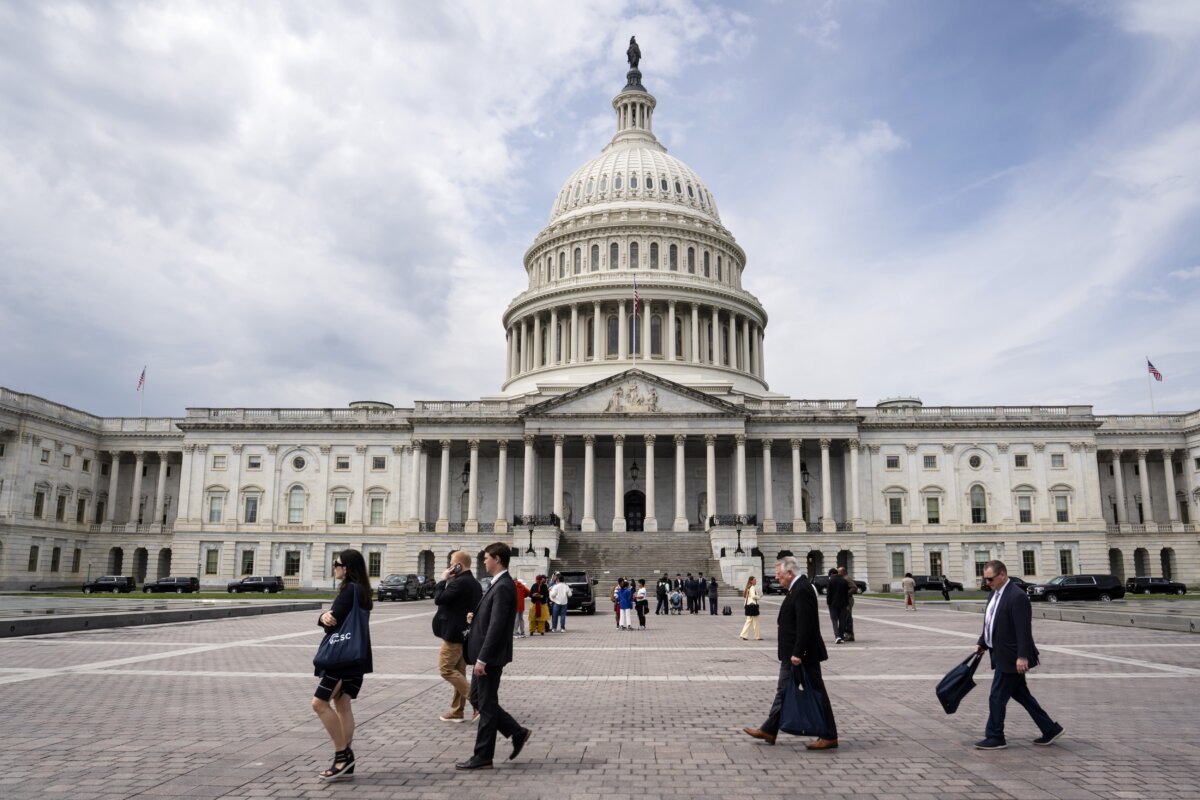

A new lawsuit challenges the 435-member limit of the House of Representatives, arguing it runs counter to the U.S. Constitution.
Delaware voters filed the suit in federal court in Washington, seeking another seat in the House.
The Constitution says that each state shall be represented in the House with at least one representative, and that the number of representatives shall not exceed one for every 30,000 people.
Through the years, the size of the House expanded. Lawmakers passed a bill in 1929 that capped the total number of House seats at the level established after the 1910 Census, or 435.
House lawmakers now represent an average of 761,169 people, compared with 210,328 in 1911, the lawsuit states. Delaware’s single representative represents 990,837 people. In comparison, Montana has a population of 1.08 million, but has two representatives, and Wyoming has a single representative for a population of about 577,719.
“Equal representation protects voters of every political party. Delaware voters receive the same diminished representation whether they elect a Democrat, a Republican, or an independent. Plaintiffs seek an apportionment that gives their population its constitutionally required representation regardless of the election’s partisan result,” the voters stated in the lawsuit.
“Awarding Delaware a second Representative would cure the underrepresentation imposed on Plaintiffs by the 435-seat limitation. Delaware would have two seats for the same certified population, averaging approximately 495,419 people per Representative. The House would comprise 436 Members, and all 49 other States would retain their existing allocations. The additional seat would give Plaintiffs and their fellow Delaware voters twice their present representation.”
Keeping the limitation in place lacks sufficient justification, according to the legal challenge, and the House could accommodate one additional member.
The voters asked a three-judge panel to declare the limit unconstitutional, arguing that Delaware’s one representative leaves plaintiffs injured and that adding a second representative is required.
Congress should be given an opportunity to fix the issue, but if it fails by a deadline, then the court should order the additional seat representing Delaware, the voters said.
Department of Commerce officials were named as defendants. The department did not respond to a request for comment by the time of publication.