NASA opened applications for its next class of astronauts on Nov. 7, and they will remain open to the public until 11:59 p.m. ET on Dec. 3.
“The people we select could walk on the Moon, live and work at the Moon Base, and help pioneer the systems and operations that will ultimately carry crews to Mars,” NASA Administrator Jared Isaacman said in a press release. “Those missions will demand technical excellence, sound judgment, teamwork, and courage.
“NASA’s astronaut corps has always called on remarkable Americans willing to take on extraordinary challenges in service to the nation. If you are ready to join that tradition, come help write the next chapter of humanity’s greatest adventure,” he said.
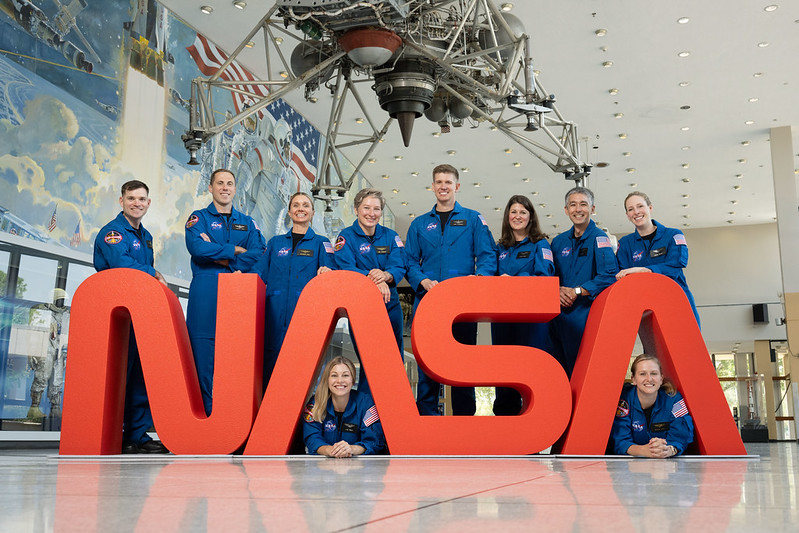
This is the first time NASA has announced a search for more explorers since 2024, after which a class of just 10 astronaut candidates was selected in 2025 from more than 8,000 applications. Beginning with the original Mercury Seven astronauts in 1959, only 370 men and women have been selected as astronaut candidates, and the agency currently has 32 men and women with active astronaut status.
Here’s what they are looking for.
New American STEM Heroes
Two of NASA’s primary requirements for its new astronauts are that they are American citizens and have advanced degrees in one of the STEM fields. STEM stands for Science, Technology, Engineering, and Mathematics.
The basic education requirement is a master’s degree in fields including biological science, physical science, engineering, computer science, or mathematics. NASA will also accept applicants who have completed at least two years of a doctoral program in “an appropriate technical field” of biological science, engineering, computer science, physical science, or mathematics.
Medical professionals also qualify, including but not limited to those with a Doctor of Medicine, Doctor of Osteopathic Medicine, Family Nurse Practitioner, Physician Assistant, or Doctor of Nursing Practice.
However, NASA also specifies what it is not looking for, and that list includes technology degrees like aviation technology, engineering technology, and medical technology; degrees in social sciences like archaeology and geography; and degrees in aviation and aviation management. Degrees in psychology are also excluded, except for three: clinical psychology, experimental psychology, and physiological psychology.
All degrees need to come from accredited educational institutions, and applicants need to submit their transcripts with their application.
On top of that, a minimum of three years’ experience in the applicant’s degree field is also required.
K–12 teaching experience in a related technical field is also accepted so long as the applicant meets the basic education requirements. Medical professionals can count their residency as part of that minimum experience so long as their residency is completed by July 2027.
Qualifying applicants can submit for sub-discipline options which include medical, biological and medical science, physical science, and engineering.
For all of these options, NASA states on the application website, “You must certify that this experience was gained in a field related to this sub-discipline and be able to provide additional certification upon request.”
More Test Pilots Wanted
Along with STEM professionals, NASA also seeks to continue its lifelong tradition of sending test pilots into the final frontier.
Test pilots must either have completed or be currently enrolled in a test pilot school program with the expectation of completing it by July 2027. This can stand as the applicant’s only advanced technical degree so long as he or she has already completed at least a bachelor’s degree at an accredited institution with major study in “an appropriate technical field of engineering, biological science, physical science, computer science, or mathematics.”
NASA’s flight test sub-discipline requires test pilot school completion and at least three years of related flight test experience. It can also apply to those with experience outside the scope of the pilot sub-discipline, such as flight test engineers, navigators, and weapons systems officers.
Those applicants wanting to apply under the pilot sub-discipline must have a minimum number of flight hours as the pilot in command of the following types of aircraft. For high-performance jets, applicants must have a minimum of 750 hours. Other fixed-wing aircraft require 1,500 total hours, with 750 of those hours being as pilot-in-command of the aircraft. For rotary-wing aircraft like helicopters, NASA requires 1,000 total hours, with 300 being pilot-in-command time.
NASA is also looking for explorers to push the envelope in realms beyond test flight. That sub-discipline category is called “operations” and includes those with at least three years’ experience working as deep-sea divers, in nuclear submarine operations, and in rescue operations.
“This experience must be in high-consequence environments that require real-time decision-making and intensive teamwork, where errors carry irreversible and physical risk to personnel, missions, or vehicles,” NASA stated on the application.
A Multi-Month Process
NASA plans to announce its next class of astronaut candidates in late 2027.
Over the course of about a year, applicants will go through a multi-stage process that initially evaluates one’s basic qualifications and then moves into rounds of interviews, and medical and psychiatric screenings. Applicants will be judged on their communication skills, teamwork, discipline, ethical conduct, personal motivation, and the applicant’s overall strength in his or her field of expertise.
When the class is selected, it is only the beginning. Those candidates will have to successfully complete an astronaut training period where they experience—among other things—spacewalk training, spacecraft systems training, robotic skills training, and aircraft flight readiness training.
“For those who apply, becoming a NASA astronaut is more than a career opportunity,” said Scott Tingle, chief astronaut and chair of the Astronaut Selection Board at NASA’s Johnson Space Center in Houston.
“It is a chance to join a legacy of explorers who have pushed the boundaries of discovery and play a role in the missions that will shape humanity’s future in space.”
Correction: A previous version of this article misstated the years that certain astronaut candidates were selected. The Epoch Times regrets the errors.