
Wisconsin health officials reported on Thursday the death of an infant tied to the ongoing measles outbreak in the southwestern part of the state, making it the first fatality of its kind since 1990.
The coroner declared the immediate cause of death as measles.
To protect the privacy of the family and the child, the Wisconsin Department of Health Services will not release any additional information related to the death.
“It is with a heavy heart we are reporting the first death of an infant connected with a measles outbreak in Wisconsin in many years. My heart is broken for the family,” the department’s secretary, Kirsten Johnson, said in a statement.
“Any death of a child is a tragedy and even more so when it is related to a vaccine-preventable disease. Measles can cause serious illness and death, and it is important for all Wisconsinites to evaluate their risk and take steps to protect themselves and their family.”
Measles is a highly contagious respiratory virus that spreads through the air when an infected person coughs or sneezes.
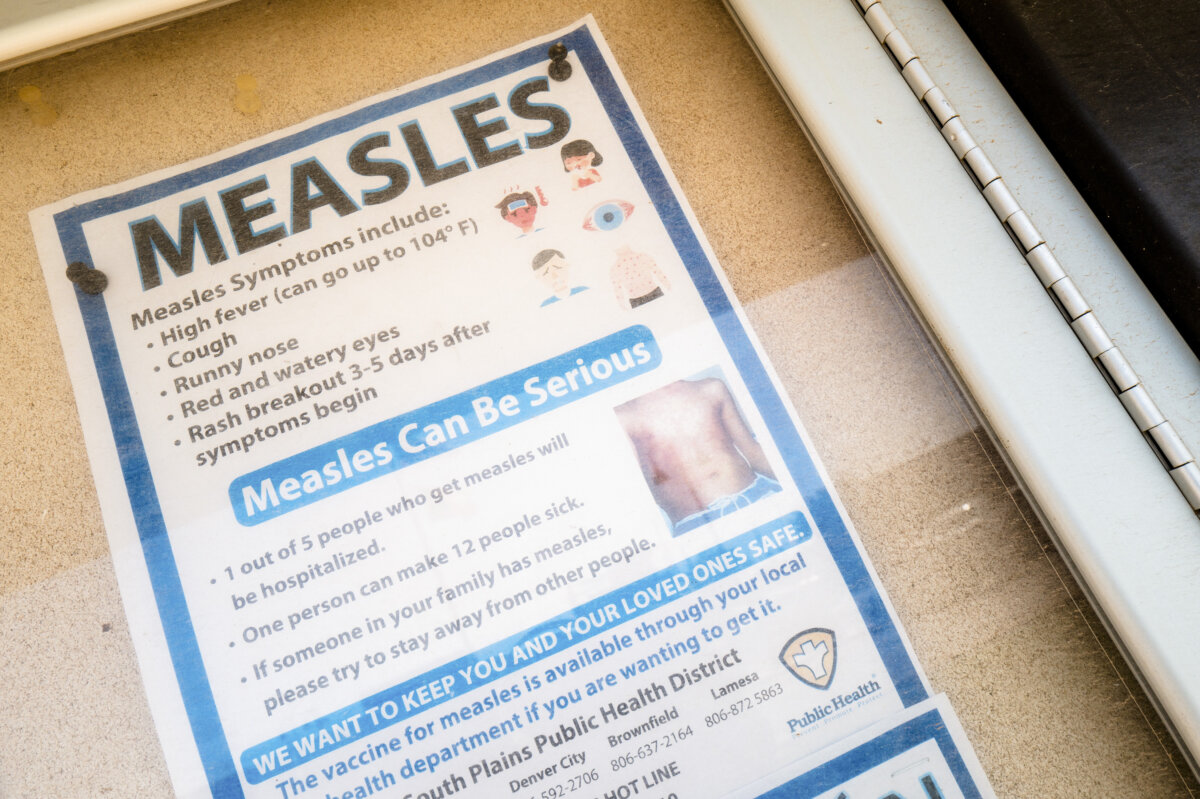
Symptoms typically begin with fever, cough, a runny nose, and red, watery eyes, followed several days later by a rash that starts on the face and spreads downward.
The disease can lead to serious complications, including pneumonia and encephalitis.
As of Nov. 3, the department has reported 431 measles cases in 13 counties so far in 2026, the highest number of cases seen in the state in more than 35 years.
Across these cases, nine people have required hospitalization for severe symptoms.
Reported case counts may not reflect the full extent of measles spread because not everyone who becomes ill seeks medical care or gets tested, which means cases may go unreported, according to the department.
It recommends that anyone exposed to measles should stay at home.
Wisconsin health officials said that the best way to prevent measles is with the measles, mumps, rubella (MMR) vaccine. Two doses are approximately 97 percent effective at preventing measles.
Since Aug.1, more than 42,000 doses of MMR vaccine have been administered by healthcare providers in the state.
About 95 percent of people who contracted the viral infection were unvaccinated or had an undetermined vaccination status, according to the department. Two percent had one dose of the MMR vaccine, while another 2 percent of cases had two doses of the vaccine.
According to the most recent CDC data for the 2025–2026 school year, the lowest kindergarten MMR vaccination rates were recorded in Idaho (75.2 percent) and Wisconsin (85.1 percent), well below the national average of 92.4 percent.
Other states with comparatively low coverage included Utah (87.2 percent), Arizona (87.4 percent), and Colorado (87.7 percent), while Alaska stood at 89.9 percent.
High-coverage states such as West Virginia reached 98.9 percent.
As of its Oct. 29 update, the U.S. Centers for Disease Control and Prevention listed 4,852 confirmed measles cases in the United States this year and four deaths.
More than half of all cases were in children and young adults, the agency said.
Approximately 17 percent were children younger than 5, and 42 percent were between ages 5 and 19. Eighteen measles cases were confirmed among international travelers to the United States.