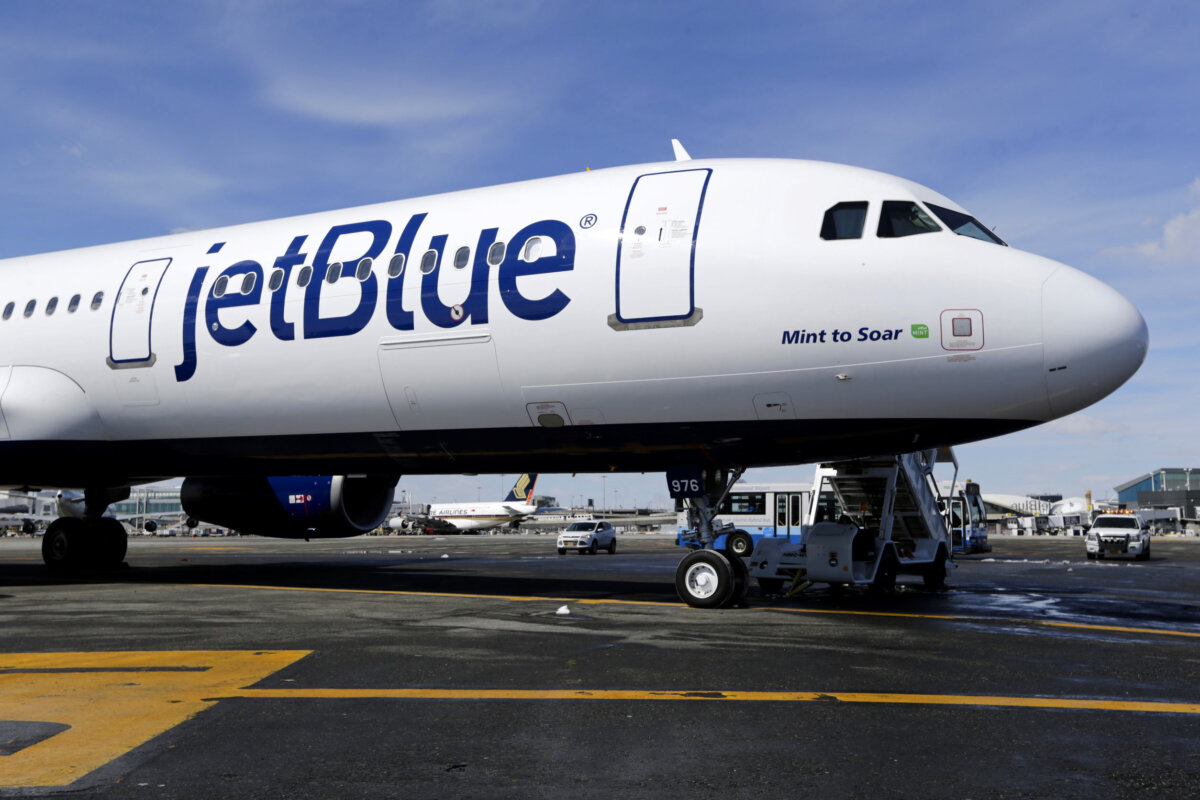

JetBlue raised its checked-baggage prices for the second time in 2026. The revised fee covers tickets purchased on or after Nov. 3 and lands just as holiday flying ramps up.
On routes inside the United States, Canada, Latin America, and the Caribbean, economy passengers will pay a minimum of $50 each way for the first checked bag, according to the airline’s updated checked bag policy. That is $11 more than the prior rate.
During peak windows such as Thanksgiving and the winter holidays, the price becomes $55 if the bag is added at least a day early. Waiting until less than 24 hours before a flight pushes the charge to $60 off-peak and $70 in peak periods.
“We’re adjusting checked bag fees to help offset rising fuel and operating costs,” JetBlue said. “This helps us keep our base fares competitive while giving customers the choice to pay for a checked bag only if they need one.”
A second bag now starts at $70 each way outside peak dates and $75 in periods of high demand. Paying at the airport can push the second-bag total as high as $85.
Eligible co-branded credit-card holders and certain loyalty members continue to check bags at no charge.
Early in the year, the off-peak first-bag rate on most domestic economy flights stood at $35.
That figure changed after the United States and Israel struck Iran in late February, driving sharp swings in jet-fuel prices.
In March, in economy tiers such as Blue Basic, Blue, Blue Extra, and EvenMore, fees for the first bag rose to $39, or $49 in peak periods, from $35 and $40. A second bag moved to $59, or $69 during peak season.
“As we experience rising operating costs, we regularly evaluate how to manage those costs while keeping base fares competitive and continuing to invest in the experience our customers value,” a JetBlue spokesperson told The Epoch Times via email in March. “Adjusting fees for optional services used by select customers, such as checked baggage, allows us to continue offering more competitive fares.”
The Iran war remains ongoing and has kept most traffic restricted through the Strait of Hormuz, a major oil-shipping corridor. The resulting disruption continues to hold jet-fuel prices at elevated levels.
On its third-quarter earnings call last week, JetBlue executives said passenger demand has held up even as fares have climbed with fuel. The carrier reported an average fuel price of $3.91 per gallon over the summer, 57 percent above a year earlier, and projected $4.64 for the final three months of 2026, an 85 percent year-over-year increase.
The March adjustment by JetBlue preceded similar bag-fee increases at other airlines, including Delta, United, American, and Southwest.
Fuel ranks as the industry’s second-largest expense after labor. The International Air Transport Association’s Jet Fuel Price Monitor indicated that prices nearly doubled after late February, when the Iran war began.
The Associated Press contributed to this report.