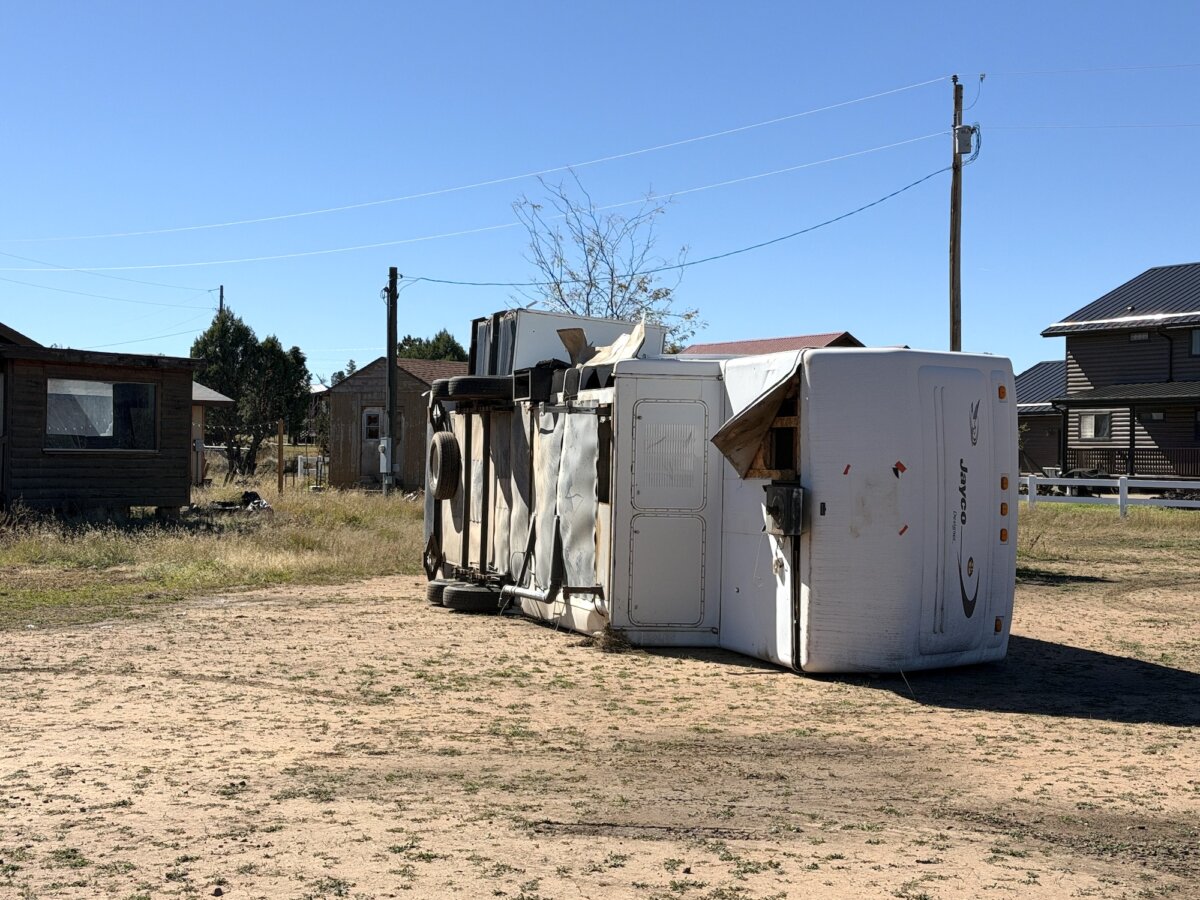

HEBER-OVERGAARD, Ariz.—Eric Sorensen and his wife, Sandee, were relaxing at home the evening of Oct. 21 when a faint rumble outside their eastern Arizona home grew into a roar and a deafening whistle.
“You could hear it—this freight train sound. You knew what it was,” Eric Sorensen said.
At about 7 p.m., Eric Sorensen’s cellphone blared an emergency alert, warning residents to seek shelter as quickly as possible.
In less than a minute, a tornado with winds exceeding 100 mph tore through the neighborhood, damaging homes and vehicles, and toppling ponderosa pine trees.
The next morning, Eric Sorensen, 76, stepped outside his stucco-frame house in Overgaard to survey the damage.
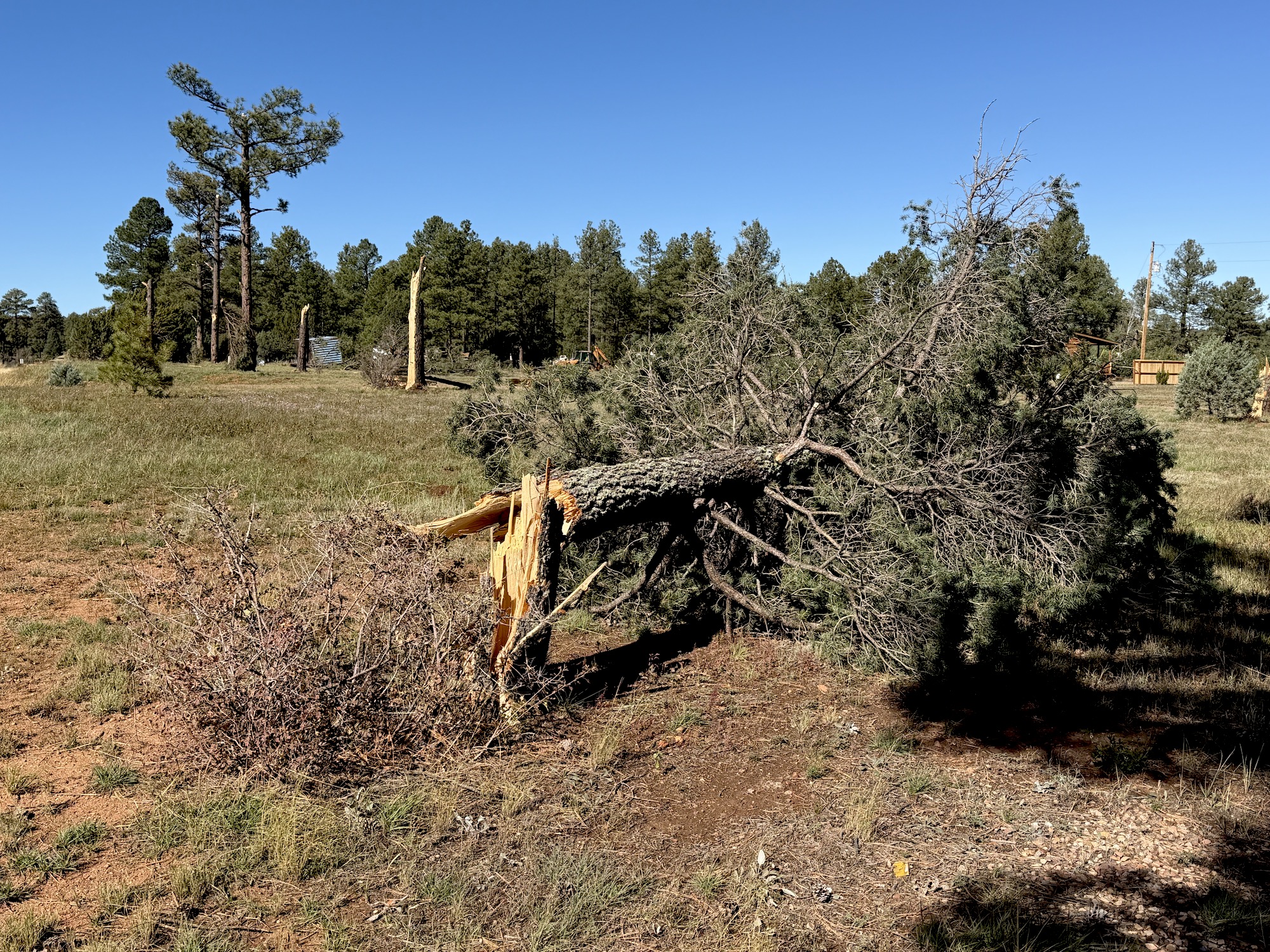
Trees had snapped in half or been uprooted. Trailer homes lay on their sides. Windows had shattered. Debris was everywhere.
Eric Sorensen said one resident’s recreational vehicle, which served as his home, was totally destroyed.
“He said, ‘I’m kind of homeless.’ He had bought that RV, and it was in beautiful shape—mint condition,” Eric Sorensen said.
The Sorensens’ home of seven years had very minor roof damage, but their two cars had broken side mirrors, and two backyard sheds had collapsed.
“We were very fortunate—we dodged a bullet,” Eric Sorensen told The Epoch Times.
“You can lose property, but if you lose lives,” he trailed off.
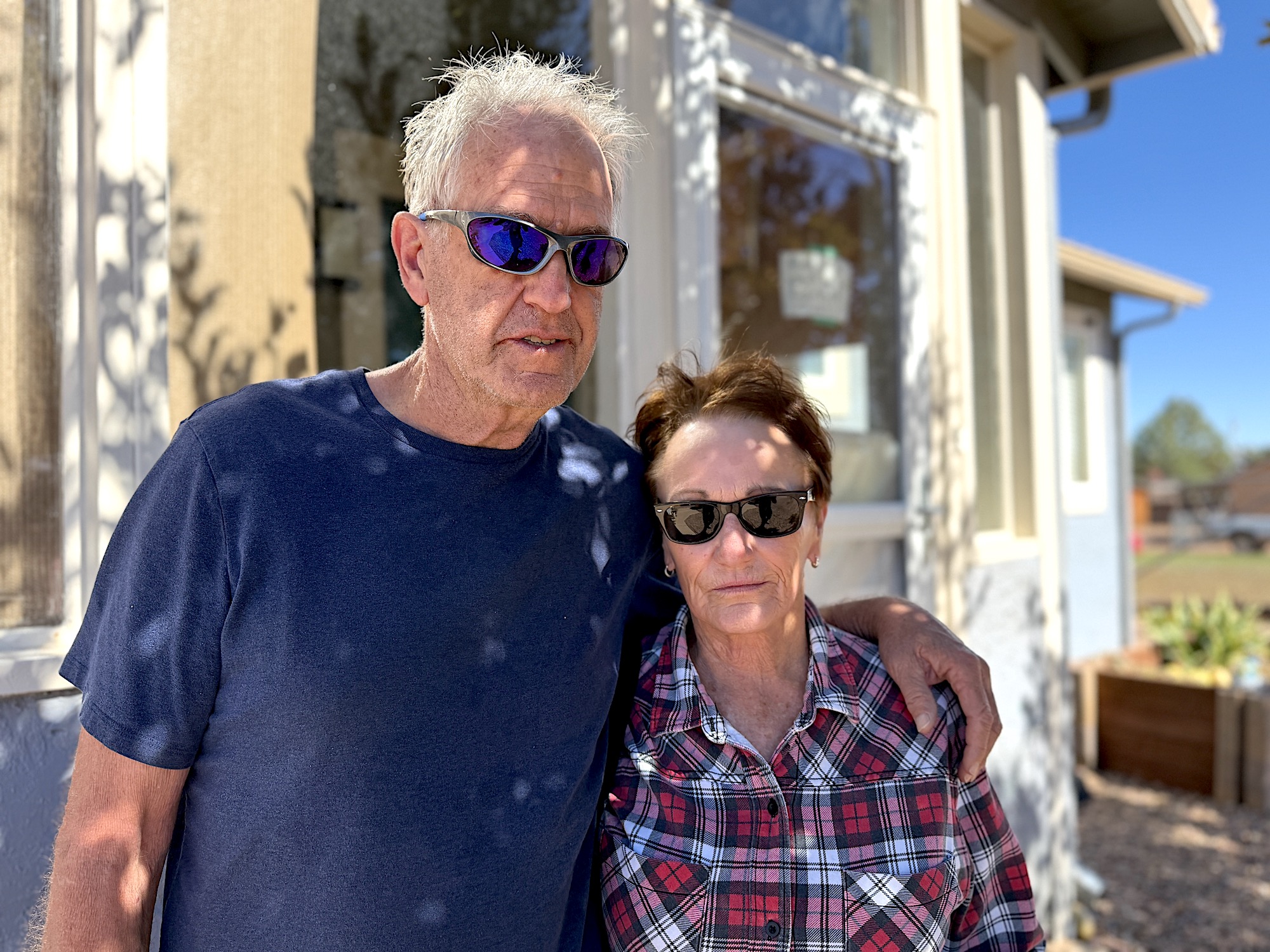 Eric and Sandee Sorensen stand outside their home of seven years in Heber-Overgaard, Ariz., on Oct. 27, 2026. (Allan Stein/The Epoch Times)
The unincorporated mountain community has 3,621 residents and is overseen by the Navajo County Board of Supervisors.
“In Arizona, of all places,” Eric Sorensen said, amazed that a tornado could strike there.
When Conditions Are Right
Despite its largely desert climate, Arizona averages four to six tornadoes a year, most rated EF-0 to EF-2, with a few reaching EF-3, according to Arizona State University’s Climate Office.
The Enhanced Fujita scale estimates tornado strength based on damage surveys. Ratings range from EF-0, with winds of 65 to 85 mph, to EF-5, with winds exceeding 200 mph.
The National Weather Service (NWS) confirmed three EF-1 tornadoes in Arizona on Oct. 21, over a span of nearly 12 hours.
The first to be confirmed struck near Spruce Mountain, southeast of Prescott, at about 7:32 a.m. It traveled roughly 8 miles with winds of about 105 mph before dissipating near Walker Road.
No injuries were reported.
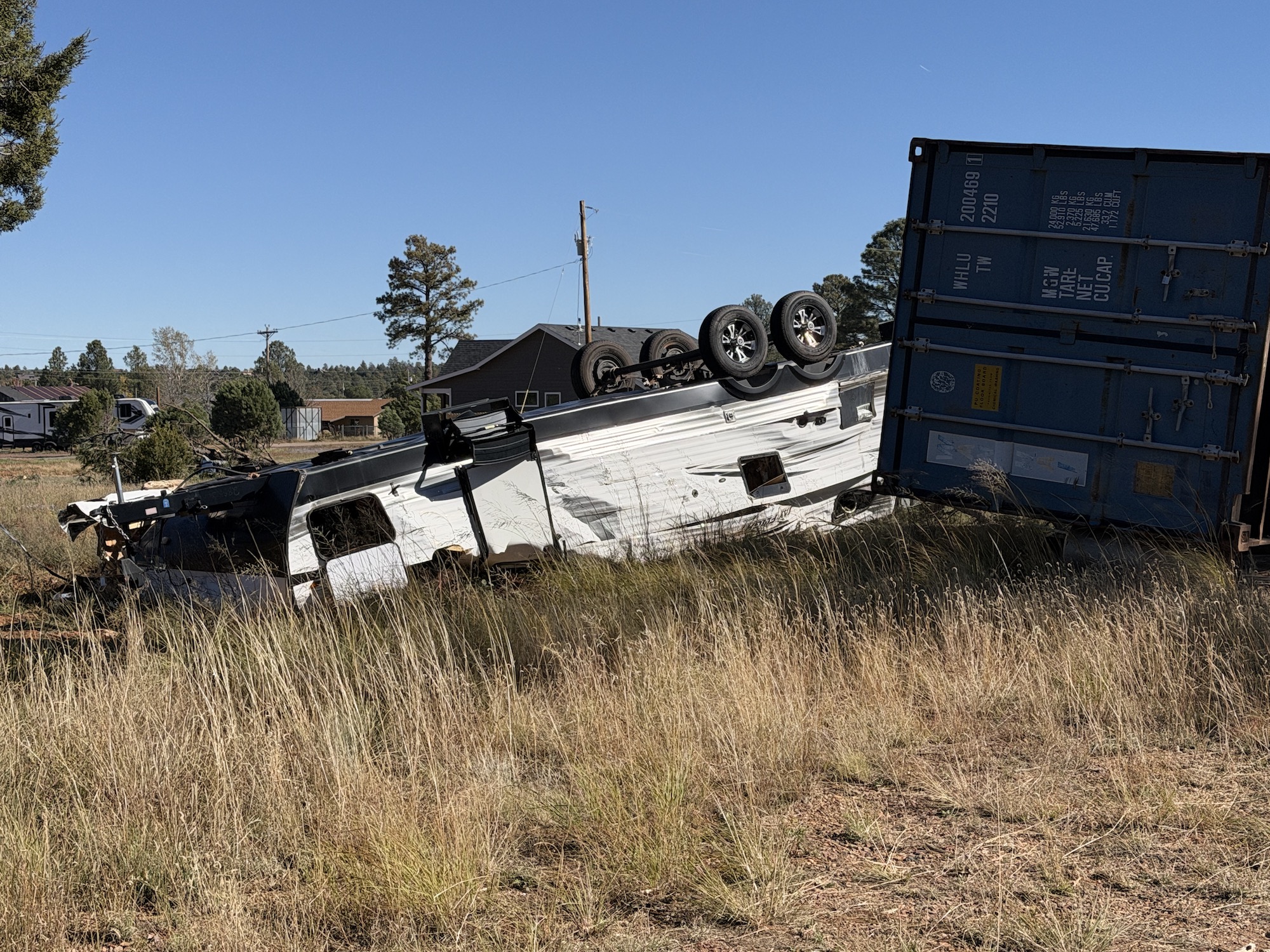 A battered recreational vehicle lies in ruins following a powerful tornado that swept through the village of Heber-Overgaard, Ariz., on Oct. 21, 2026. Below, trees were snapped in half and uprooted by winds exceeding 100 miles per hour. (Allan Stein/The Epoch Times)
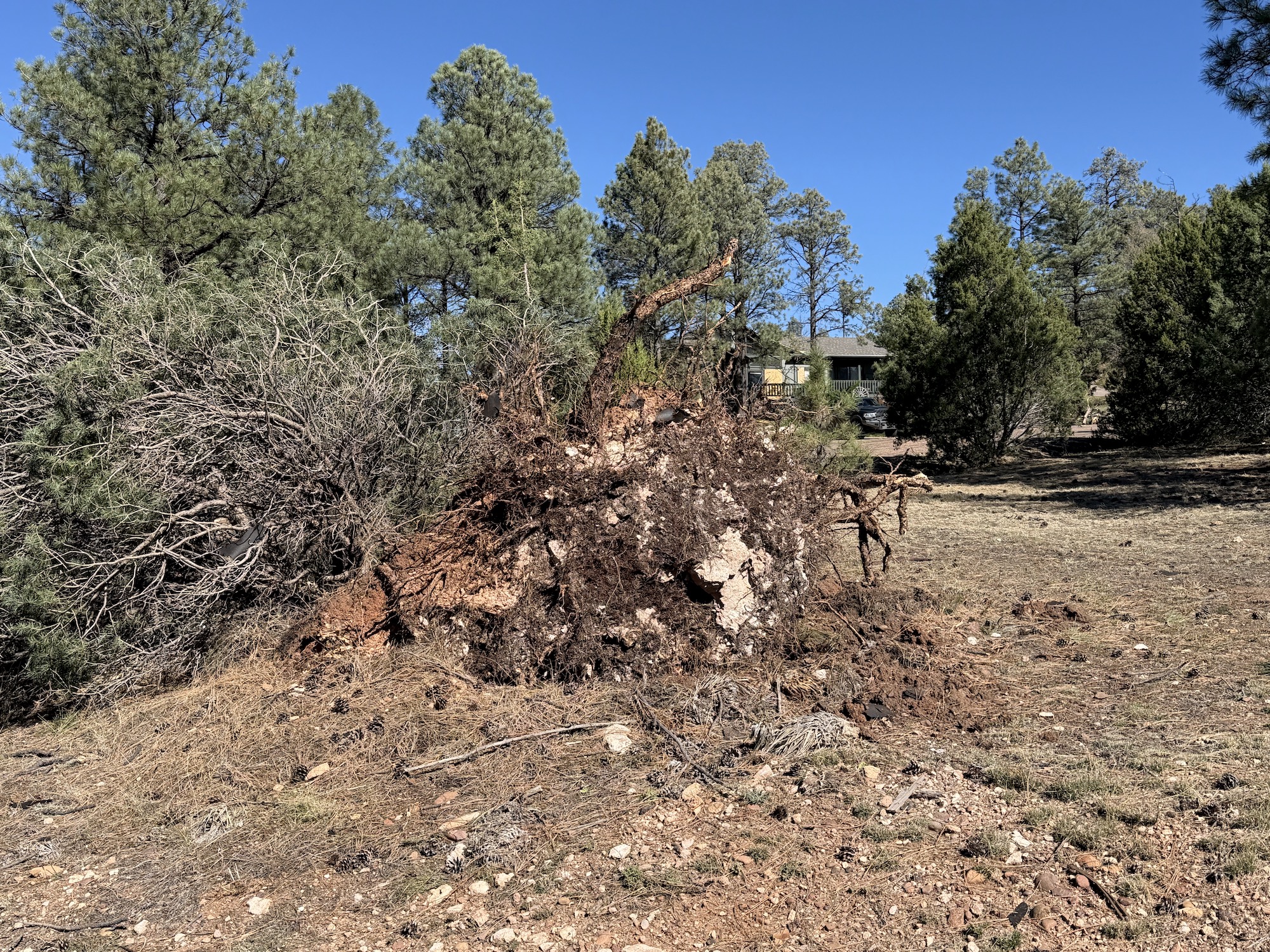
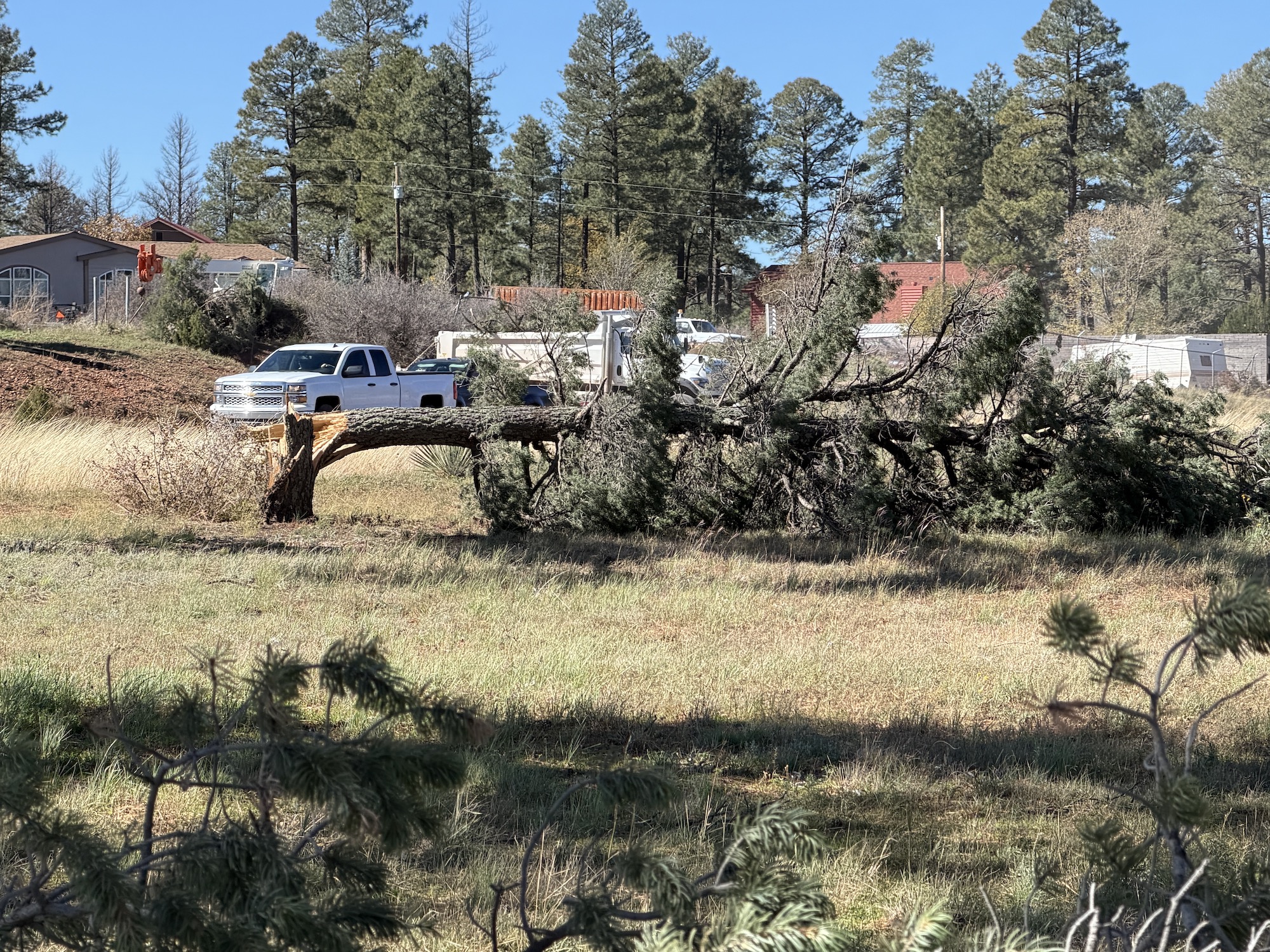
“This EF1 rated tornado produced the most significant damage on the southern side of Highway 260 and also in central portions of Overgaard, where tree and roof damage was more extensive,” the NWS said in a storm summary.
The NWS estimated peak winds of 110 mph along the tornado’s nine-mile path. One person suffered non-life-threatening injuries, local news outlet Signals reported.
Arizona’s Family reported that a man identified as Artem, who asked that his last name not be used, was riding his bicycle to the grocery store in Heber when powerful winds gathered around him.
“The wind came and flipped me around to go the other way. The force was just getting more and more.”
Then his bike went airborne.
“It just flew out my hands,” he said.
Artem told the outlet he was taken to the hospital covered in mud, given a CAT scan and medication, then sent home with no broken bones.
The NWS later confirmed a third tornado, which began the string of twisters when it struck northern Arizona at 5:41 a.m. local time on Oct. 21.
Dubbed the Wing Mountain Tornado, it formed about 3.5 miles north of Bellemont, toppling and snapping ponderosa pines along a 2.3-mile path before dissipating west of Highway 180. Peak winds reached 110 mph.
Rare Weather Events
Severe tornadoes are rare in Arizona, but atmospheric conditions can occasionally combine to produce them, the Arizona State University School of Geographical Sciences and Urban Planning said.
These conditions include abundant moisture, atmospheric instability, and strong winds.
One ingredient often missing in summer is the subtropical jet stream, a narrow band of powerful winds about six miles above the ground.
“Still, tornadoes have occurred in Arizona and will occur again in the future,” the school said.
Arizona also experiences funnel clouds associated with severe thunderstorms, often along cold fronts in fall and winter.
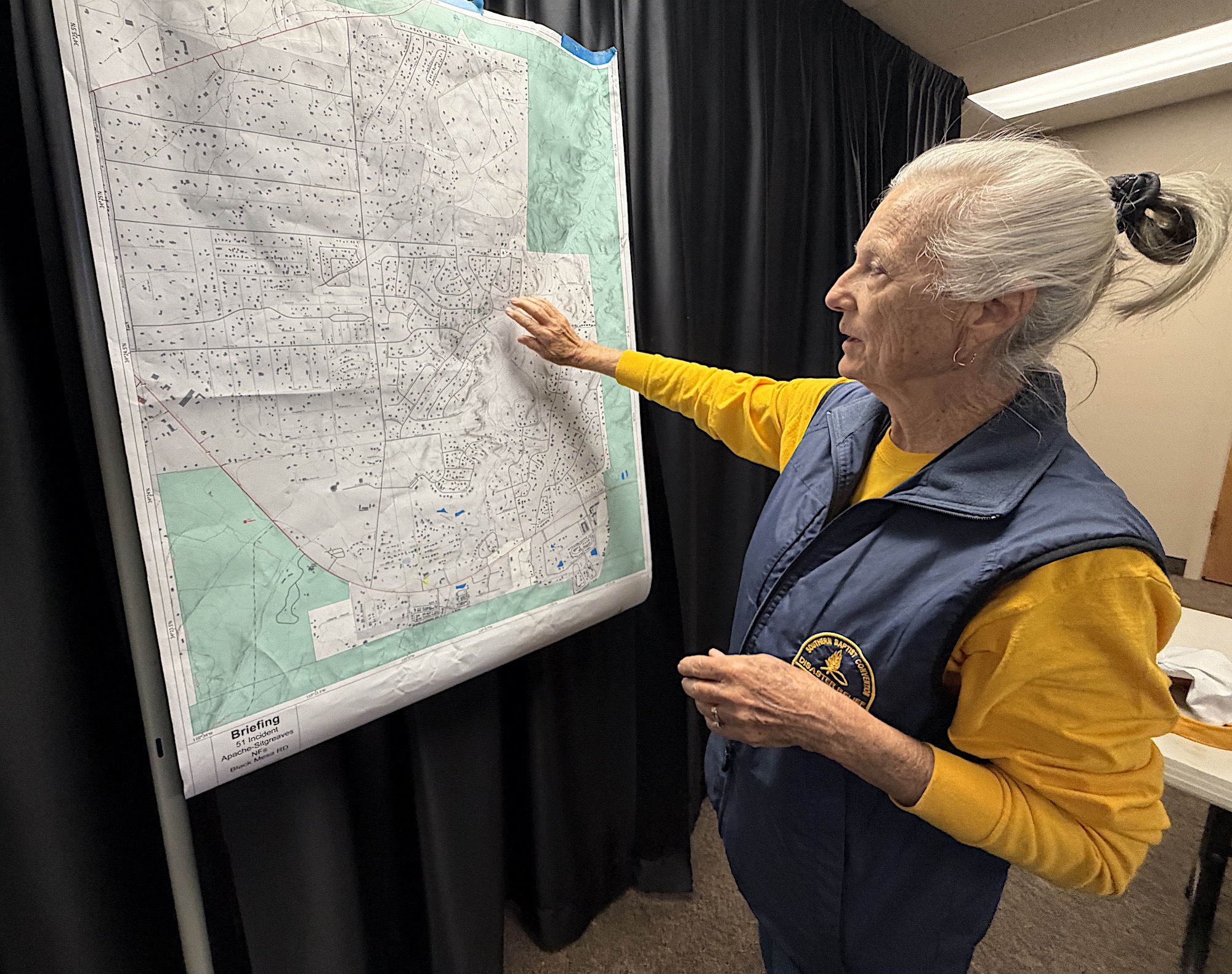 Tornado recovery director Patty Kirchner from nonprofit Arizona Southern Baptist Convention Disaster Relief points to areas that suffered the most damage from an EF-1 tornado that touched down in Heber-Overgaard, Ariz., on Oct. 21, 2026. (Allan Stein/The Epoch Times)
If it touches the ground, it becomes a tornado.
Any funnel cloud has the potential to develop into a tornado, the school said.
The NWS said an October 2010 tornado outbreak ranks as the largest in Arizona history.
During the event, the agency’s Flagstaff office issued 28 tornado warnings, 25 severe thunderstorm warnings, and one flash flood warning.
The agency described the outbreak of at least 11 tornadoes as unprecedented in duration, intensity, and number, and it noted that the outbreak was unlike any other event in Arizona or west of the Continental Divide.
It occurred when all the necessary conditions for severe thunderstorms and tornadoes came together, the agency said.
Ann Phillips, a server at June’s Cafe in Heber, was at home when large hailstones began falling before the EF-1 tornado struck about a mile away.
“It was hailing all over the place,” Phillips told The Epoch Times. “Massive winds and everything. I had a lot of debris in my yard.”
 Ann Phillips, a server at June’s Cafe in Heber, Ariz., said hailstones preceded the arrival of an EF-1 tornado in the combined village of Heber-Overgaard on Oct. 21, 2026. (Allan Stein/The Epoch Times)
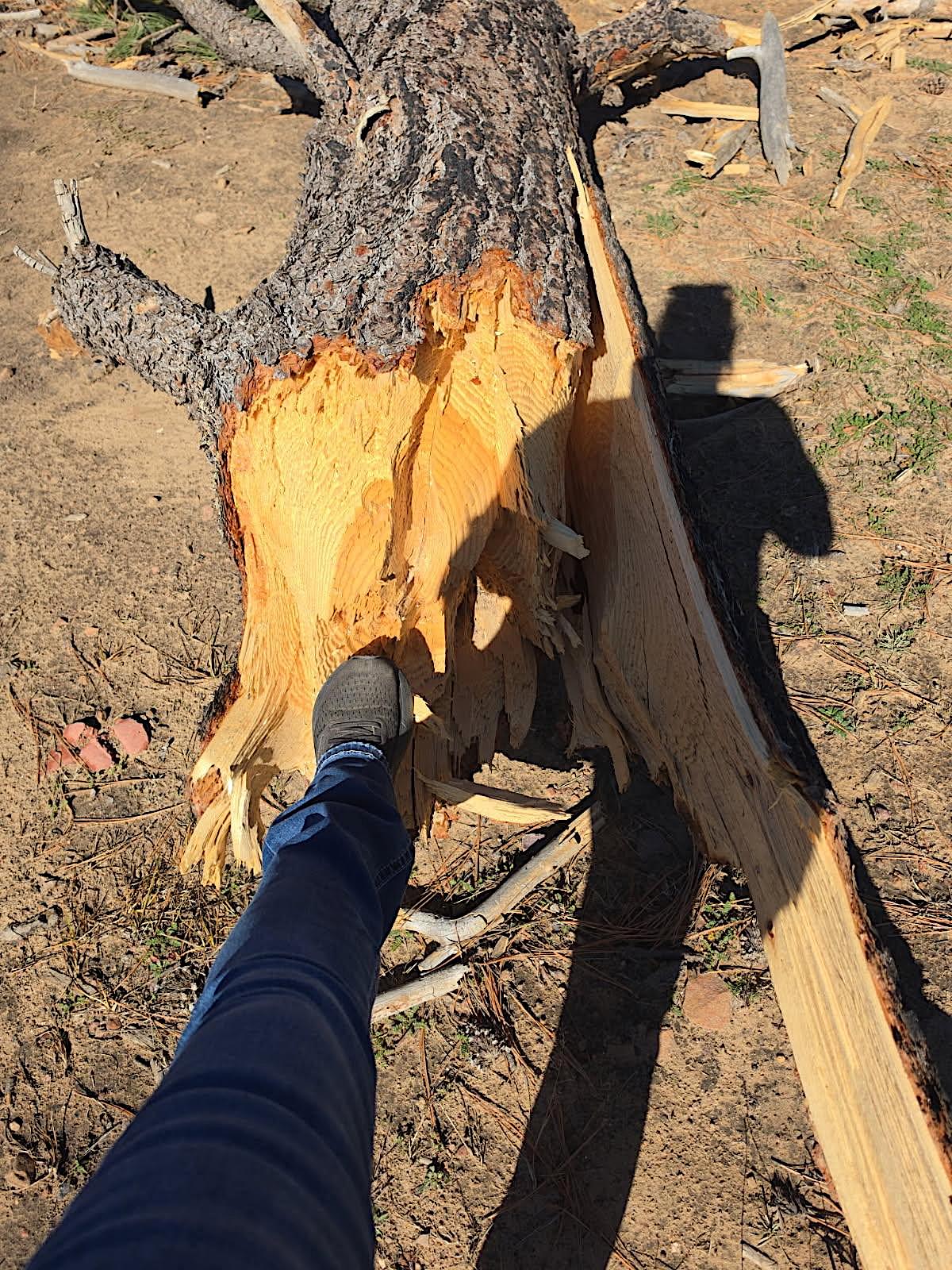 Ann Phillips, a resident of Heber-Overgaard, Ariz., snaps a photo of a fallen tree on her property following a powerful tornado on Oct. 21, 2026. (Courtesy of Ann Phillips)
She said changes in air pressure, followed by hailstones, were warning signs that something was coming.
“Something’s going happen—what, I wasn’t sure,” she said.
“The thing is they’re so rare [in Arizona]. People are not equipped for it, so it does hurt us very badly.”
Navajo County Emergency Management is coordinating tornado recovery in Heber-Overgaard with the county Sheriff’s Office and Heber-Overgaard Fire District.
The Epoch Times contacted the agency for a full damage estimate and cleanup costs but received no response.
Recovery Underway
Volunteer cleanup efforts continue throughout the tornado-stricken areas of Heber-Overgaard.
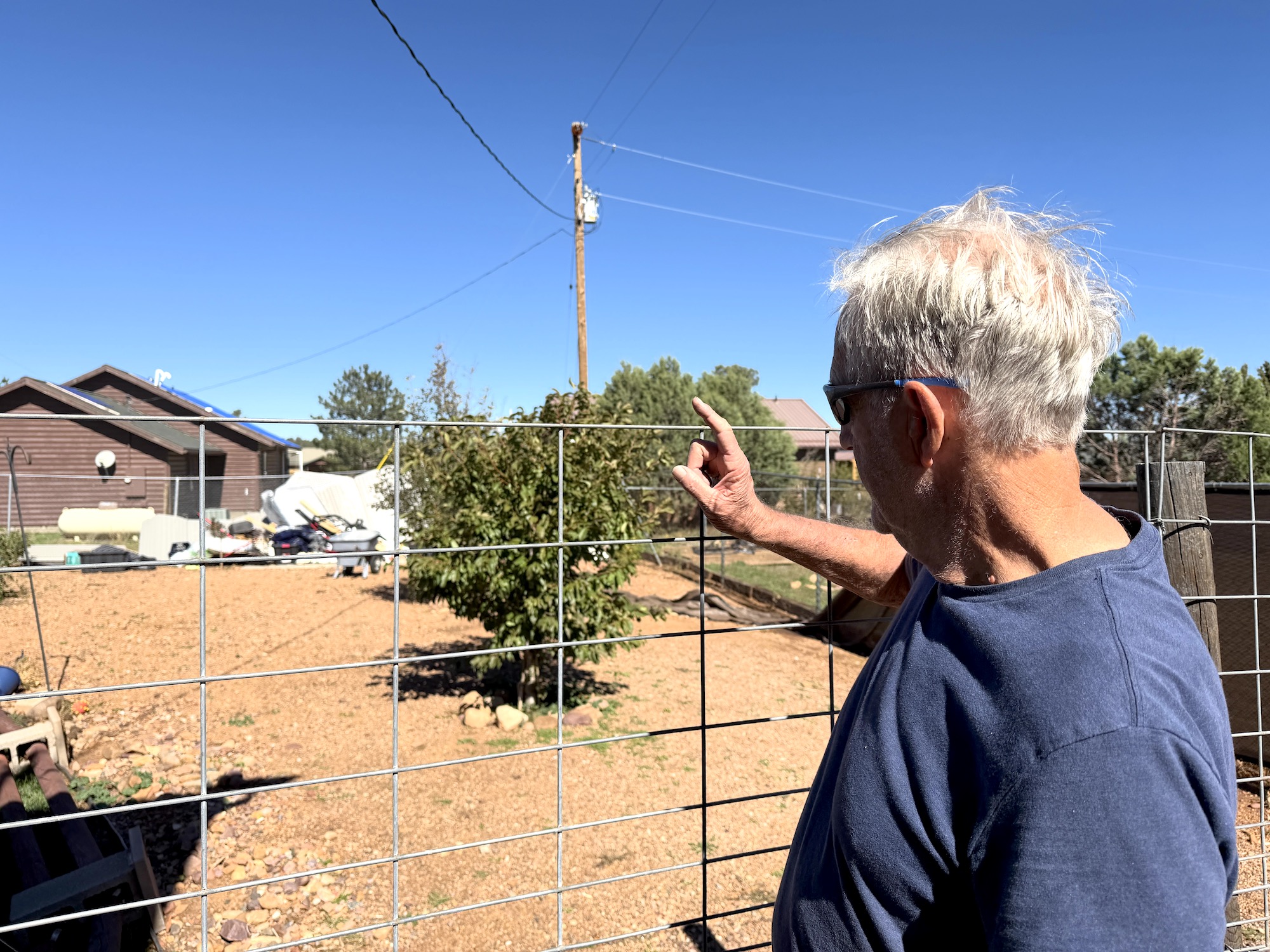 Eric Sorensen points to a collapsed backyard shed on his property in Heber-Overgaard, Ariz., on Oct. 27, 2026. (Allan Stein/The Epoch Times)
“It’s impressive, the power of the wind,” she said. “From the southwest to the northeast, it hit all these trees. That house back there—you can see there’s a shed. Yesterday, it was still leaning against the house.”
Kirchner said the tornado fell just short of EF-2 status as she pointed out affected areas on a map.
“We have gotten 20 requests for assistance. But there are many more than that,” she told The Epoch Times. “Our plan right now is to be here till Saturday.”
The group has been operating its command post from the church in the aftermath of the tornado.
On Oct. 21, Arizona state Rep. Walter Blackman, chairman of the House Government Committee, called on Arizona Gov. Katie Hobbs to declare a state of emergency for areas affected by the tornado.
“The people of Heber need immediate assistance. We have families without power, significant property damage, and at least one reported injury,” Blackman said in a statement.
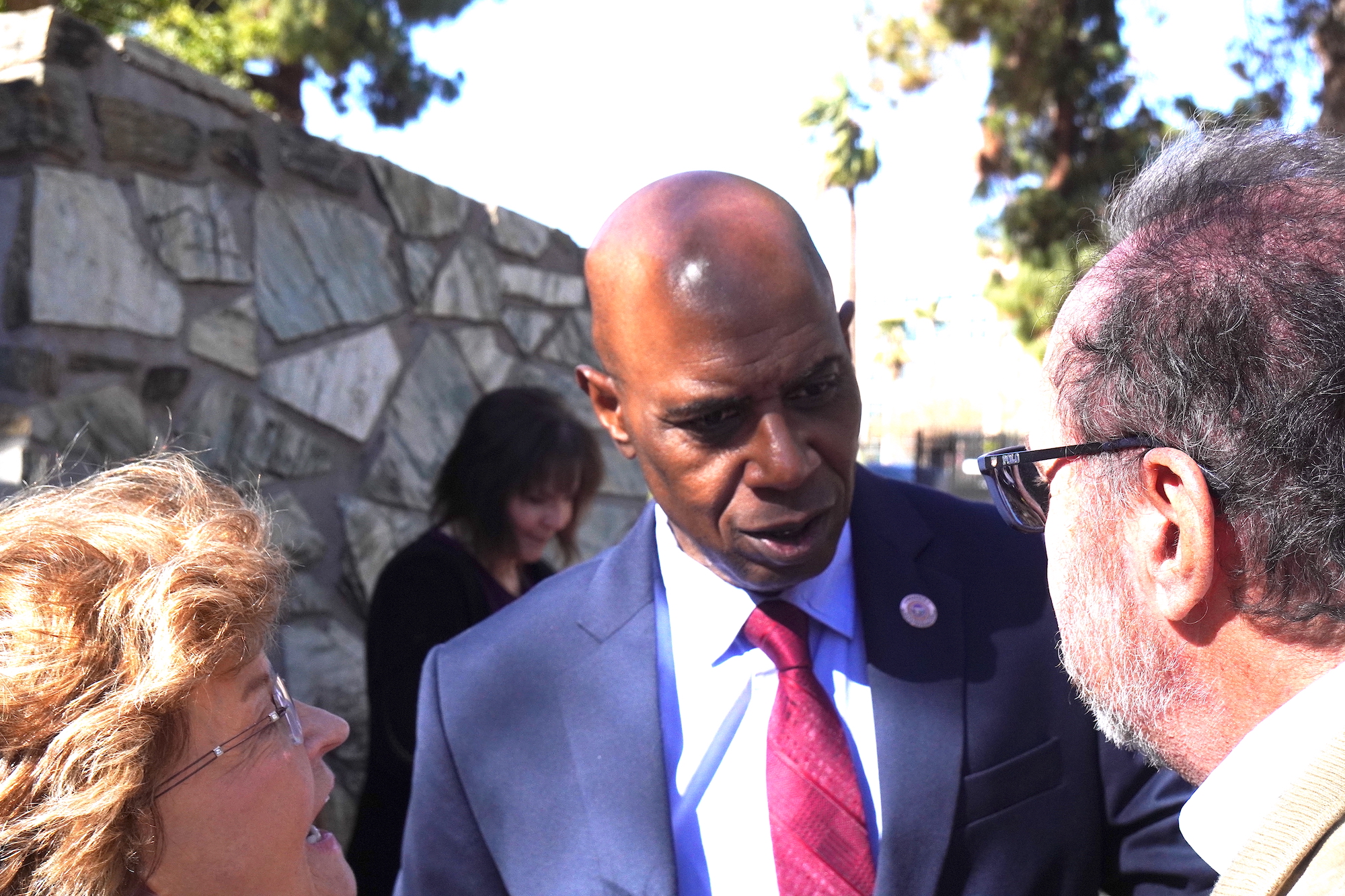 Republican Arizona Rep. Walter Blackman (C) speaks with a reporter outside the statehouse in Phoenix on Jan. 15, 2025. (Allan Stein/The Epoch Times)
In an email to The Epoch Times, Hobbs’s press secretary, Liliana Soto, said, “No decision has been made yet, assessments are underway, and the governor is getting regular updates.”
“Governor Hobbs is deeply grateful to the first responders who deployed swiftly to support the Heber-Overgaard community,” she said.
“At the Governor’s direction, state agencies are on the ground and working directly with local officials to keep residents safe and support a rapid recovery.”
Arizona’s Department of Emergency and Military Affairs activated its State Emergency Operations Center at Level 1 and deployed staff to assist emergency managers in Navajo and Greenlee counties, Soto said.
She said that state officials worked with local leaders to check on residents, survey damage, and assess recovery needs.
Emotional Toll
On Oct. 27, Eric Sorensen walked around his house, reviewing the damage from the tornado a week earlier.
 Arizona Gov. Katie Hobbs gives the State of the State address in the House of Representatives at the Capitol in Phoenix on Jan. 13, 2025. (Ross D. Franklin/AP Photo)
A few hundred yards away, a large storage shed lay nearly on its side.
“The amazing thing about a tornado is my garbage can is still there,” Eric Sorensen said. “It’s the strangest thing. There’s no rhyme or reason.”
Sandee Sorensen said she had been experiencing panic attacks and did not know when they would stop.
Hearing a tornado barreling toward you can be terrifying, especially in a state such as Arizona, where they’re uncommon, she said.
Her husband summed it up with a line from “The Wizard of Oz”: “We’re not in Kansas anymore.”
Correction: A previous version of this article misstated the time of the third confirmed tornado to strike Arizona and the name of the highway from which the tornado that struck south of Heber-Overgaard crossed over. The Epoch Times regrets the errors.