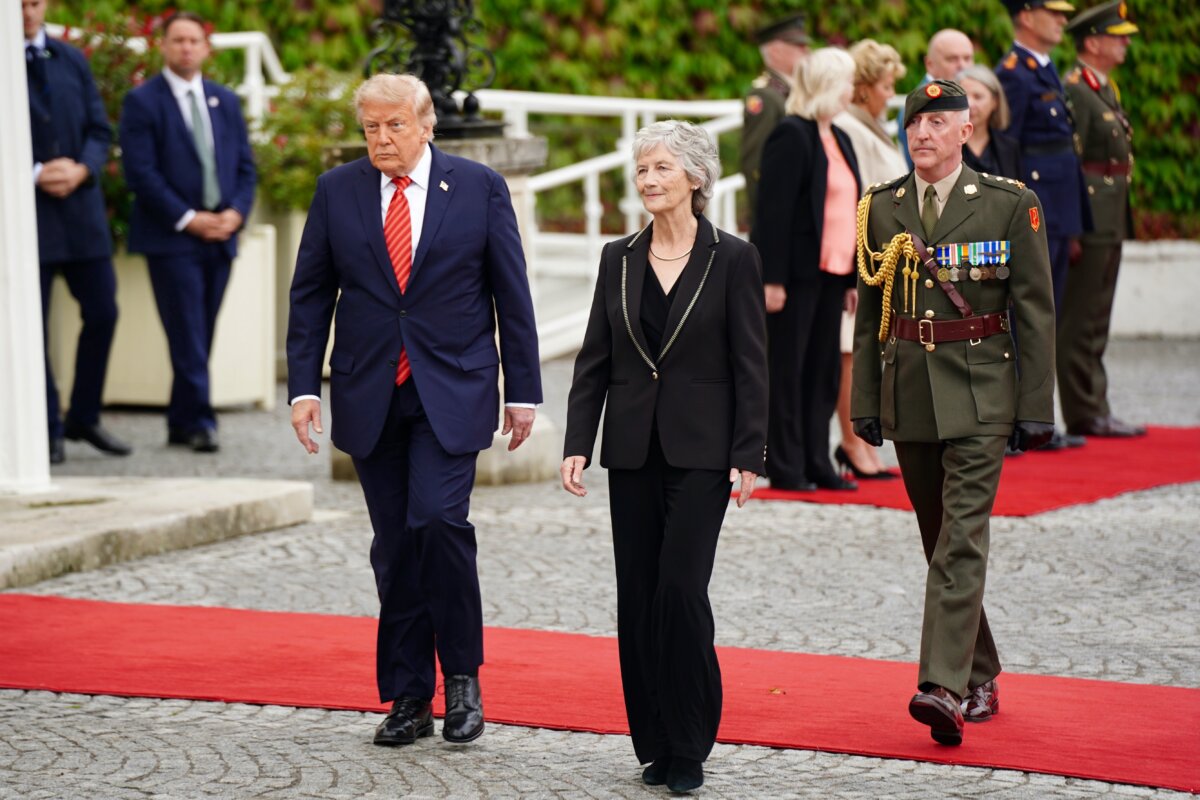

President Donald Trump suggested that a trade deal with Canada is expected to be secured “fairly soon” after negotiations collapsed in August.
“Canada wants to make a deal very bad,” Trump said on Sept. 12, after a bilateral meeting with Irish Prime Minister Micheál Martin in Dublin.
Trump’s remarks came in response to a reporter’s question about whether he was considering withdrawing from the United States–Mexico–Canada Agreement (USMCA).
“It’s a strange question to be asked over here,” Trump responded while sitting next to Martin in Ireland.
“No, we’re going to have a great relationship with Mexico. We actually have a good one with Canada, but the United States has been ripped off for 50 years by Canada.”
Trump said that Canada needed to “treat our farmers better” and stop charging large tariffs.
“They’re charging our farmers 400 percent tariffs and many other things, so when those things go away, [and] they’re willing to get rid of all of them, you’ll probably see a deal with Canada fairly soon,” he said.
Tariff battles between the neighboring countries intensified after negotiations fell through last month.
Both nations blamed the other for new demands that upended the talks.
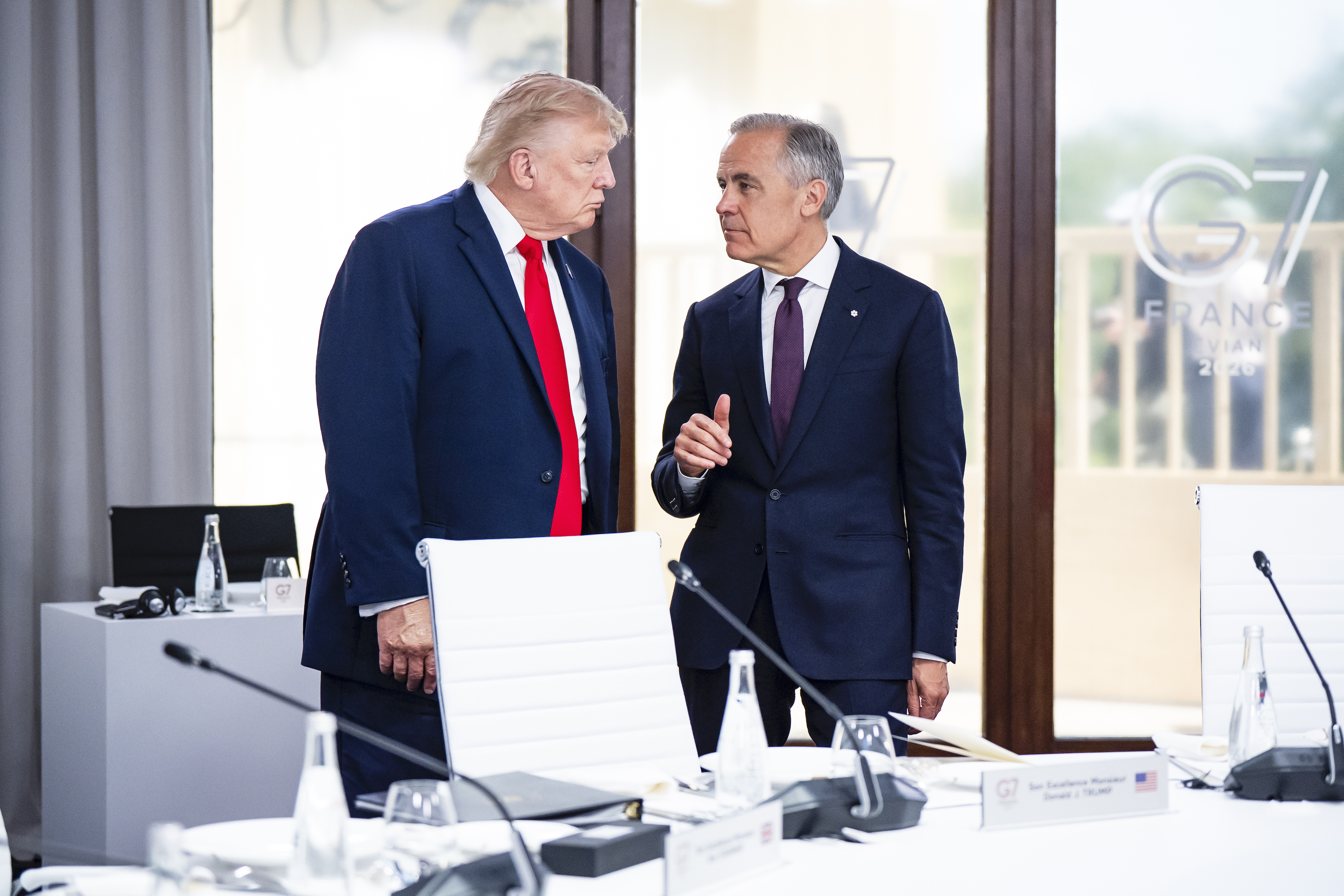 Canadian Prime Minister Mark Carney and President Donald Trump speak at the G7 working luncheon, during the G7 summit in Évian-les-Bains, France, on June 16, 2026. (The Canadian Press/Christopher Katsarov)
After trade negotiations hit a stopping point, Trump imposed 50 percent tariffs on Canadian goods such as hockey sticks and honey on Aug. 22.
Canadian Prime Minister Mark Carney responded hours later, announcing that his country planned to issue retaliatory dollar-for-dollar tariffs on American exports.
“Let me be clear: We take this step reluctantly, reluctantly because we recognize that some of these measures will raise costs and reduce choice for Canadians,” Carney said during a news conference on Aug. 22.
Canada’s tariffs are in effect for about 700 goods that legally qualify as U.S.-origin under USMCA marking rules.
During the initial round of trade talks, the United States stated that it had asked Canada to end “discriminatory” trade practices against American-made exports such as automobiles, alcohol, and dairy products in exchange for lowering the current tariffs.
Before the deal collapsed last month, Canadian provinces were preparing to restock U.S.-made alcohol, such as Kentucky bourbon, which has been in short supply since previous tariffs took effect in the spring of 2025.