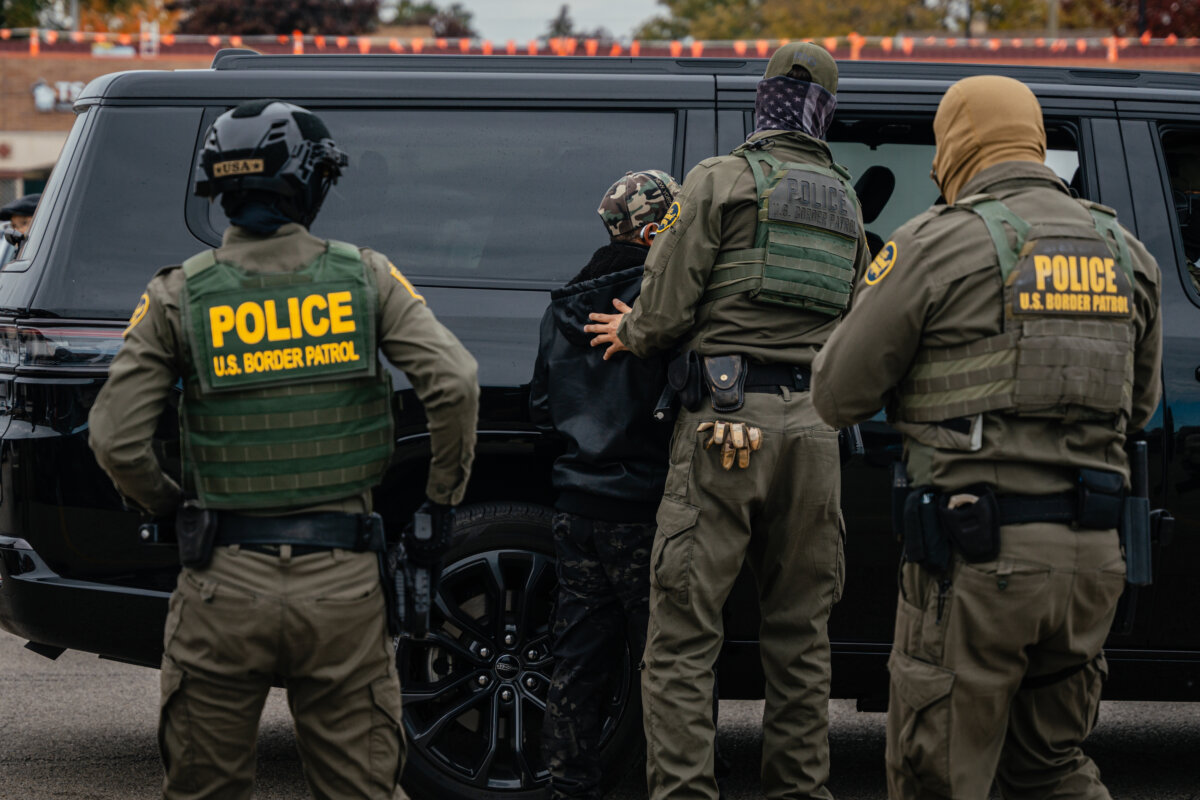

The head of Border Patrol’s operations in Chicago has said that agents will remain there “for years” as federal officials continue to target illegal immigrants in the city.
“If you think we’re done with Chicago, you’d better check yourself before you wreck yourself. Don’t call it a comeback; we’re gonna be here for years,” Gregory Bovino, the Border Patrol official, said in a post on X on Tuesday.
Starting in September, the Trump administration sent Border Patrol, Immigration and Customs Enforcement (ICE), and other agents to Chicago as part of a wide-ranging immigration crackdown in the city.
Bovino arrived in the Chicago area in September amid Operation Midway Blitz, which has yielded thousands of arrests. Bovino left Chicago in November to lead immigration operations in New Orleans and North Carolina. But earlier this month, Bovino returned to the Chicago area.
“As we said a month ago, we aren’t leaving Chicago and operations are ongoing,” Department of Homeland Security Assistant Secretary Tricia McLaughlin said in a statement at the time.
Earlier this week, Bovino also wrote that Border Patrol and other agents “are working hard in Chicago to identify and remove illegal aliens who violate our laws and pose a risk to our communities,” as he included a photo of a recently arrested illegal immigrant who had a number of criminal convictions.
The operation in Chicago has drawn pushback from local officials. Democratic Illinois Gov. JB Pritzker this month signed immigration-related legislation that his office says will protect “people and institutions that belong here in Illinois.”
The new law would bar immigration arrests at courthouses in the state and at other locations, according to his office.
Last week, the U.S. Department of Justice (DOJ) filed a lawsuit against Pritzker and Illinois Attorney General Kwame Raoul over the law, which the DOJ said would “threaten the safety of federal officers who have faced an unprecedented wave of harassment, doxxing, and even violence.”
“Threatening officers with ruinous liability and even punitive damages for executing federal law and for simply protecting their identities and their families also chills the enforcement of federal law and compromises sensitive law enforcement operations,” the DOJ said in a statement. “The danger is acute.”
Multiple lawsuits, meanwhile, have been filed against the Trump administration to halt its Chicago efforts. On Dec. 11, the 7th U.S. Circuit Court of Appeals reversed a lower court ruling that ordered the release of thousands of illegal immigrants who were detained in Chicago.
In his second term, President Donald Trump has made immigration enforcement and deportations a priority. Among other actions, he has signed a number of executive orders and memos placing more restrictions on illegal entry at the U.S.–Mexico border, implementing travel bans on certain countries, directing agencies to carry out enhanced vetting of visa applicants, and ending birthright citizenship, the last of which has been blocked by multiple courts.
The Department of Homeland Security (DHS), which oversees the two immigration agencies, stated on Dec. 19 that more than 4,500 illegal immigrants have been arrested since the Chicago operation was launched.
Overall, more than 2.5 million illegal immigrants have left the United States since Trump took over in January, according to DHS. That includes 622,000 who have been deported and around 1.9 million who left on a voluntary basis, the department stated.
The Associated Press contributed to this report.