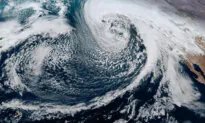

The National Hurricane Center announced its first named storm of the hurricane season this week, and it formed in the Pacific Ocean.
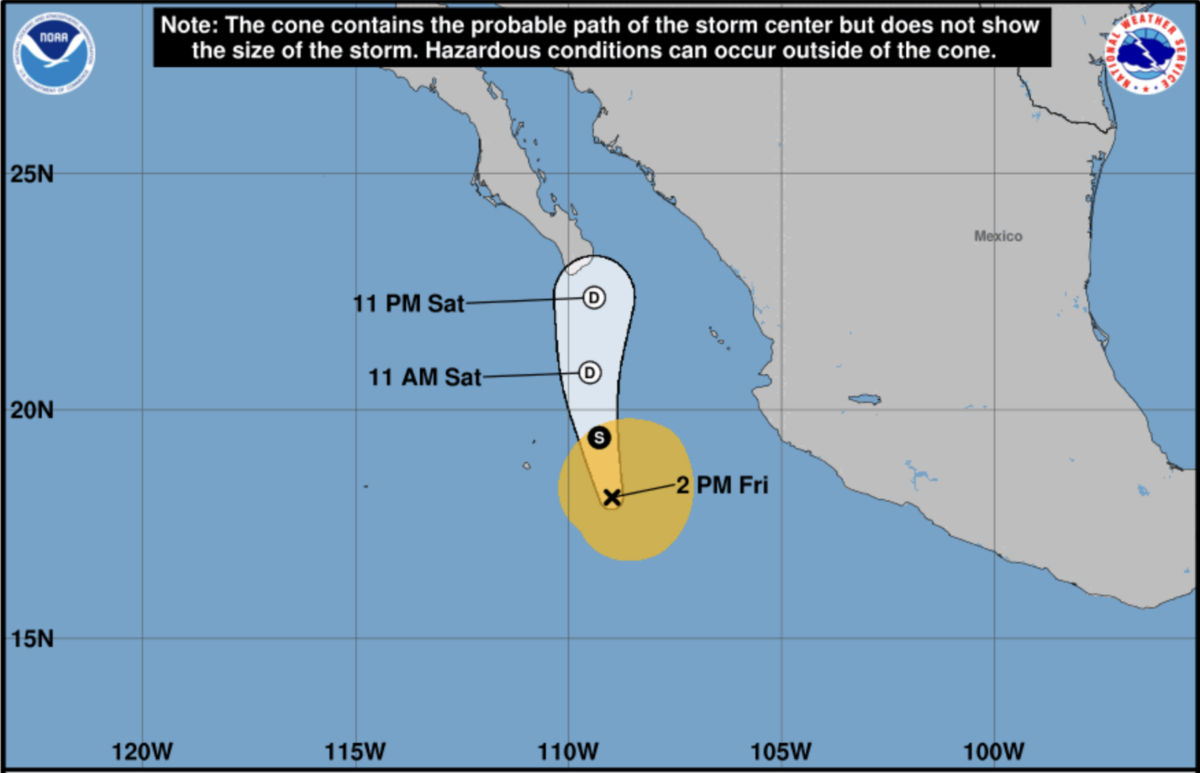
Tropical Storm Alvin was announced on May 29, spotted about 565 miles south-southeast of Mexico’s Baja California peninsula with maximum sustained winds of 60 mph and moving northwest at 12 mph.
By the evening of May 30, Alvin’s maximum sustained winds had decreased to 50 mph, and its north-northwest track slowed to 10 mph. No tropical storm watches or warnings are in effect for any part of Mexico, and it is expected to be demoted to a “remnant low” by May 31.
That being said, a tropical storm marine warning has been issued, and the National Hurricane Center’s afternoon advisory stated “large swell and rip currents possible across portions of western mainland Mexico and southern Baja California Peninsula through the weekend.”
Hurricane season begins in the eastern North Pacific earlier than the more active Atlantic hurricane season, starting on May 15 rather than June 1. Both seasons end on Nov. 30.
There has yet to be a named storm in the Atlantic Ocean or Gulf of America this year, with forecast models still showing no activity until after the first week of June as of 7:45 p.m. ET on May 30. The Atlantic hurricane season also has its own name list separate from the Pacific, and the first three to form are set to be called Andrea, Barry, and Chantal.
The National Oceanic and Atmospheric Administration (NOAA) forecast an “above average” hurricane season for 2025, with 13–19 named storms expected to form this year.
In order to earn a name, the storms have to be tropical cyclones of a defined form with maximum sustained winds of at least 39 mph, which would make it a tropical storm. Cyclones with winds of 74 mph or greater will be classified as hurricanes.
According to Ken Graham, director of NOAA’s National Weather Service, NOAA predicts six to 10 of those storms to reach hurricane strength, with three to five having a chance of becoming a major hurricane. Major hurricanes are rated Category 3 and higher, with maximum sustained winds reaching 111 mph or more.
The average North Atlantic season, according to Graham, sees seven hurricanes per year, with three reaching major hurricane status of Category 3 or above.
NOAA reported that the North Atlantic saw 18 named storms in 2024, of which 11 became hurricanes, and five of those became major hurricanes, including Helene and Milton.
Jacob Burg contributed to this report.