Commentary
I am a food-freedom maximalist.
That means I believe we have a right to grow, raise, harvest, prepare, eat, sell, barter, and trade food. Our forefathers could not have imagined Americans needing federal permission to feed themselves or exchange food with a neighbor. Producing and trading food were simply part of being alive.
I am a farmer, restaurateur, and small-business owner. I live where food, health, regulation, and survival meet, where we trade freedom for promises of safety or convenience.
I have been known to say that almost every time the government tells us something is for our safety, we should look closely for the freedom being removed.
That may sound extreme. You may think I have gone too far down the rabbit hole. But this is not hyperbole. We are literally losing rights that Americans once exercised without asking anyone’s permission.
Rights rarely disappear in one dramatic vote. First, a right becomes regulated. Then it requires an increasingly expensive permit. Eventually, something our grandparents did freely becomes illegal unless the government grants an exception. It is treated no longer as a right, but as a privilege that can be withdrawn.
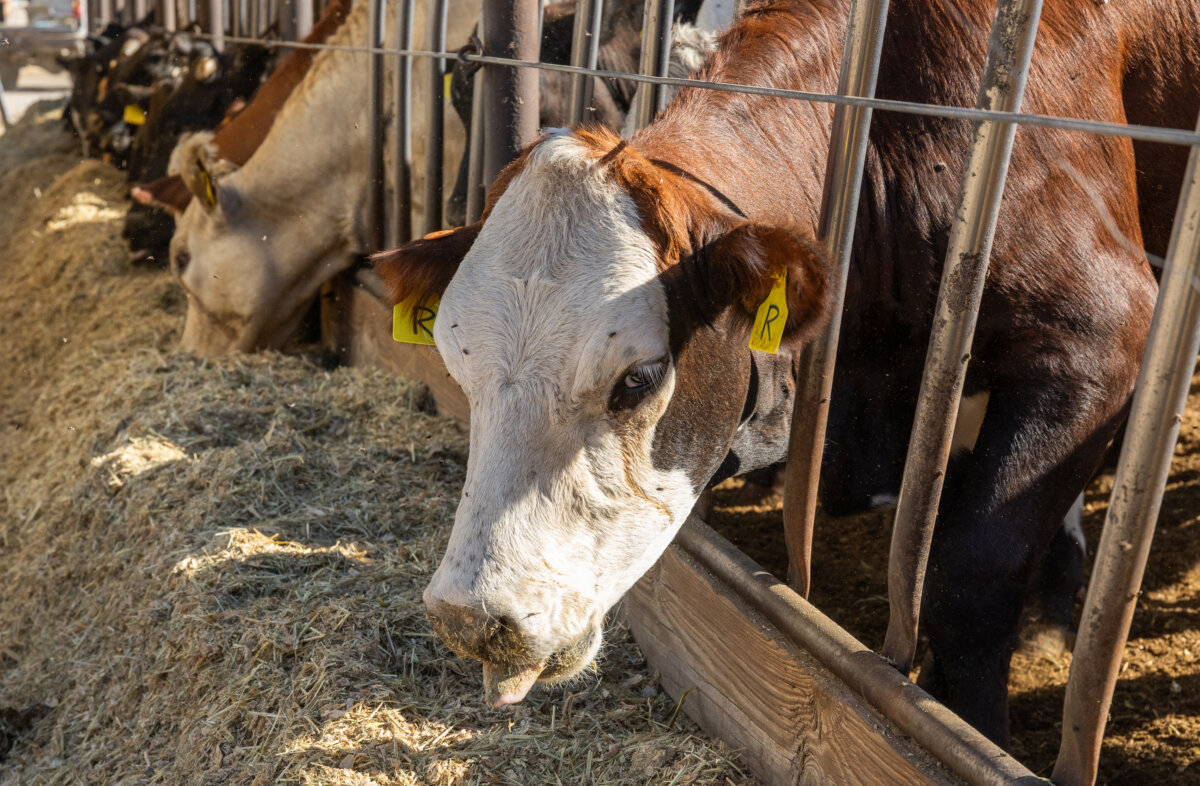
You might ask, “Mollie, do you really believe your husband should be able to butcher a cow and sell a piece of it to your neighbor?”
Yes, I do.
If my husband butchers a cow on our farm and another adult wants to buy that meat, the question is not whether the buyer knows us or trusts us personally. The question is about informed consent. If the buyer understands that the animal was slaughtered and processed on the farm rather than in a government-inspected facility, accepts that, and still wants the meat, that person has every right to buy it.
The government should not dictate which meat an informed adult may choose. Food freedom must include the right to sell, barter, and trade. Without that, only people capable of producing everything themselves are free. Farmers, butchers, bakers, cooks, and customers should be able to exchange food without federal permission for every transaction.
This does not mean sanitation and modern medicine have never saved lives. Clean water, refrigeration, antibiotics, and trauma care are real achievements. But rescuing people from immediate death is not the same as creating a healthy culture.
We are more obese, diabetic, metabolically ill, chronically sick, and dependent on medication than generations before us. We may be better at keeping sick people alive, but we are not healthier. We are more medically managed.
When will people want their food and health back in their own hands? Will we discover that we already surrendered the freedoms required to do it?
Two recent events show that this transfer of power is happening now.
The first involves Roundup, the weedkiller containing glyphosate. A Missouri man named John Durnell used Roundup for approximately 20 years and later developed non-Hodgkin lymphoma. He argued that Monsanto should have warned him about the alleged cancer risk. A Missouri jury agreed and awarded him $1.25 million.
In June, the Supreme Court reversed that decision 7–2. The Court did not decide whether glyphosate causes cancer. It decided who controls the warning label.
The court concluded that because the Environmental Protection Agency approved Roundup’s label without a cancer warning, Missouri could not use its law to require a different warning through a lawsuit. The federal government did not require a warning. Its failure to require one was then treated as a federal decision that a state could not contradict.
Federal pesticide law still allows states some authority over the sale and use of pesticides. But a state cannot demand a different label, and an injured person can no longer use a label-based failure-to-warn claim to accomplish the same thing.
One federal agency’s decision overruled a Missouri jury’s application of Missouri law to a Missouri citizen. Durnell had exercised a remedy under his state’s law and won. The federal system took it away. That is an actual loss of legal recourse, not a theory about something that might happen someday.
The second development is a congressional proposal called the FDA Review and Evaluation for Safe, Healthy, and Affordable Foods Act, shortened to the FRESH Act.
Parts of it sound beneficial, including reviewing chemicals already in our food supply and addressing contaminants in baby food. But near the end is a section called “National Uniformity and Preemption.” It says federal provisions would “supersede any and all State requirements or prohibitions” concerning the use, labeling, sale, or marketing of food and a sweeping range of substances in it.
“Any and all” is not cautious language. Congress is openly describing the state authority it intends to erase.
Imagine that the Food and Drug Administration (FDA) accepts a chemical for use in food. Years later, Texas examines new evidence and decides that the chemical should not be used in food sold in the state. A manufacturer could argue that Texas has created a requirement that differs from the federal standard and that federal law, therefore, preempts it.
The FDA might never have considered the same evidence Texas considered. There might be no meaningful federal protection to replace the state law. Yet federal silence could become federal permission, and federal permission could become an order that the states remain silent, too.
Supporters call this national uniformity. Manufacturers do not want 50 formulas and labels. But there is an enormous difference between a federal minimum and a federal maximum.
A minimum says every state must provide at least this much protection. A maximum says no state may decide differently or provide more. One leaves room for states to govern. The other turns them into regional offices of the federal government.
Centralization is also convenient for large corporations. Instead of answering to 50 legislatures, state regulators, local communities, judges, and juries, a corporation may need only one favorable decision in Washington. One centralized regulator creates one centralized point of capture.
We do not have to agree about glyphosate or believe every state law is wise to recognize the danger. States can be wrong. Juries can be wrong. Federal agencies can also be wrong. Federalism prevents one government’s mistake or one captured agency from becoming the only permitted answer for the entire country.
Members of Congress swear to uphold the Constitution, yet many who campaign on states’ rights embrace federal power when their party controls Washington. When the other party holds it, they condemn federal overreach. When their side holds it, they call it “national uniformity.”
The machinery never shrinks. Only the driver changes.
We are not merely in danger of losing food freedom. We continue to lose it, law by law, ruling by ruling, permit by permit. Each loss is presented as narrow, technical, reasonable, and safe. Only when we step back can we see what is disappearing.
But remembering changes what is possible.
When we remember that food comes from soil, animals, rain, human hands, and God—not from government—we can begin rebuilding. A neighbor can know her farmer. A community can support its butcher, baker, dairy, restaurant, and farm stand. States can defend direct sales and cottage kitchens. Families can learn again to grow, preserve, cook, and trade food.
Healthy, nutrient-dense local food may be essential to recovering our health, communities, and independence.
We should not wait until we are desperate to feed ourselves differently to discover that we surrendered the right to do it. We must remember now, while there is still enough freedom left to rebuild.
Views expressed in this article are the opinions of the author and do not necessarily reflect the views of The Epoch Times.