
Commentary
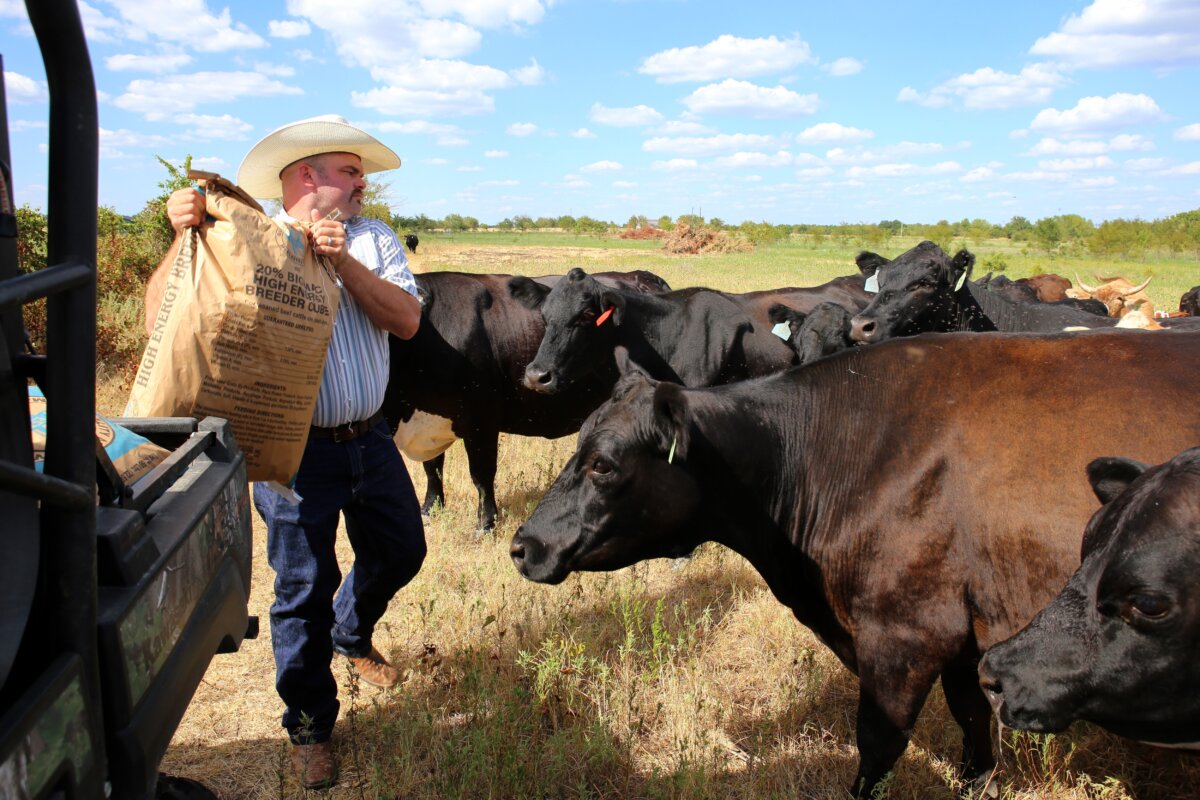
My husband could walk into one of our pastures in Texas this afternoon, harvest one of our hogs, gut and clean it, break the carcass down, slow-roast the pork in our oven, shred several hundred pounds of it, put it in our freezers, and feed our family from that animal for months.
Perfectly legal.
What he cannot do is sell that pork to you.
We could instead take that same hog to a custom slaughterhouse, where professional butchers could slaughter it, process it, wrap it beautifully, and hand it back to us.
We still couldn’t sell it to you.
The packages would be marked “Not for Sale.”
So when President Donald Trump announced that he was making it easier for farmers and ranchers to process and sell meat from our own operations, I wanted to celebrate.
Then I looked at what actually changed.
My husband can still harvest our hog. We can still eat it. A custom butcher can still process it for us.
And we still cannot sell that custom-exempt meat to you.
The announcement changed none of that today.
That doesn’t mean that the executive action is meaningless. The administration is directing the USDA to expand local processing opportunities and reduce obstacles facing smaller processors. Those efforts may eventually be useful.
But that is considerably different from the sweeping freedom the announcement seemed to promise.
I Already Use a Small USDA Processor
The slaughterhouse I use demonstrates how strange the existing system can be.
It isn’t one of the giant meatpackers. It is a small local facility. Some days, it operates under the custom exemption. On other days, a Department of Agriculture (USDA) inspector is there, and animals are processed under federal inspection.
When my cattle go through federal inspection, I can sell that meat commercially, including across state lines.
When an animal goes through the same small facility under the custom exemption, the resulting meat is “Not for Sale.”
Texas provides another option that is important to acknowledge. We have a state meat-inspection program. Meat slaughtered under Texas inspection can be sold commercially within Texas. I don’t generally use those processors because the small federally inspected facility I use is more convenient to my ranch.
So the choice is not simply between giant meatpackers and nothing.
The real question is why states cannot have greater authority to allow meat from custom facilities to be sold within their own borders.
Do We Need an Inspector Standing in Every Small Facility?
Federal meat inspection involves considerably more than watching an animal being killed. There are ante-mortem and post-mortem inspections, sanitation requirements, humane-slaughter oversight, and other responsibilities.
But I have personally watched a USDA inspector sitting in a room monitoring the kill floor through closed-circuit television.
I am not suggesting that every inspector operates that way or that watching a screen represents the entirety of federal inspection.
But watching it made me wonder.
If portions of the job can be performed by watching a camera, could one inspector someday monitor portions of the operations at five or more small slaughterhouses?
Do we really need to structure small-scale meat processing around having an inspector physically stationed at every facility during inspected slaughter?
These questions matter because small processors struggle to survive while enormous packing companies can spread compliance costs across thousands of animals.
Then we complain that meatpacking is consolidated.
We have built a system in which regulatory compliance becomes easier with scale, and then we seem surprised when the industry becomes enormous.
Someone Has Been Trying to Change This for 11 Years
There is another reason I am frustrated by this week’s announcement.
Congress already has a pathway aimed much more directly at this problem.
Reps. Thomas Massie (R-Ky.) and Chellie Pingree (D-Maine) first introduced the Processing Revival and Intrastate Meat Exemption Act—the PRIME Act—in 2015.
Versions have been introduced repeatedly ever since.
The concept is straightforward: Give states greater freedom to permit meat processed through qualifying custom slaughter facilities to be sold within their own borders.
Massie is currently persona non grata in parts of Washington.
That shouldn’t matter.
We can disagree with Massie’s politics. We can disagree with him about any number of things. But we cannot ignore that he is also a cattle producer.
Perhaps someone who actually raises cattle has a deeper understanding of certain bottlenecks in our food system than many of the people writing agricultural policy in Washington.
And Massie appears to have understood something for more than a decade that is getting lost in this week’s headlines: Congress has to change the law.
The Federal Meat Inspection Act is a statute. A president can direct the USDA to administer programs differently within the authority Congress has given it.
But ultimately, Congress changes statutes.
Massie has been carrying this particular torch since 2015.
And after more than a decade, a PRIME Act pilot has finally been included in the Farm Bill passed by the House this year. Under that pilot, a state could apply to allow participating custom-exempt facilities to sell meat directly to people within that state.
That is much closer to the freedom I thought was being announced this week.
Let Texas Decide for Texas
Texas already allows Texas-inspected meat to be sold to Texans.
So why shouldn’t Texas have greater authority to decide whether meat processed through custom facilities can also be sold to Texans?
Texas has more than 30 million people. I don’t need access to every grocery store in America to build a viable regional food economy.
A farmer in California has nearly 40 million potential customers without crossing a state line. New York has roughly 20 million.
If a hog is born in Texas, raised in Texas, slaughtered in Texas, processed in Texas, sold by a Texas farmer, and purchased by a Texan, why shouldn’t Texas determine whether that transaction is legal?
That is a states’ rights question worth having.
Why Now?
The timing of the president’s announcement also cannot be separated from what is happening in the cattle market.
The American cattle herd is at its lowest level in decades, beef prices are historically high, and the administration recently expanded access to hundreds of thousands of metric tons of lower-tariff imported beef.
Many American cattle producers are furious.
High cattle prices hurt consumers. But they also send a signal to ranchers: retain your heifers. Rebuild.
Those heifers become cows. Those cows produce calves. Supply eventually increases.
That takes years.
If the government responds to high prices by increasing foreign supply and pushing prices downward, it risks weakening the very market signal encouraging American ranchers to rebuild the domestic herd.
Against that backdrop, promising farmers greater freedom to process and sell our own meat sounds fantastic.
But farmers need structural change, not simply a response to the frustration of the moment.
Pass the Law
I want the president’s promise to be real.
I want more local slaughterhouses. I want farmers to have more choices. I want people to be able to buy meat directly from the people who raised it. I want an American cattle industry strong enough that when beef becomes scarce, our instinct is to rebuild American production rather than increase our dependence on foreign supply.
But the legal restriction at the center of this problem was created by Congress.
Congress can change it.
If Washington now agrees that American farmers should have greater freedom to process and sell the animals we raise, the pathway is already sitting in front of Congress.
Farmers don’t need another promise.
Pass the law.
Views expressed in this article are the opinions of the author and do not necessarily reflect the views of The Epoch Times.