SEARCH


Commentary
On Nov. 11, Canadians will pause as our governor general, politicians, military personnel, and service families gather in Ottawa for a ceremony of national remembrance. They will assemble in Confederation Square by the giant monument known as “The Great Response of Canada,” which depicts in bronze 22 figures representing every branch of the Armed Forces that served in the Great War—infantry, fliers, nurses, cavalrymen, sappers, sailors, artillerymen, stretcher-bearers, and so on, marching through an arch topped by two winged bronze figures symbolizing Peace and Freedom.
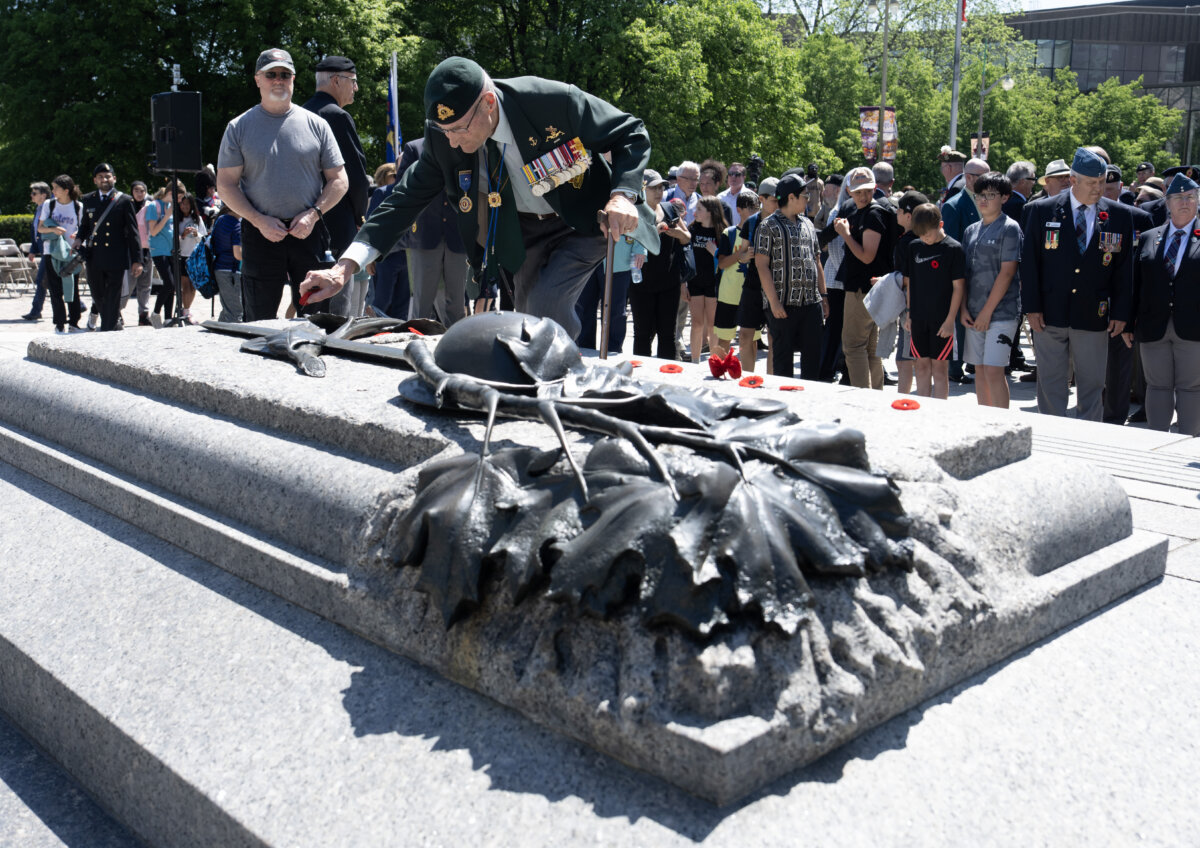
In front of the monument stands a low granite sarcophagus with a sculpted bronze lid. This is the Tomb of the Unknown Soldier.
Over the centuries, many nations have raised monuments celebrating military victories and honouring those who fell in battle, but it was only after the horrendous slaughter of World War I that countries thought to memorialize the unidentified dead. Such was the destructive power of modern weaponry that after a battle was over, hundreds of thousands of bodies could not be found or assigned to a name. Of the 66,000 Canadian soldiers who perished on the Western Front, the remains of almost 13,000 were never recovered while another 6,846 corpses were not identified and were buried under a marker that read only “A Canadian Soldier of the Great War – Known Unto God.”
In Britain and France, countless families were left not knowing where the bodies of their sons, husbands, fathers, or brothers lay. To assuage this grief and honour those who had no individual grave marker, governments decided to choose the remains of a single warrior who would stand for all the rest of his comrades.
In order to allow every bereft family to believe that it was possibly their loved one who was so honoured, great care was taken to make the choice of the dead soldier as random as possible. Bodies were exhumed from a wide range of battlefields and lay concealed before the selections were made on Nov. 11, 1920. The choice of a British soldier was made privately by a ranking officer, but in France the duty was given to a young soldier, a war orphan whose father had been killed at Verdun. The chosen bodies were then laid in a special resting place: in Britain, in Westminster Abbey and in France, under the Arc de Triomphe.
Other countries followed this lead. An American veteran picked his country’s unknown soldier to be buried in Arlington National Cemetery (additional ceremonies were held later in the 20th century for the unidentified dead of World War II, Korea, and Vietnam). In Romania, 10 bodies were placed in oak coffins and the choice was made by a 12-year-old boy whose father had died in the war. He gazed at the array before he knelt before the fourth coffin saying, “This is my father.” In Poland and Italy, selection was made by mothers of missing soldiers.
Canadian governments had long believed that the Unknown Soldier in Westminster Abbey represented all the dead of the British Commonwealth and that there was no need for a tomb of our own. That changed under pressure from the Royal Canadian Legion, a veterans’ organization, prompted by the experience of retired RCAF general Duane Daly. In 1966, Daly had been deeply moved when visiting the lone grave of a fallen Canadian soldier from the Boer War in South Africa. Contacts were made with the military and the Department of Veterans Affairs. The Legion made it their millennium project, and sufficient funding was made available to pay for exhumation and transport of the body and the construction of the tomb.
It was decided that the body be chosen from the 1,603 unidentified Canadians buried near Vimy, the site of the quintessential battle of 1917. On May 25, 2000, the remains were flown from France to Ottawa accompanied by an honour guard. They lay in state for three days in the Hall of Honour in Parliament’s Centre Block, after which they were interred in a silver maple casket inside the tomb at the National War Memorial. Before it was sealed, members of the Canadian Legion placed a handful of soil from each of Canada’s provinces and territories, as well as from the soldier’s former grave site.
Made from the same granite as the War Memorial, the tomb is adorned with a sword, a helmet of the type worn in the Great War, and branches of laurel and maple leaves cast in bronze. It is watched over by members of Canada’s Ceremonial Guard, drawn from every branch of the armed services. Every Nov. 11, the tomb is the focal point of the ceremonies held for Remembrance Day.
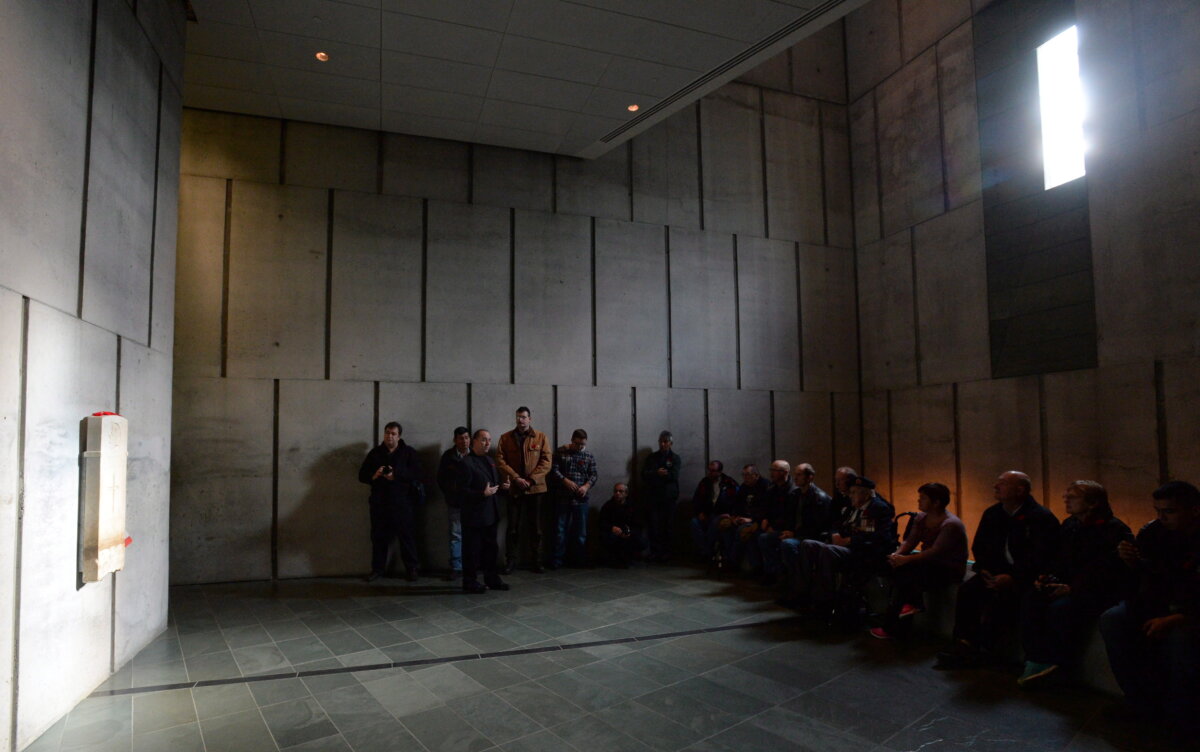
A further token of memory for our unknown dead may be found in the Canadian War Museum’s Memorial Hall. The hall is so designed that once a year—at 11:00 a.m. every Nov. 11—sunlight will frame the tombstone that once stood over the body of the Unknown Soldier.
Views expressed in this article are the opinions of the author and do not necessarily reflect the views of The Epoch Times.