Commentary
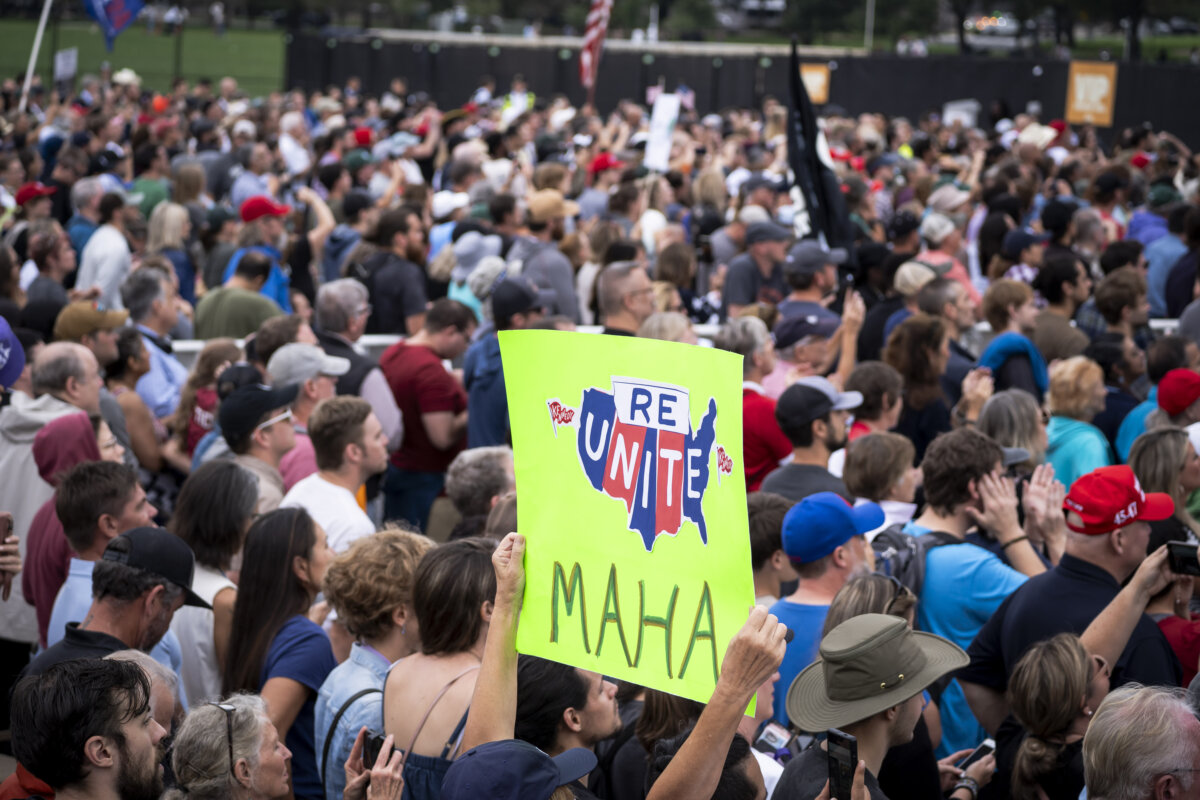
We are at the two-year anniversary of the most exciting coalition to disrupt American politics in the entire postwar period. It is called MAHA for Make America Healthy Again. It was born of a brave decision by Robert F. Kennedy, Jr., to abandon his independent bid for president and team up with Trump to win the 2024 election. Upon inauguration, Kennedy was appointed and confirmed as Secretary of Health and Human Services.
The slogan MAHA was a parallel to MAGA with a different set of concerns, most of which grew out of the pandemic period. Americans had been treated brutally in that period that began March 2020 with censorship, stay-at-home orders, business and school closures, and unrelenting media propaganda that made it feel as if the world was on fire. This was followed by the release of an inoculation that proved dangerous and even deadly.
In 2024, to speak of the issue of health involved a huge range of concerns beyond physical health. The MAHA coalition sought answers as to why and how this calamity came to be and how to fix the system so that nothing like that could ever happen again.
And yet there was so much else going on. The problem of public health and pharmaceuticals turned over a rock. What about medicine more generally? What about agriculture and the food problem? There were separate movements on these subjects that had grown in cultural niches for decades but had never found voice independently. Together they could make a difference.
Health also pertains to mental health. Americans have a psych drug issue. Students had long been drugged for misbehavior and the pandemic period drove many to use telehealth where anti-depressants were prescribed for dealing with the trauma of the period. That was not the only substance abuse problem: weed and liquor consumption soared as those stores were kept open even as churches and coffee shops were closed.
MAHA came to power with a wind of expectation that was going to be impossible to satisfy. The problems that led to the calamity and the massive problem with chronic disease and addiction were so deep and intractable that it would take more than a few appointments to solve them. The food problem is another massive issue, with industry capture in all directions.
There was a further issue about which I had been warned early on. All the structures of Washington are built to withstand onslaught by a new partisan push. They are implacable, intractable, and impenetrable. It takes heroic work even to move a bureaucracy by a centimeter, while Congress never has an interest in reforms that would disturb the special interests that fund election campaigns.
Then there is the problem of the judiciary. Any misstep in executive agencies will trigger litigation that ends in court judgment. Legal logjams can last years. Even a judgment that favors the defense on appeal achieves the plaintiff’s goal of delaying until the right forces can come together to apply pressure in the other direction.
MAHA confronted all this immediately when it came to power. There was simply no way that its achievements could match the hopes, especially with some people in the White House (technically the boss) who did not fully share the values and goals of the MAHA agenda. Indeed, there were powerful people there who worked to block progress.
All of this makes for exciting drama. Robert Malone, a scientist at the center of so many of the debates and so much of the action, along with his scientist wife, has offered the first draft of a history: “Chronic Rebellion: History of the MAHA Movement” (Brownstone Institute, 2026). It is a balanced but unvarnished look that names names. Using a scalpel rather than a sword, the Malones provide a fair judgment on what has been achieved and what has been left on the table.
One of the greatest achievements pertains not to vaccines, as was the administration’s mandate, but to another important realm, dietary recommendations. RFK literally flipped the pyramid to put proteins up top and deprioritized carbohydrates and sugars. This is no small matter. Generations developed chronic disease from poor diet in the 50 years since the original guidelines came out. The culture has been changed, and we see this in the marketing results too.
That is a big achievement. In the realm of pharmaceuticals, and vaccines in particular, there has been far less progress. RFK took on some structural issues related to approvals and did so in a bold way. But myriad factors collided to block fundamental changes. The committees controlling vaccine approvals were slammed with lawsuits and faced down a ghastly media assault. No agency head has been powerful enough to stop the industrial juggernaut. The FDA in particular has proven to be a huge problem. In short, no commissioner who confronts industrial power can keep the job.
All that said, the experience of MAHA in Washington has made the movement at the grassroots far more impassioned and realistic about the odds. We’ve learned that there is no white knight who can save us, and realized that the structures that are responsible for creating one of the sickest nations on earth are more powerful than we ever imagined.
This has created a realism that can only benefit the movement in the long run. We now have a nationwide network of supper clubs, dozens or even hundreds of new books, a social and cultural infrastructure of influence that did not even exist before. MAHA as a brand has an expiration date, and the Malones are already speaking about it in the past tense. But as a cause, as a consciousness, MAHA has made its mark and shows every promise of having durable power.
Just for example, candidates from both parties have been called on to address these growing concerns over Big Pharma and Big Ag. They are popular concerns, all unleashed and given energy by the COVID experience. No one in Washington wants to talk about that experience but the American people were traumatized by it and it created a genuine political realignment backed by a powerful and sustainable social and cultural movement. In the short term it has been met with frustration; long term, it is another matter entirely. MAHA has failed more than it has succeeded but also gained more in the way of progress than any such new movement in modern history.
Let me add a final late-breaking point here. Robert F. Kennedy, Jr., has released a magnificent new website with millions of documents for the public to examine, covering a huge trove of material once secret. This is a huge innovation in public affairs, one that might be without precedent. It’s going to take me months if not years to read through it. This is an indispensable resource for understanding the fullness of much that has gone wrong over the last years and decades.
There is always more to do of course but remember that these concerns go to the very core of what it means to live a good life. For that reason, MAHA’s durability is assured.
Views expressed in this article are the opinions of the author and do not necessarily reflect the views of The Epoch Times.