
Commentary
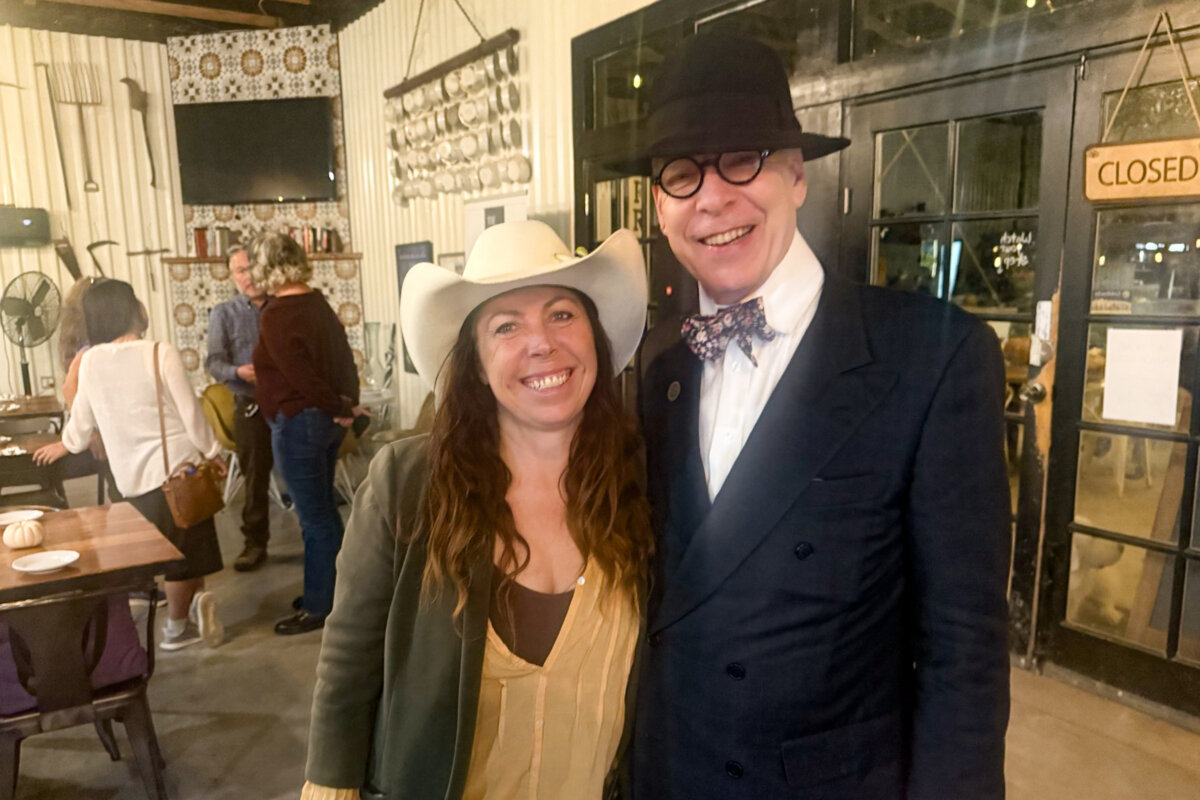
Friday night at Sovereignty Ranch was the Brownstone Supper Club, but this was no ordinary supper club. Brownstone Institute founder Jeffrey Tucker was coming, and 73 people had bought tickets.
We had been preparing the food for days. The menu included Oaxacan green corn tortillas with ranch chicken, beef, or pork; roasted and smashed pumpkins; purple sweet potatoes; and taco toppings including guacamole, pico de gallo, salsa verde, farm-fresh cheese with cilantro and lime, and cabbage slaw. We also served Mexican-style black beans and white rice tossed with Himalayan crystal salt, lime, and cilantro from the ranch.
The vast majority of the meal came from this property. My husband spent hours on Thursday processing a hog and 30 chickens. Miguel and Jonny, who work on the farm, dug the purple sweet potatoes. We roasted pumpkins, chopped greenhouse jalapeños for pico de gallo, and grilled green tomatoes, onions, and jalapeños for salsa verde.
Everything except the rice and beans came from the ranch.
Another important arrival made it to the restaurant patio just in time for Tucker’s visit: a massive metal artwork created by welder and sculptor Jen Loree. The piece bears an American flag and the words “Join the Resistance.”
It was commissioned for the “Defeat the Mandates: An American Homecoming” protest in Washington, D.C., on Jan. 23, 2022, but it never made it there. Later, it was supposed to become a backdrop for the “Alex Jones” show. I’m not sure what happened with that plan, but Mikki Willis eventually called my brother Ryland to ask if he wanted it.
After missing a protest, passing through several proposed destinations and briefly stranding a box truck, the artwork finally arrived on our patio. Its timing seemed fitting. Tucker was one of the original voices pushing back against vaccine mandates and lockdowns. Now, Loree’s flag declaring “Join the Resistance” was waiting for him.
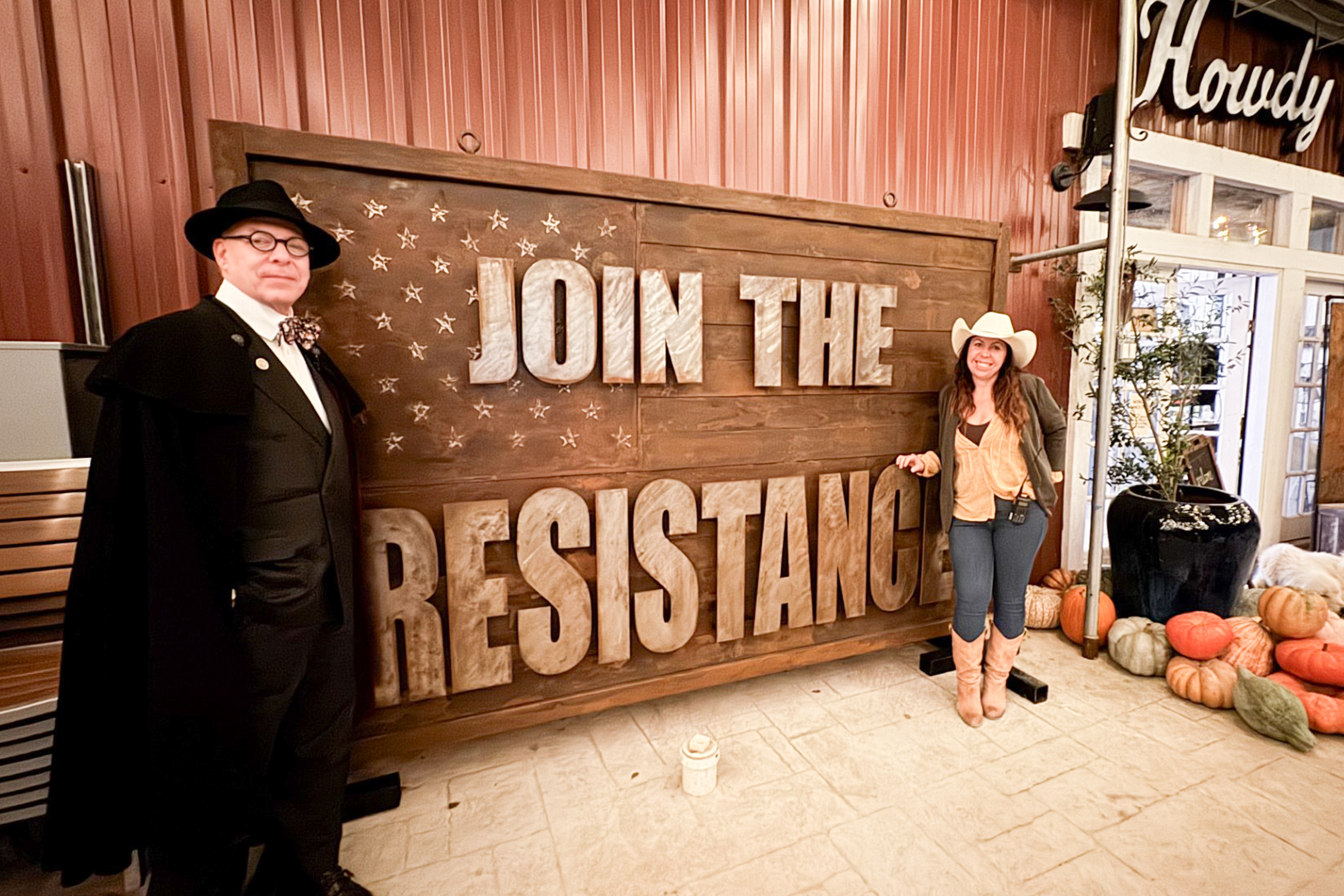 Brownstone Institute founder Jeffrey Tucker and Sovereignty Ranch owner Mollie Engelhart pose in front of the metal sculpture “JOIN THE RESISTANCE” at the Brownstone Supper Club event in Texas on Nov. 20, 2026. (Courtesy of Mollie Engelhart)
It was a revealing moment. We depend so heavily on these small devices that the mere thought of a phone failing stresses us out. Everything else had to stop until it was restored.
The phone restarted just in time for the farm tour. Tucker hurried across the parking lot, jumped aboard, and finally relaxed.
About 20 people joined us. We walked through the greenhouses and rode around the ranch to see the baby pigs, cows, goats, and sheep. We discussed regenerative agriculture and tasted spilanthes, also called toothache plant or buzz buttons. The plant is good medicine, but it is also a fun party trick. It makes your mouth numb and tingly, almost as if pop rocks are exploding on your tongue.
Tucker was fascinated. “This is fun,” he said.
When we returned to the restaurant, more guests had arrived. People were ordering cocktails, visiting and talking. The energy was high, and the excitement was palpable. If I had a dollar for every person who told me, “You and Jeffrey are my favorites at The Epoch Times,” I would have a lot of dollars.
We usually serve supper club meals family-style, but with 73 guests, we chose a buffet. Everyone filled their plates and settled in. Tucker apologized for interrupting the good conversation, then gave a talk that was heartfelt, funny, provocative, informative, and emotional.
He spoke about Brownstone Institute’s work publishing the Fauci diaries in three fully indexed volumes. Reading and publishing that material required a willingness to examine decisions many people would prefer to forget.
He also discussed “Cries for Help,” a collection of accounts submitted to the CDC’s V-safe monitoring system by people reporting injuries after receiving COVID vaccines. Tucker planned to read every account aloud on X before the end of the year. After about 10 hours, however, the emotional weight became too much, and he had to pause.
Being willing to confront harm is one thing. Allowing yourself to feel the suffering behind every account is another. Each entry represents a human being whose health, family, livelihood, or future was changed. There is bravery in publishing material others would rather ignore. There is another kind of bravery in sitting with the human pain it contains.
This was the second time Tucker and I had shared a farm. Earlier this year, we were together at Polyface Farm for the Brownstone retreat, which I wrote about at the time.
Our friendship is new, but close. We tell each other the truth. We count on each other. We are grateful for the blessings associated with our shared passion and our ability to make a living telling stories about what matters to us.
At one point, Tucker put his arm around me and said, “Aren’t we the city mouse and the country mouse?”
He also mentioned that he recently realized his new book was not really written for country people. His life is very different from mine. He moves through a world of cities, institutions, publishing, and public debate. My daily life revolves around livestock, soil, weather, crops, food, and the physical demands of keeping a farm alive.
Yet people resonate with both of us. Our experiences could hardly be more different, but we approach many of the same questions from opposite ends of the road. Tucker follows ideas through the institutions that shape public life. I follow those ideas until they reach the soil, the kitchen, the family, and the farm.
In Aesop’s fable, a country mouse visits his city cousin and is presented with a luxurious feast. But danger repeatedly interrupts the meal. The country mouse decides that simple food enjoyed in peace is better than abundance accompanied by fear.
Our supper club offered a different version of the story. The country had prepared its own magnificent feast, grown, raised, and cooked almost entirely on the land where it was served. Our city mouse seemed perfectly happy to be there.
Tucker loves bitters and asked whether I could make him wormwood bitters. I told him I already had homemade bitters, and he took a dropper bottle for his holiday cocktails.
Unfortunately, the body butter did not survive his return trip. Tucker forgot that the container exceeded the TSA liquid limit and had to throw it away at airport security. Even the city mouse had trouble transporting the abundance of the country back to the city.
The old fable asks us to choose between the abundance of the city and the peace of the country. But that distinction overlooks something essential: much of the abundance enjoyed in cities comes from the country. It must first be grown, raised, cultivated, harvested, and cared for somewhere.
The city and the country produce different lives and different stories, but each needs the other. Perhaps that is why people recognize something true in both Tucker and me. The city mouse and the country mouse may inhabit different worlds, but they still belong at the same table.
Views expressed in this article are the opinions of the author and do not necessarily reflect the views of The Epoch Times.