Commentary
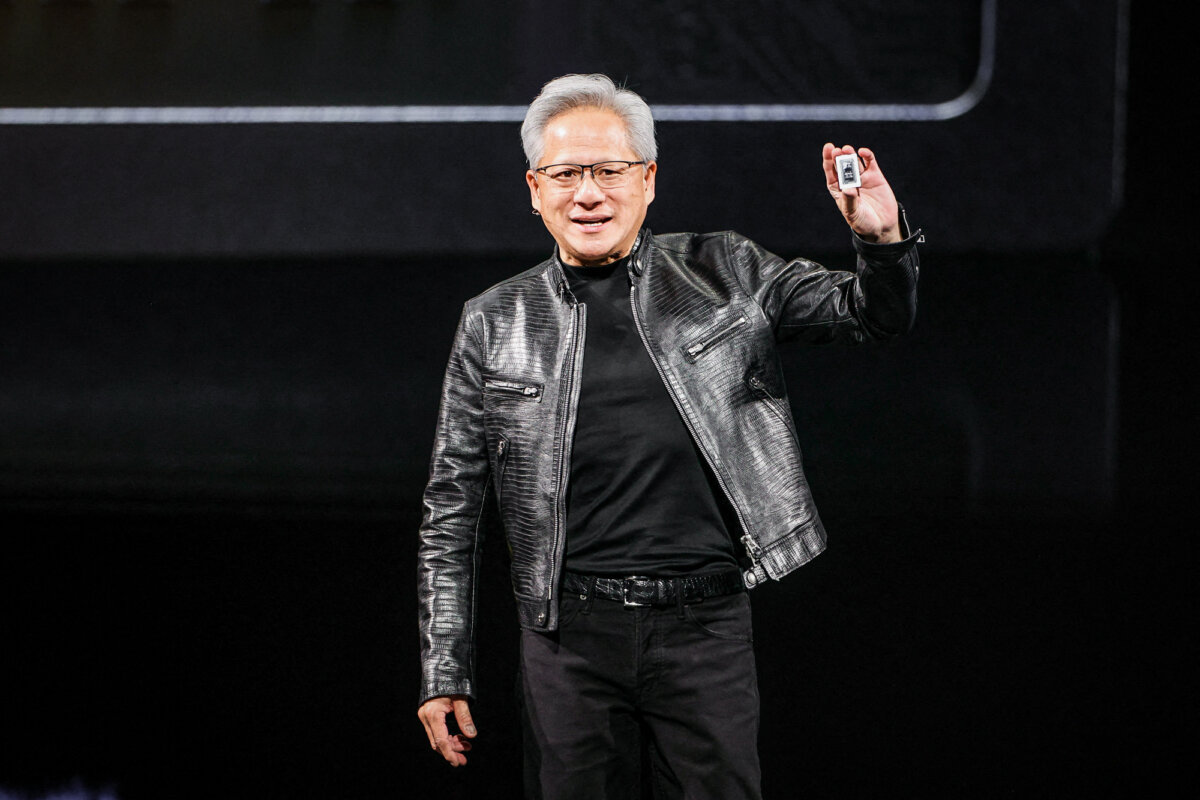
On Nov. 11, Jensen Huang resigned as Nvidia’s president, CEO, and board member, effective immediately. CFO Colette Kress was appointed interim CEO, and longtime director Harvey Jones became the company’s first-ever board chair. The board has begun searching for a permanent successor and will consider internal and external candidates. Nvidia’s shares fell as much as 14 percent on Thursday before recovering to close down 4.3 percent, leaving them about 11 percent below where they stood before the board announced its investigation.
The resignation came after days of scrutiny over reports concerning Mr. Huang’s personal conduct and a separate national-security investigation. Nvidia’s board had opened an independent inquiry after reports that Mr. Huang had been targeted by a foreign intelligence effort. The company said it had no reason to believe national security or company secrets had been compromised. No findings have been announced. This column is not about the allegations. It is about what happens to a company when its most visible leader is suddenly gone.
Mr. Huang co-founded and led Nvidia for 33 years. His leadership has been closely associated with the company’s strategic direction. Nvidia’s engineers, software ecosystem, and partner network did not leave with him. But can the judgment that guided them be sustained without him? That is the question.
A company can have many executives running important parts of the business and still depend on one person for its most important decisions. Having a leadership team is not the same as having an organization that can lead itself. Think of a sports team. Some teams know how to read the game, adjust, and make decisions on the field. Others wait for the coach’s instructions. Both may have talented players. But which team can keep playing when the coach is no longer there?
“Irreplaceable” is the problem. It is meant as praise. But the best organizations build systems strong enough that their capabilities do not depend on any one person, not even the CEO.
For decades, my work has focused on one question: how organizations turn resources into lasting advantage. The answer is that advantage rests not on one person, one team, or one department, but on how the parts work together over time. Culture, structure, and human resource practices reinforce one another. People are hired carefully, cross-trained, promoted from within, and given ownership. Each turn of the cycle develops the next generation of talent and judgment. That combination becomes distinctive to an organization, and competitors cannot easily copy it.
Some cases never age. Consider Wachtell, Lipton, Rosen & Katz, a firm known for handling complex, high-stakes matters without competing on volume. The firm operates through small teams, close mentoring, and meaningful responsibility. Each new associate is assigned both an associate mentor and a partner mentor. Its model has endured beyond its founding generation. Even when its co-chair and five litigation partners left for a rival firm this summer, the firm said it was having a record year. The real asset is not any single lawyer. It is the system that develops the next one. Does Wall Street know how to value that kind of strength in the companies it trades?
Nvidia faces a different challenge, but the principle is familiar. Its chips are not the entire story. Its engineers, software ecosystem, developers, and relationships are part of what makes the company difficult to catch. AMD and other competitors are working to close the gap. In a market where rivals are looking for an opening, Nvidia cannot afford to have its organizational strength depend on one person’s continued presence.
I call this Organiz-AI-tion: building a company so the market values the organization, not just its leader. And let’s be clear: technology and AI are not the moat. The organization is.
Do markets overprice individuals? Share prices react to leaders because balance sheets cannot fully show organizations. A balance sheet shows chips, cash, and plants. It does not show whether judgment is developed across a hundred leaders or concentrated in one. It does not reveal how the organization’s resources work together. When the person at the center is suddenly gone, investors have little visibility into what remains.
Research on sudden executive deaths and CEO hospitalizations finds that unexpected leadership disruptions can affect firm value and performance. Dependence is a design choice. Boards, leaders, and investors can choose differently, if they know how to see the system.
Three questions every board and investor should ask:
If the CEO left tomorrow, which decisions, relationships, and strategic capabilities would leave too? If the answer is “most of them,” that is a governance gap, not a tribute to the CEO.
Is talent promoted from within, cross-trained across units, and given real ownership? These practices are insurance. The real advantage is the whole system: culture, task design, and structure working together.
Would the culture survive without its founder? It survives when it is built into how work is designed, how people are hired, and how they are rewarded. It does not survive if it lives only in one person’s attention. This is Management 101, yet it is rarely practiced, and the consequences can be enormous.
AI makes this more urgent, not less. As companies automate tasks, the scarce resource becomes the human core: judgment, relationships, and culture. The challenge is not simply to distribute tasks. It is to develop judgment and relationships throughout the organization so it can renew its advantage. The firms that win will protect the moat, not hinge on one person.
No balance sheet shows that difference. This week, the market was reminded that it matters.
Views expressed in this article are the opinions of the author and do not necessarily reflect the views of The Epoch Times.