
Commentary
In his recent call for a second scientific revolution, the director of the National Institutes of Health, Jay Bhattacharya, identified underlying problems in the American scientific establishment, such as the non-scientific handling of the COVID-19 pandemic and a slew of questionable scientific findings over the years (remember before the 1990s when eggs were “the next worst thing to poison”?).
His solution? A return to a purer form of science free from politicians or popular fads. Bhattacharya says research should be replicable, should use new and innovative ideas, and shouldn’t be limited to a clique of insider institutions.
I fully support anyone who can keep governments from mandating vaccines; however, I also think there is more to the problem than what Bhattacharya is stating. Dealing with human health means far more than dealing with science; it means dealing with highly fallible human populations.
For better or for worse, we are beings who need and survive on a narrative. If a deadly disease is sweeping across America, we want a way to understand it, and we want a way to fight it.
During the Black Death in the 14th century, many Europeans understood it as punishment for humankind’s sins. They could pray and seek God’s mercy to fight it. During the COVID-19 pandemic, people could fight it by using vaccines, social distancing, and masks. In either case, regardless of our own personal views of their methods, the population felt they were needed and indeed used a narrative at a time of large-scale crisis.
In the well-documented placebo effect, a non-medicine “sugar pill” is swallowed by people who think it is real medicine. Yet the fake pill shows real mental and physical healing results. The narrative is powerful.
This is the narrative that I propose: the second scientific revolution must open a new front in health, perhaps as a subset of mental health. I call it moral health. The results of moral unhealthiness are the increasing suicide rate, the opioid epidemic, the rise in marijuana legalization, and related deaths.
So much is done to deal with these social blights once they have already become blights. After the fact, there is treatment for physical and mental problems related to them, as well as social services, much of which is funded using taxpayer dollars.
Why can’t a moral standard be recommended to every American, regardless of their religious background, that could prevent these problems before they are problems at all?
For basic physical health and to battle America’s obesity problem, the Department of Health and Human Services (HHS) already recommends the Food Pyramid and specific exercise guidelines. Why not have specific moral guidelines?
In the 7th century, the Japanese imperial regent Prince Shotoku wrote a 17-point constitution for Japan that laid the groundwork for one of the world’s most powerful countries and economies today. His first point was, “Harmony should be valued and quarrels should be avoided. Everyone has his biases, and few men are far‑sighted. Therefore some disobey their lords and fathers and keep up feuds with their neighbors. But when the superiors are in harmony with each other and the inferiors are friendly, then affairs are discussed quietly and the right view of matters prevails.”
Think about all the complicated laws today for punishing people after a fight takes place. With the full weight of his government behind him, Prince Shotoku instituted a law that prevented fights from happening in the first place. Instead of fines or prison sentences, it emphasized the benefits of restraining personal bias, obeying superiors, and working well together. And, although he was Buddhist, Shotoku made virtually all of these laws from a secular, civic-oriented perspective.
Of course, in the West, we have our own moral guidelines, like the Ten Commandments, but they are cloistered behind the wall separating church and state. Four Southern states—Texas, Louisiana, Arkansas, and Alabama—now have laws requiring the Ten Commandments to be displayed in public school classrooms. However, most face legal challenges.
In the sincere pursuit of moral health, the HHS could revisit the Ten Commandments poster. The general objective of moral health is not a religious one, but a narrative one grounded in generic spirituality—the same generic spirituality, like belief in “the Creator” in the Declaration of Independence, that undergirds the entire foundation of the United States.
This is just a rough idea of what the HHS, state departments of health, or individual public schools might implement (no sacrilegious offense intended):
Ten Recommendations for Moral Health
1. Have faith in a powerful and good Creator in the universe and have faith that you have a soul, although neither can be easily seen.
2. Reject unhealthy addictions and obsessions.
3. Respect the name of the Creator, also known as God, and do not misuse it.
4. Set a regular time, at least weekly, to put aside worldly pursuits and pray or meditate.
5. Honor your father and your mother.
6. Avoid murder.
7. Avoid engaging in sexual activity outside of the sacred bond of marriage.
8. Avoid stealing.
9. Avoid lying.
10. Avoid jealousy of others and what they have.
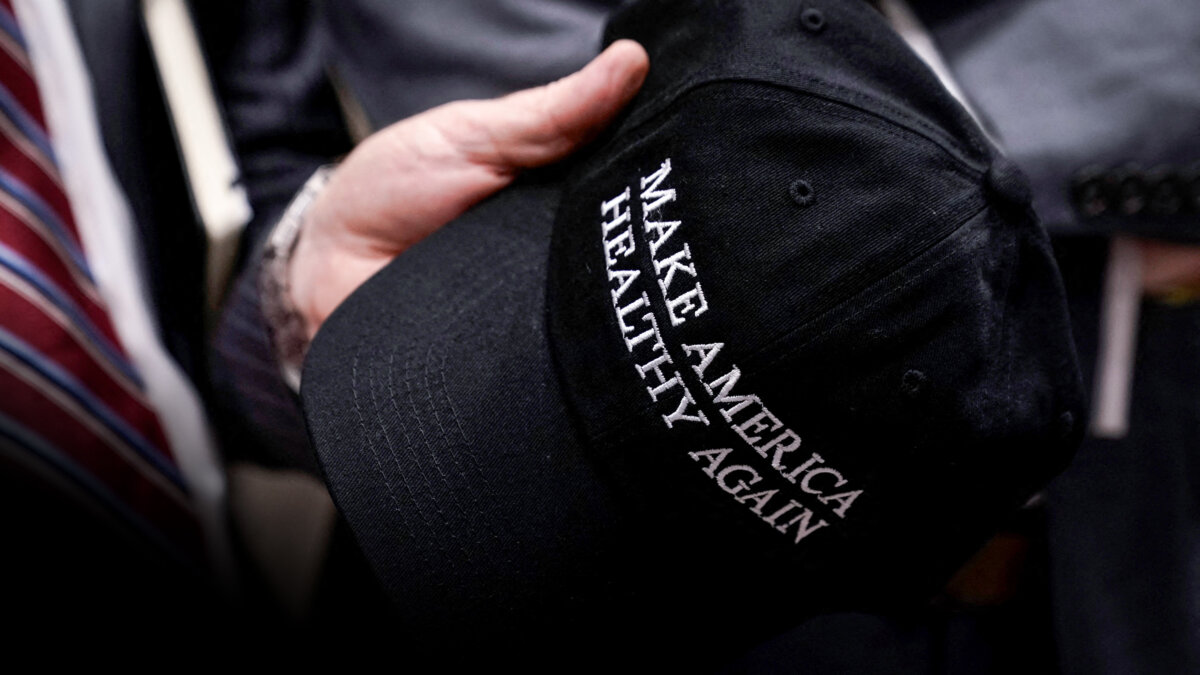
Imagine the good these could do if authorities could openly emphasize the importance of these recommendations in the public square. This could be the key to making America healthy again.
Views expressed in this article are the opinions of the author and do not necessarily reflect the views of The Epoch Times.