
Commentary
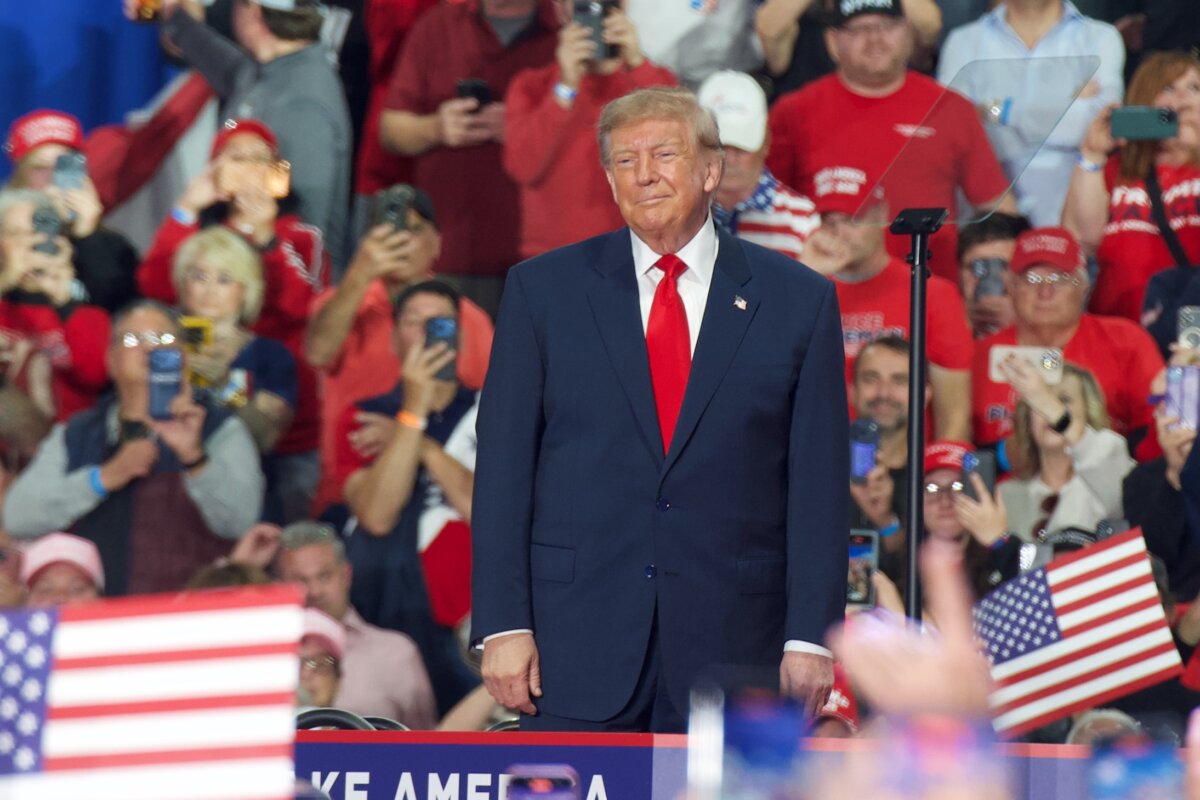
“I don’t understand why all Americans don’t like him,” a South African student said, looking genuinely puzzled. We were standing just a few feet from the podium, waiting for President Donald Trump.
The venue was a midterm rally for failed gubernatorial candidate Bruce Blakeman in Central New York.
Kyle was from South Africa, and he’d driven several hours from an American university where he’s studying for a master’s degree. My friend and I had saved an extra seat and asked him to join us.
Kyle told me he worked with a South African organization that focused on human rights, and for this reason he chose to remain anonymous for this article. Like many people, his work doesn’t always align with his values, but he’s still obligated to perform his job.
His work often brought him into the “poor and marginalized” rural communities that are a product of the former apartheid regime. These were areas that still lacked reliable access to clean water, decent housing, and basic sanitation.
Roads were so poorly maintained that police and medical teams often could not reach them. Schools were built from mud, clinics were nonexistent, and a range of other essential services were missing.
South Africa’s democratic government inherited these problems from the former National Party that created them—but they’ve had decades to make things right. Kyle contends the government has the money to help them.
“But so much is lost through corruption, fraud, and wasteful expenditure. It’s frustrating because these are the very people our government should be uplifting,” he explained.
That’s why Kyle emulates Trump and his America First policies that have brought back manufacturing, encouraged jobs, and created investment.
“To me, that’s what a government should be doing—putting its people first and working toward a better future for everyone,” he said.
Beyond that, Kyle wonders why the Democrats have supported an illegal invasion of “third world persons” and why they don’t support deporting them. Islamists, he said, believe that Islam should govern society and the state through Sharia (Islamic law).
“Their worldview is detrimental to U.S. values,” Kyle said. So why do Democrats support millions of dollars to go toward housing these folks “as opposed to U.S. citizens and even veterans,” he asked.
Kyle also appreciates how Trump speaks out against the “woke” agenda. Issues like diversity, equity, and inclusion (DEI), for example, leave him stumped.
How did America end up instituting policies similar to South Africa’s post-apartheid, economically based, Broad-Based Black Economic Empowerment (B-BBEE) or the workplace/labor law Employment Equity Act (EEA)?
Kyle says he fully understands why these policies were introduced in South Africa, given their history of apartheid, but just like in the United States, he believes they are often implemented badly.
“Race, political connections, and nepotism [take] priority over qualifications and experience,” he said. “In the end, it’s often the communities that rely on government services that suffer the most.”
He believes both societies have reached the point where political correctness takes priority over common sense. Government and military positions should be “filled by competent, capable people who can actually do the job, rather than simply ticking boxes,” he said.
What about Trump’s outspoken criticism of South Africa, including the Oval Office meeting last year in which he pressed President Cyril Ramaphosa on claims of “white genocide” and the persecution of white (especially Afrikaner) farmers?
Kyle thinks it’s great that the leader of the free world spoke out.
“I’m certainly not suggesting that crime only affects white South Africans, because it affects everyone,” he said. “But I do find it concerning that certain political figures continue to sing songs such as ‘Kill the Boer,’ accompanied by gestures of shooting guns.
“Given our country’s history … this kind of rhetoric is extremely irresponsible and only creates further racial division.”
Kyle doesn’t agree with everything Trump says or does, yet he loves his patriotism, boldness, and willingness to challenge the status quo.
What Kyle wants to take back home is a clearer sense of national priority and a stronger belief that government should exist most importantly to serve its own people. He hopes South Africa can build a government in the spirit of MAGA—one that cuts waste and corruption and treats improving everyday life not as a secondary goal, but as the central measure of success.
Even as we’re still reeling from the results of the midterms, we should ask ourselves how someone from South Africa appreciates what MAGA means more than many Americans. The answer is that—as cliché as it sounds—we’re still that shining city on the hill, leading the rest of the world by example.
Views expressed in this article are the opinions of the author and do not necessarily reflect the views of The Epoch Times.







