
Commentary
A clip from an interview President Donald Trump gave to 60 Minutes went viral this week.
The longtime conservative columnist at the New York Times, now face of the revamped 60 Minutes, Ross Douthat, posed a rather strange and, what I thought, an impertinent question to the president in the course of his interview with the president, his first after the Republican party took a major hit in last week’s midterms up and down the ticket. Mr. Douthat had the audacity to ask Mr. Trump whether he could forgive his enemies, as if that was all he had to do to get into heaven.
When the president declined to take the easy way out, saying it would not be honest to say he could do that—knowing full well the easy answer and “correct” answer was “yes, I could do that,” as he says more than once—Mr. Douthat expressed his incredulity in the form of another strange and presumptuous claim, that the president had led “the most charmed and remarkable life of any American in my entire lifetime, and you are telling me you couldn’t find it in your heart to forgive some of your enemies?”
Predictably, the moralizing kicked off online after 60 minutes posted this clip, many wringing their hands with glee, when they were not wagging their finger, at the president’s apparent failure to embrace the Christian obligation to forgive. One prominent Christian conservative commentator compared his answer to talking to someone living in Dante’s “Inferno.” Others mocked the president’s failure to understand the requirements of basic Christian teaching. Somebody even linked to an article on a study that claimed Gen-Z will not go to church because Christians on the whole seem to support the president.
I believe the technical term for this kind of performative outrage is Trump Derangement Syndrome.
My own view is that this question was an attempt to elicit both the response and reaction that it got, a bit of red meat for the Christian never-Trumpers, enjoying their day in the sun in the wake of the blue wave that swept Republicans out of power in last week’s midterms.
More interesting than the political context of the interview, I thought, was the presumption of the initial question itself, with the follow-up guilt trip that was verging on outright hypocrisy. Did this journalist, by all accounts a conservative and Christian himself, think it appropriate to don the mantle of Christ and pass judgment on a man he does not know well or care for, with cameras rolling no less, and then believe that we, his audience, should regard this as an honest question about the health of the president’s soul? Is he insinuating that his money, fame, and riches, even the office of the presidency itself, are gifts from God? And that, as a consequence of what he’s been given, he should forgive his enemies, because the president has come out in the black on the balance sheet of life? He has done pretty well by God, so the least he could do is follow this one rule; is this the general drift?
Parlor games that imagine imponderable moral scenarios at the pearly gates are the stuff of New Yorker cartoons, not serious theology. As any orthodox Christian knows, there is nothing any of us can “do” to merit a place in the hereafter and enjoy the presence of God for all of eternity. If there were, Christians believe, Christ would not have had to die for our sins. The scenario, as it is conceived, is itself heterodox out of the gate.
A better framing, if there was genuine interest in shining light on the state of the president’s immortal soul, and assuming we think this is an appropriate line for a journalist, rather than a priest or minister to undertake—a big if—would be to ask whether Trump has faith in God and perhaps to describe the nature of his faith. The president, moreover, should have been told about this question in advance, so that he might be prepared to offer a thoughtful answer. And for heaven’s sake, should he not have prefaced the question by saying first that his enemies had sought forgiveness? We are creatures with a free will that God himself cannot violate.
Baiting the president and then dunking on him when he is down on the political battlefield risks the same tactics his detractors pretend to decry in him: a moral triumphalism that knows better than you do and a feeling of superiority that depends precisely on your relative inferiority. In this mood, Christians cannot enjoy heaven unless they know some are burning in hell.
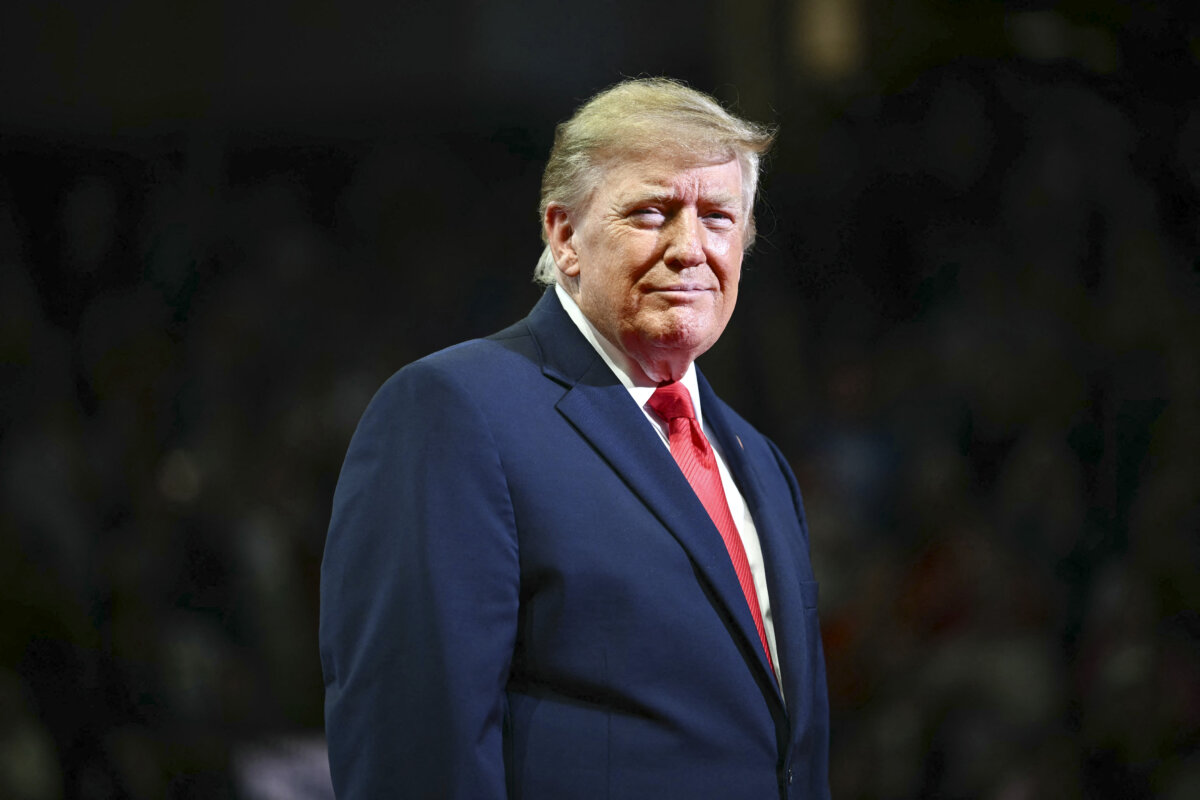
If you watch closely, Trump smiles wryly as soon as he sees where the question is going. Even Trump’s enemies concede he has excellent political instincts and an uncanny media savvy. This “gotcha” journalism question was a case in point. The president’s instinctive theology, if you like—his Christianity, dare I say it—is superior in this moment to the better studied and prepared journalist.
Perhaps this was an honest question, but at a minimum, it was not well-framed. Not only was it impertinent, it was mistaken theologically, a judgment I make in light of the follow-up guilt trip that President Trump has led the most charmed life of any American in the journalist’s lifetime. An extraordinary claim. Ask anybody who has lived a full and meaningful life in this country, and not one of them would ever dream of swapping places with Mr. Trump, as adventurous and filled with blessings as his life has surely been.
While Mr. Douthat is entitled to ask whatever he likes, of course, the idea that President Trump is not entitled to hate his enemies, whom he believes wish him and the country he loves evil—in other words, he hates them for what they have done and continue to do—is simply wrong, from a Christian point of view. The attempt to shame Trump as a Christian and then presume to know how the Lord of the universe will pass judgment on his immortal soul is itself shameless.
Mr. Douthat was not ministering to the president or hearing his confession, he was conducting an interview for a major news organization of a sitting president. Is it too much to ask that we leave the last judgment to God under such circumstances and stick to politics? As a matter of fact, it isn’t; politics is exactly what Mr. Douthat himself was doing, and Mr. Trump knew it.
Views expressed in this article are the opinions of the author and do not necessarily reflect the views of The Epoch Times.