
Commentary
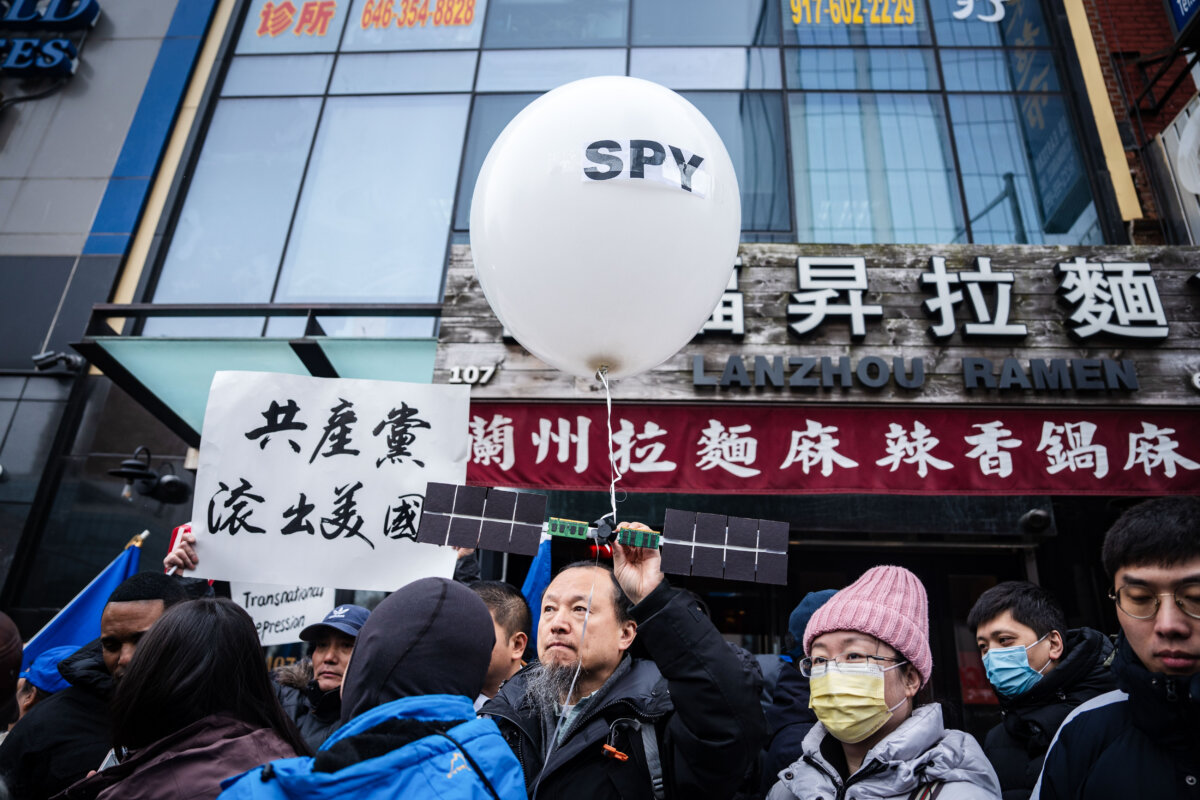
In 2026, a federal jury convicted a New York City man of acting as an illegal agent of the Chinese regime in connection with a Chinese overseas police station in the New York City borough of Manhattan.
The operation had been located inside a community organization and maintained contacts with China’s Ministry of Public Security, whose primary job is protecting the Chinese Communist Party (CCP), not the Chinese people. It also runs prisons for political prisoners.
According to federal prosecutors, it was not limited to helping Chinese nationals with routine paperwork. One of those involved was tasked with locating a Chinese pro-democracy activist living in the United States.
The phrase “overseas police station” should give Americans pause.
Foreign governments may cooperate with American law enforcement through established legal channels. They have no police authority inside the United States. Yet the larger issue is not the sign on an office door or whether Chinese officials wore uniforms. It is that the CCP has attempted to extend political coercion beyond China’s borders and into the lives of people who believed that they had left that authority behind.
China’s Ministry of Public Security is one part of this system. The Ministry of State Security (MSS) is another. The MSS is notorious for coercion, repression, kidnapping, and running black prisons.
In a separate case, Shujun Wang, a naturalized American citizen who helped establish a pro-democracy organization in New York City, was convicted of secretly acting for the MSS. Prosecutors showed that he provided information on activists and dissidents to Chinese intelligence officials.
Other federal cases have involved allegations of stalking, intimidation, threats to relatives, and attempts to pressure people into returning to China.
The methods vary. The principle behind them deserves greater attention.
The United States answered that question long ago.
In July 1868, Congress declared expatriation—the right to leave one political allegiance for another—to be a “natural and inherent right of all people.” The issue was not academic. European governments sometimes continued to treat immigrants who had become Americans as subjects of their original sovereign.
One day after Congress acted, the United States and imperial China signed the Burlingame-Seward Treaty. Its language is remarkable today. The treaty recognizes “the inherent and inalienable right of man to change his home and allegiance.”
That principle was articulated in American relations with China more than 150 years ago.
The treaty was not a modern human rights charter, and America’s subsequent treatment of Chinese immigrants was often inconsistent with the generous principles announced in 1868. The Chinese Exclusion era is sufficient warning against turning history into mythology.
Still, the principle matters.
A man does not belong to his government.
The state may legitimately make claims on the citizen, but the state does not own the human person. His dignity does not come from his passport, the political party in power in his country, or the role the state sees fit to assign him.
For those who hold that the human person is created in the image of God, this is the fundamental issue before politics. The state did not create human dignity, so it can never own it. The state can never replace God or his law.
Totalitarianism has a great deal of trouble with this. Totalitarianism is not simply about seeking obedience to the law. It seeks to subjugate institutions, associations, beliefs, and loyalties to the political order. Religion is dangerous in that it teaches that there is an authority above the state. The family is dangerous because it creates loyalties the state did not create. Independent education, independent law, and independent civil society can be dangerous for the same reason. So can the individual who leaves.
To migrate is more than to cross a border. The migrant may have effectively severed himself from the state’s ability to command his speech, his associations, his religion, and his conscience.
Transnational repression is all about trying to prevent that very escape. The leverage can be direct or exercised through relatives who remain behind. A person living in Wisconsin, New York, or California may be fully protected by the Constitution while his relatives in China are still within reach of the regime. A threat need not be enforceable in an American court to be effective. The CCP does not need to formally state that former Chinese citizens remain the property of the state.
If it can determine what they dare say, whom they meet, what organizations they join, or whether they criticize the Party, it has retained part of the political control they believed that they had escaped.
This is why the issue is also one of American sovereignty.
The people targeted by these operations are not some foreign population living outside the concern of the United States. Some are permanent residents. Some are naturalized Americans. Some were born here. Whatever their ancestry, people living under American law must not be forced to calculate whether exercising an American liberty will bring punishment from a foreign government.
Chinese ancestry does not equate to loyalty to the CCP. In fact, Chinese Americans, religious people, dissidents, democracy activists, Tibetans, Uyghurs, Hong Kong activists, and so on have on numerous occasions been the very people targeted by Beijing’s coercion. They are not the problem. They are the people who need protection.
There’s also an American failure worth looking at.
The United States did not officially grant the Chinese police operation jurisdiction in Manhattan. It was conducted through people and organizations already here. Federal authorities did look into it, closed it down, and brought charges.
The very fact that such an operation could be established at all should prompt us to ask how well federal, state, and local agencies actually recognize transnational repression. The victims are often reluctant to come forward with the threats they are receiving for a number of reasons: They are worried about their relatives overseas, and they don’t believe that U.S. authorities will understand what is going on.
Protecting them, therefore, requires more than simply going after the perpetrators once an operation has been uncovered. It requires the recognition that foreign coercion occurring on American soil is not merely a private matter between members of an immigrant community.
It’s an intrusion on U.S. sovereignty. Diplomatically, this is akin to an act of war.
In 1868, the United States said changing your allegiance was a fundamental human right. That has consequences. A person who comes under the protection of the United States should not discover that the government he left still determines what he is permitted to say.
No government owns its people.
And no foreign government should be permitted to act as though it owns people living here.
Views expressed in this article are the opinions of the author and do not necessarily reflect the views of The Epoch Times.