
Commentary
The things that are most broken in Canada are in our cities. If we want to fix Canada, we have to fix our cities.
Yet recent local elections show that for the most part, the status quo prevailed.
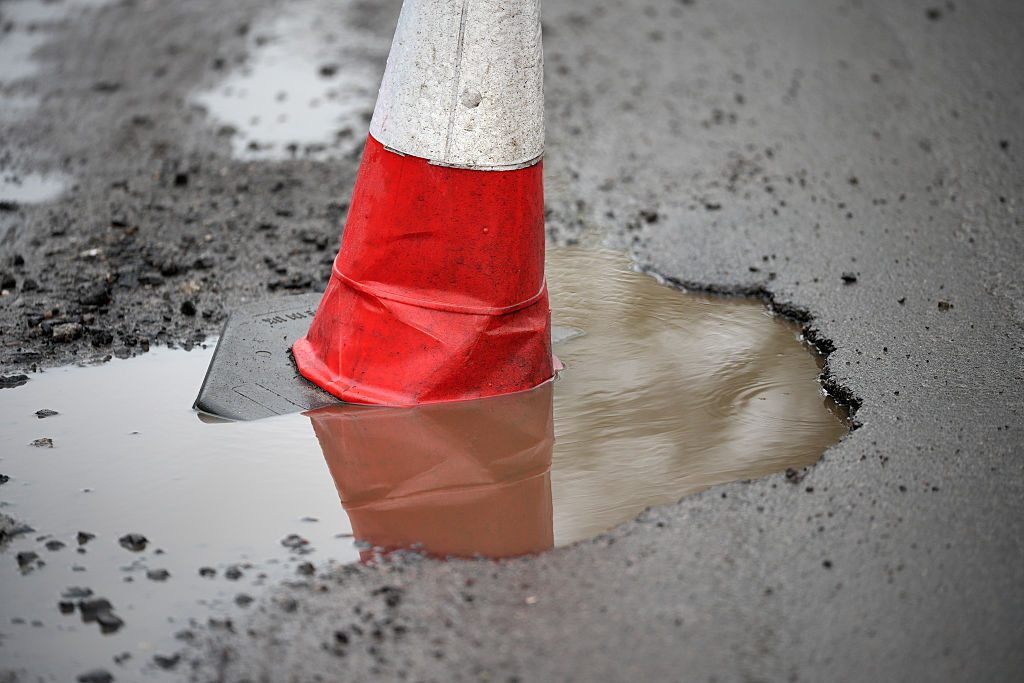
What’s making life difficult in cities across Canada, and particularly Ontario, are gridlock, the cost of living, high taxes, litter, public disorder, the drug crisis, and crumbling infrastructure.
There are political candidates who don’t want to window-dress these problems—they want to speak honestly about them and tackle them head on.
Then there are those who want to tell people that all is well and not to worry, that we can keep doing things the same way and life will miraculously be better off for it. Voters like hearing this message. It’s hard to blame them. But it just isn’t the truth.
Sooner or later, we’re going to hit a breaking point. Our debt service charges will eat up our capacity to pay for generous social programs. The lack of new road infrastructure and ever-expanding bicycle lanes will literally grind things to a halt.
The disorder on our streets will cause further harm, both to those suffering from mental illness and addiction and to the bystanders who become collateral damage in the carnage.
People are increasingly voting with their feet and leaving. Canadians are heading abroad, whether it be to Portugal or Florida. They’re taking their high-paying jobs with them, which means less tax dollars and economic activity remaining here. Some of them are taking companies away, which means the loss of one entrepreneur can be a loss of employment for hundreds of other families.
These are serious matters. Cities and their economies are complex organisms and we must handle them with care. Continually creating new social programs and freebies paid for by rising taxes and increasing debt is not a meaningful long-term strategy. It feels good and easy in the short-term but leads to long-term ruin.
The “polis” is the phrase Greek thinkers like Plato and Aristotle used to describe the form of city state that existed before there were even countries or national borders. Humans first came together to form towns and cities before they formed countries.
All politics is local, as the saying goes. National politics can be abstract and something of a sport. Local politics is what you see and feel every day—it’s personal.
If you’re someone who has to drive to work every day, the many hours that you lose sitting in traffic are maddening. That’s time that could be spent being productive at work or at home with family.
Public transit is an alternative option. But a lot of people shy away from Toronto transit these days because of the public disorder that occurs on it.
This is an example of how failed city policies combine in a way where you can’t escape their consequences. The worsening gridlock makes traffic a bad experience, but the subway is often littered and feels unsafe.
What can you do? Those who can leave do, but those who can’t are trapped as the victim of political consequences.
People feel punished for working hard, paying their taxes, and following the rules. It shouldn’t be this way. They should be rewarded and their lives should be improved.
For many years, the Fraser Institute has tracked what percentage of annual income the average Canadian family spends on taxes. In 1961, it was 33.5 percent. It has slowly but surely gone up every decade since. Today, it hovers around 42 percent.
This is a broken framework. It’s one thing to be paying more and feeling like we’re getting less. That has been the experience for a while now. But the problem has hit a whole new level in many cities: we’re paying more, getting less, and feeling our quality of life erode—as in the commuting example.
Canadians rightly focus a lot of attention on international, federal, and provincial matters. There’s a lot going on in the world today. We can’t forget our cities, though. That’s where the action is and where we can play a big role in improving our daily lives.
Views expressed in this article are the opinions of the author and do not necessarily reflect the views of The Epoch Times.