
Commentary
China’s investment- and export-driven growth model is faltering, but low household incomes and Chinese leader Xi Jinping’s resistance to expanded welfare spending continue to block the promised shift toward consumption-led growth.
As the country’s economic growth slows, the shift toward household consumption that economists have long recommended and Xi has repeatedly promised has failed to materialize. Beijing remains dependent on debt-fueled investment, a collapsing property sector, and exports vulnerable to trade disputes, while resisting the social spending needed to strengthen household consumption.
China’s economy grew by 4.5 percent in the third quarter of 2026 and by 4.6 percent over the first nine months. In its Oct. 19 release, the National Bureau of Statistics acknowledged that “the issue of insufficient domestic demand remains prominent.”
Domestic demand consists of consumption and investment, both of which are weak. Retail sales of consumer goods rose by just 1.1 percent over the nine months. Fixed-asset investment fell by 7.2 percent, real estate development investment fell by 20.6 percent, and private investment fell by 10.4 percent.
New home prices in September were lower than a year earlier in 64 of 70 cities. The World Bank reports that a soft labor market and eroding property wealth have held down consumption, while households have channeled more income into savings.
For two decades, investment, real estate, and exports have driven China’s growth. Investment has run at about 40 percent of gross domestic product (GDP), much of it financed with debt, but each dollar invested generates less growth than before.
Before 1997, China needed $2.60 of investment to produce $1 of GDP growth. By 2014, it needed $4. The Foundation for Defense of Democracies calculates that the figure now stands at about $8.50 using official GDP data and between $14 and $17 using Rhodium Group’s lower growth estimates.
The World Bank describes the continuing rise in China’s capital-output ratio as evidence of resource misallocation, with increasingly large investments generating diminishing returns. Much of that money has gone into unused apartments, factories producing more than consumers will buy, underused highways, and high-speed rail lines in sparsely populated areas with little prospect of recovering their construction costs.
China’s toll road debt exceeds 8 trillion yuan. China State Railway Group owes more than 6 trillion yuan, and economic geographer Lu Dadao found that only six lines showed some profit as of 2023.
Households have helped finance this investment at the expense of their own consumption. By some estimates, the system transfers an average of 4 percent of GDP each year from households to subsidize investment. These transfers explain much of the decline in the household share of China’s economy.
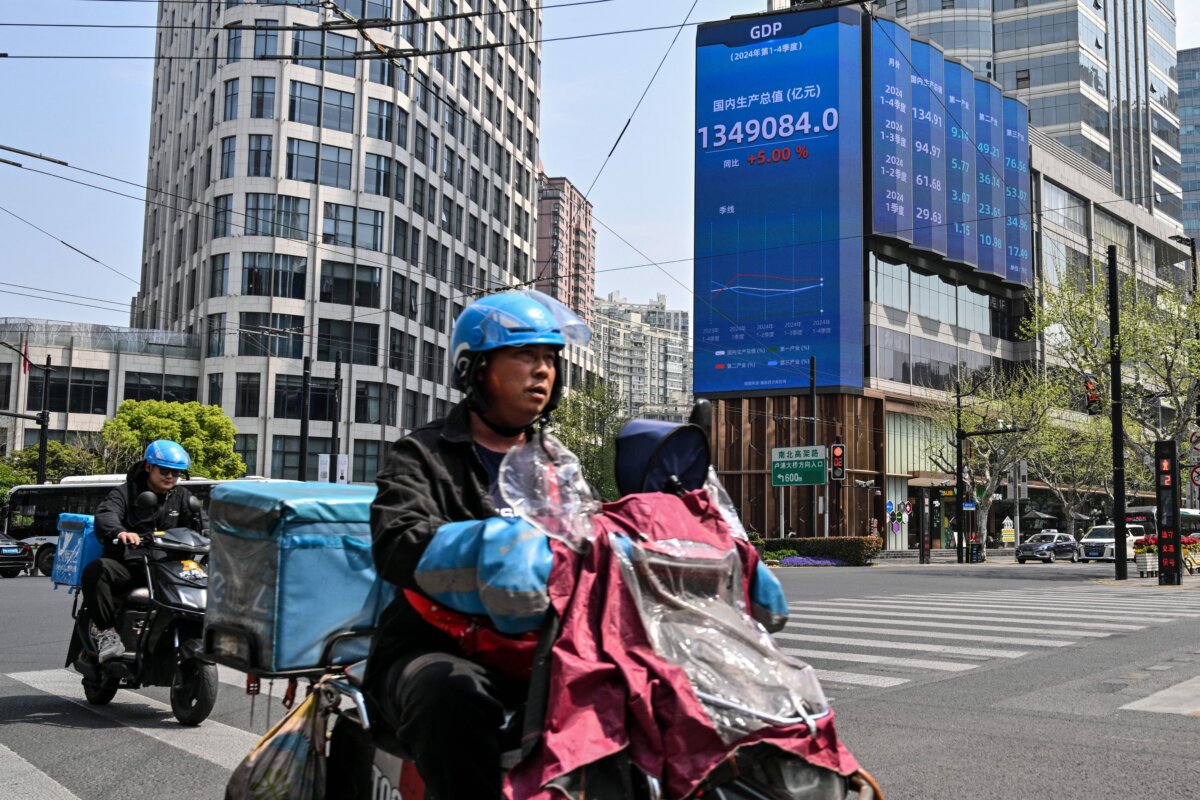
Exports carried this year’s growth figures. Customs data show that China’s trade surplus reached $938 billion in the first nine months of 2026, on track to exceed the record $1.2 trillion surplus of 2025.
The World Bank has warned that this reliance on external demand leaves growth vulnerable to shifts in global trade, and the European Union is pressing Beijing to close a trade deficit of more than $1.1 billion per day.
Household consumption accounts for a smaller share of GDP in China than in most major economies. It represented 39.57 percent in 2023 and 39.97 percent in 2024, according to World Bank data. Comparable figures were 49.93 percent in Germany in 2023 and 52.6 percent across the European Union, 53.07 percent in Japan, and 67.91 percent in the United States in 2024.
Beijing endorsed a shift toward consumption-led growth under Hu Jintao in December 2004, and economists have urged that transition since at least 2005. That November, the International Monetary Fund’s Asia-Pacific director, David Burton, called rebalancing away from investment and toward consumption important to sustaining growth. By 2007, IMF economists warned that investment-driven capacity had outpaced Chinese consumption.
Xi’s calls to expand domestic demand date to at least October 2015. He has advocated making consumption a key growth driver and described domestic demand as essential to economic stability and security.
His “dual circulation” strategy emerged at a May 14, 2020, Politburo Standing Committee meeting, following the U.S. trade war and during the COVID-19 pandemic. It called for tapping China’s domestic demand potential, later framing the domestic market as the economy’s mainstay and foreign trade as a supporting element. But Xi also tied the strategy to technological self-sufficiency, without a corresponding emphasis on household incomes.
In December 2022, Xi identified insufficient aggregate demand as the prominent issue facing the economy. Yet the party’s goals for the 15th Five-Year Plan, released in October 2025, prioritized manufacturing and technological self-reliance over consumption. In fact, no numerical target was even set for increasing household consumption’s share of GDP.
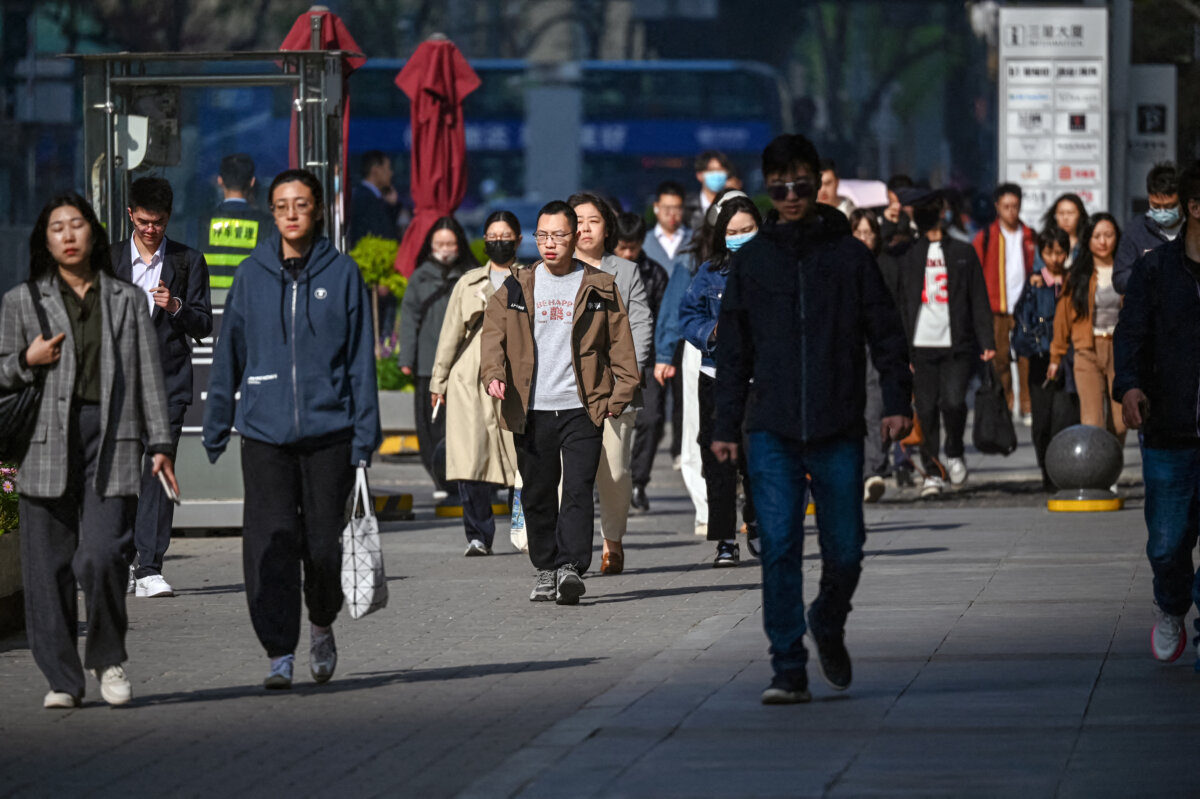
China’s 301.15 million rural migrant workers averaged 5,075 yuan (about $739) per month, while construction, a major employer, has lost 17 million migrant workers over the past decade. Urban private-sector employees earned an average of 5,966 yuan (about $850) per month in 2025, roughly 16 percent of the $5,390 U.S. average.
Low incomes and inadequate social protection push families to save for medical bills, retirement, and unemployment rather than spend. China devotes 11 percent of GDP to social protection, about half the OECD average. Stronger benefits and broader coverage would give households greater confidence to spend.
The International Monetary Fund has recommended expanding rural pensions, health spending, and minimum-income support to reduce precautionary savings and increase consumption. Xi, however, warned in 2021 against welfare programs fostering “lazy people.”
Without stronger state support, households remain reluctant to spend. The World Bank describes China’s persistently low inflation as a symptom of insufficient domestic demand, which will continue constraining growth, jobs, and incomes unless addressed.
Views expressed in this article are the opinions of the author and do not necessarily reflect the views of The Epoch Times.