
Commentary
Should “nature” be accorded enforceable human-type rights? Not too long ago, the very notion would have been laughed out of town.
But no one is chuckling now. Over the past decade, support for granting legal rights to nature has steadily seeped from the radical fringe into the establishment mainstream.
So what are we talking about?
The usual definition states that nature—which, when you think about it, is everything that exists—has “the right to exist, persist, maintain and regenerate its vital cycles” in evolution. That comes close to a right to life for all of flora and fauna, doesn’t it?
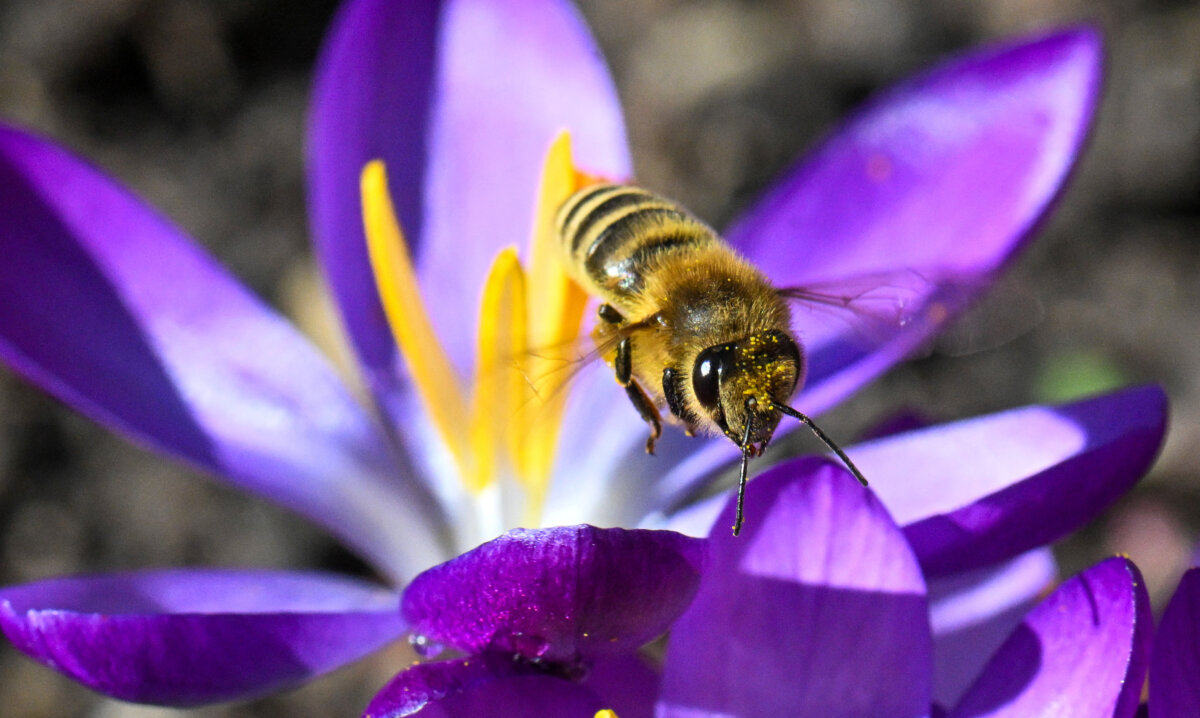
Such proposals are already being adopted at both national and local levels. Hence, Peruvian bees have been granted rights. A Canadian town recently granted “the right to life, to natural growth, to integrity and to regeneration” … for trees!
Geological features are also claimed by activists to be “persons” and the subject of rights. Rivers, we are told, “are living entities” and have “the right to flow,” among other declared liberties. About a dozen rivers in the world are now deemed in law to be rights-bearing subjects. So, too, are a few glaciers, a mountain in New Zealand, and a Spanish lagoon.
These laws could cause great harm. Panama’s supreme court enforced that country’s nature rights statute by closing a copper mine, a project that would have generated economic activity worth $3.5 billion. Apparently, the supposed right of the earth to keep its ore in the ground mattered more than the loss of income for the would-be miners.
Influential forces within the intellectual establishment and among the globalist ruling elite are facilitating these radical successes. As you read these words, the United Nations is negotiating a “Universal Declaration of the Rights of Nature” for the General Assembly to act on. Imagine the intrusive possibilities!
Some of the most venerable scientific publications are also on record as supporting nature rights. The journal Science—one of the world’s most influential professional journals—published advocacy in 2019, lauding the movement as a “rights revolution.”
Not to be outdone, The Lancet—one of the world’s oldest medical journals—also published advocacy supporting the concept. Most recently, the science journal Nature followed suit, with the authors promoting a humans-come-last enforcement strategy.
The rights-of-nature framework that we are proposing includes many ecocentric principles that help with its implementation. These include “in dubio pro natura,” meaning “when in doubt, side with nature.”
Even staid, once non-controversial organizations such as the National Geographic Society have jumped onto the nature rights bandwagon. Indeed, the society is funding nature rights activism all around the world, with the goal of ending the status of nature as “property.”
How are the rights of nature to be enforced?
Some schemes establish commissions—which would be made up of radical environmentalists—to adjudicate between the rights of nature and the needs of people. But most proposals create what could be called universal legal standing by empowering anyone who believes that nature’s rights are being violated to file lawsuits. The lawfare possibilities would be unending!
More recent proposals are even more extreme, and indeed, authoritarian. Legislation pending in the UK would establish criminal and civil penalties for those who illegally interfere with nature’s rights.
If the bill becomes law, a special “Nature Rights Tribunal” would adjudicate all such cases with the burden of proof placed on “the party alleged to be infringing to demonstrate that no violation has occurred or will occur.” In other words, the unfortunates in the dock before that court would be deemed guilty until proven innocent.
Like other left-wing policies, nature rights proposals are meant to hamstring human thriving and undermine capitalism in the name of fighting climate change (among other environmental causes). Advocates explicitly seek to destroy disfavored industries such as oil and natural gas.
Many nature rights believers also promote the nihilistic belief that humans are just another animal in the forest. Activists claim that that view will result in our being gentler on the land. I disagree. If we demote ourselves to the status of beasts, that’s precisely how we will act.
This is all crackers. We cannot not affect the natural world with nearly every action we take. Build a house? That requires wood, harvested from trees. It takes metal fabricated from ore that was mined in mountains. Drive a car? You violate nature’s right “to be free from pollution” and to properly maintain “climatic” cycles and processes. Flood control? But the river has the right to flow! The list of potential infringements of nature’s rights would be infinite, and the societal impact paralyzing.
What to do? An easy remedy would be for state and national legislatures to pass laws declaring that only humans, our associations, and juridical entities have rights and legal standing in court. (This was done in Florida when Orange County voters granted rights to waterways.)
My worry is that, as the movement gains strength, it might soon be too late. If I am right, it is only a matter of time until radical environmentalist lawyers are free to fire a continual barrage of lawsuits against governments, corporations, and individuals to uphold the rights of their geological, animal, vegetal, and fungal clients to be free from human exploitation.
Views expressed in this article are the opinions of the author and do not necessarily reflect the views of The Epoch Times.