
Commentary
It’s the fall season in a time of renewed cultural attention to elegance as a priority. For men, this is your opportunity to make a genuine examination of conscience. Are you sure you look the part? Are you dressing as well as you should? The season is calling for a higher standard. Let’s examine what this means.
Early in my college years, newly aware of dress as a class signifier, I decided to dress properly daily. Digging through fashion magazines, I found a white double-breasted blazer and decided I needed one. I made my way to the Polo shop for men and asked for it. The supercilious salesman dismissively said: “You don’t need that. You don’t even have the basics.”
Ouch, but he was correct. I learned and I’m now here to pass on what I learned.
Despite the bravado and seeming confidence, most men these days are actually terribly insecure about the way they dress. They are pretty sure what they like. They have their favorite T-shirt, sweatshirt, jeans, and shorts. But once we get beyond the grubbies and so-called dress casual, which really means a slightly improved version of grubbies, men can get very confused.
Why is this a problem? If you feel uncomfortable in a suit, the job interview isn’t going to go very well. It is also not a good idea to be the least well-dressed person attending the wedding. If you end up at a conference where people look fabulous, you don’t want to be the one outlier.
There is a strong case for dressing well every day. But even if that is not your goal and point, you need to figure out how to not feel ridiculous when the time comes to dress well. And it’s a good idea to know what it means to dress properly.
At the birth of modernity, clothing for men was defined in the following categories. Formal evening wear meant white tie and a cutaway tailcoat, with black tie (“tuxedo”) as a less formal version of the same (never worn in the daytime). Business attire meant a suit and a tie, and there was no other thing appropriate for business. Wearing either is what was called being dressed.
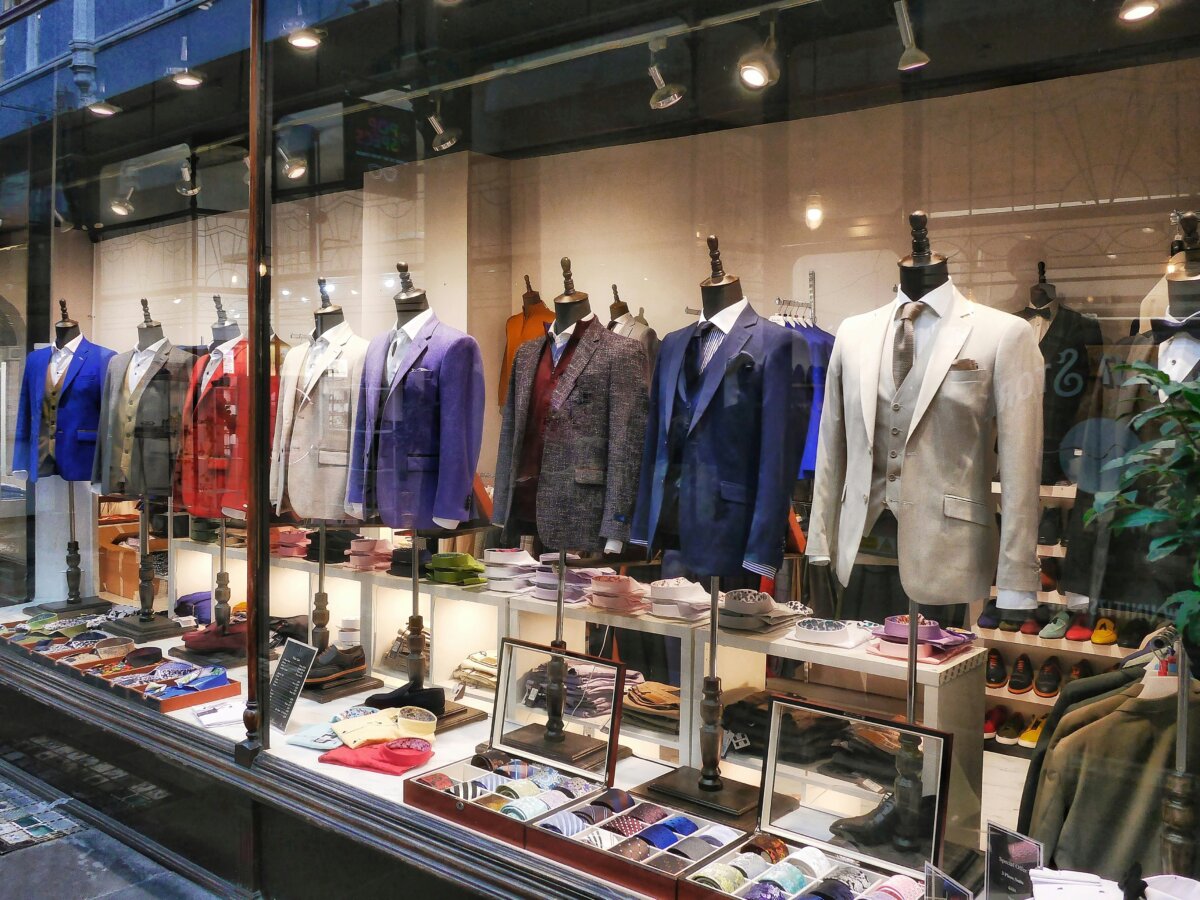
In the category of casual was the “sport coat,” which is still the term used for a jacket that has no matching pants. It could be navy blue. It could be tweed. It could be some nice pattern. All of them are nice. But by heritage, no matter how much you pay for the jacket, pants, shirt, and tie, by heritage and tradition, this is a casual look. It is dressed down.
This remains true. A jacket and separate-colored pants means not dressed up. There is nothing wrong with that. But be aware that this is always and everywhere the situation. If you are wearing a sport jacket, you are wearing what is technically defined as casual clothes. The heritage of this clothing is the yacht, the weekend, the club, and other settings outside formal or business wear. A jacket and pants would not be seen as appropriate for the office.
Of course times change. Granted. Standards have changed. Offices are stuffed with people wearing shorts and flip-flops. It might be fine or even essential for you to copy this style just to survive in your office situation. If so, I feel bad for you.
Sport coats can be a blast, even worn with jeans and a tie. It’s a casual look.
It is also good to know the rules. In the end, men’s clothing is remarkably stable over time and has been for well over one hundred years. Our cultural memories and inchoate sense of style revert to the original and stable understanding of what is right and wrong.
It is good to be aware of this. If you are breaking the rules, you should know you are breaking them.
So, given our culture and the changed times, why bother dressing up at all? Is it to show off, look fancy, illustrate that you are better than others, to be able to look down on them? Absolutely not, and you should never dress with these goals in mind. Clothing should not be used as a means of being nasty to others. The reverse is true: you are honoring others.
If you dress up, you are implicitly saying to others: I find your presence in my life at this moment to be important and significant. I want to honor you by trying to look right. There are countless times when this is important. I like to travel in suits and ties, simply because waiters, ticketing agents, and even the TSA appreciate the compliment you are paying them. This in turn can mean getting more favors from everyone in a position to do so, from flight attendants to Uber drivers.
When people feel and sense that you are respecting them—and they will—they will in turn repay the favor by having a more favorable impression of you. Thus does this work differently from what you might first expect. You are dressing for others, not for yourself, but the final benefit redounds to you.
It is not difficult to look dressed up. You actually don’t need many clothes at all. You can do amazing things with just ties. Otherwise, you can wear mostly white shirts, and perhaps some blue shirts. There is nothing wrong with spending vast amounts of money on a huge wardrobe and nothing wrong with accumulating many suits and coats. The point is that this is not necessary.
The trick is to know the difference between what is essential and what is a luxury and/or frippery. You do not want a closet full of luxuries and fripperies. Consider the case of a white linen sport coat—an item that men dream about because they have seen it in movies or something. You wear it on Monday to a flood of praise and attention. Then you wear it again on Thursday. What happens? People immediately think: oh yes, you wore that on Monday. Try to wear it the second week and people are already tired of it, and it seems like you don’t have that many clothes at all.
What you need are staples of any man’s wardrobe. You must have these before you buy high-fashion items. In fact, as you discover the merit of the staples, you might come to realize that buying super distinctive, time-sensitive articles of clothing is not a good expenditure at all.
So let’s begin with sport coats. Or rather, begin with the pants that go with the sport coat. You need gray pants, possibly two shades. You will also need khaki pants. With a blue sport coat, you suddenly have three full outfits for one coat. The truth is that you could wear some combination of this the rest of your life and do just fine, provided you are changing out your ties. Ties you can pick up at thrift stores or eBay for $5-$10.
In addition, you will need three or four shirts at minimum. If you are hand washing them at home and using best practices, you should be able to wear them two days each.
Right now a good-quality blue blazer on eBay can run $50 or as much as $750 new. Don’t want to buy used clothing? If not, you are throwing away vast amounts of money because there are deals out there that you cannot imagine. Gray wool pants are $30. Khakis are $20. The shirts are $25 each. Add two suits (a gray and a blue) for $200 each and you end up with enough clothing to look super wonderful—way better than practically anyone else—for under $500.
Given the enormous benefits that accrue to you and to others from looking great, this is not unreasonable in the slightest bit. It is all about selecting the right items.
A few points about which clothing to buy:
• Don’t consider any suit that is not 100 percent wool. Being all wool does not make it hot to wear. It demonstrates that it is good quality. There is no such thing as a blended fabric quality suit. Sport coats can be blends of cashmere, silk, and wool.
• Your first two suits should be blue and gray. Black comes in and out of fashion, but it is not a lasting choice. Brown is out of the question no matter what.
• Pinstripes are always fashionable.
• Whether you buy two-button, three-button, double-breasted, notch or peak lapel is really a matter of choice. They are all wonderful. On the matter of the “three-piece suit,” there is huge mythology about this. Vests are fine and I like them, but there is nothing inherently great about the “three-piece suit.” Sometimes they can just look stodgy and old-fashioned, if not cheap.
You also have to think about shoes. A bad shoe can ruin an entire outfit. The most dressy of any shoe has laces. You can’t dress up in a loafer. It is what it is, and it always looks casual, no exceptions. Well, perhaps there is one exception in the form of a formal loafer but those are expensive and rare.
Tied shoes can have an “open last” or a “closed last” depending on the style. Buckles can also be a nice substitute for laces, though this can look a bit eccentric.
A great shoe is a wonderful investment. A Johnston & Murphy or an Alden shoe can run $300 to $1,500, but it is worth every penny. You can get it re-soled for $40 and it will last a lifetime or even two. It is the one item of clothing for which you are pretty well stuck paying a high price. You can often find outstanding shoes from eBay in your size. Look for Alden. If you find a pair under $100, grab them and enjoy them.
For goodness sake, use a shoehorn. This is one of those normal objects every man had in the old times. It’s been lost to time like many things because we are no longer attentive to basics. Without a shoehorn, the heel of your shoes will break down from absurd practices like smashing the foot into the heel. This is so destructive and dumb. The shoehorn was a marvelous invention. It needs to make a return to every closet.
Let’s talk about the details, because these are often what matter most in a men’s wardrobe. We all more or less look similar in the basic stuff we are wearing, but there are huge differences that appear in the smaller matters of things like ties.
Tiebar.com has excellent ties for very little money. They run $20 and they are brilliant. Compare to Brooks Brothers at $90 plus. There really is no point whatsoever in spending more, unless you just like shopping and impulse buying.
What ties to buy? There are no limits, but some things to avoid: large screened graphics of cartoon characters and the like. A tie can be fun, but there is a point at which it is just tacky.
What knot to use? My preference is for the “four-in-hand knot” or the “half Windsor.” The rest either look fat or ridiculous. As for bowtie, careful here: bowtie wearers are often caricatured as bomb throwers. There’s nothing wrong with that fundamentally, but it might not be the best choice for some settings like job interviews or corporate dinners. The bowtie wearer will always come across as just slightly arrogant. That’s fine but be aware.
Pocket squares are fine things. They are white, and sometimes can be other colors. But there are no exceptions to the ironclad, universal rule: your pocket square should never ever match your tie.
On socks, if your drawer is full of only black socks, you will be fine forever. Black works with blue, gray, or just about any other color. Socks, in any case, should be darker than your pants and never lighter.
I strongly suggest avoiding fancy socks with patterns. They are impractical and just a bit unseemly too. No one likes to imagine you rifling through your sock drawer in the morning to get just the right patterned sock. A sock is purely functional and should always be over the calf and never be visible in a fallen-down, slumpy state.
What about tie bars, collar pins, and the like? Rather pointless but there’s no crime in wearing them.
What about cuff links? Of course they require special shirts. But they are highly recommended. It is just one of those special touches that men can get away with. It is a form of jewelry that we can wear that doesn’t raise eyebrows. These days, many cuff links are themed in some way. They carry a message. This is not a bad thing. People want to notice them and comment on them. This is all good.
What about contrasting collar and shirt? This is the Gordon Gekko look from the 1980s. It always looks good, and rich too. It’s not what you want to wear if you are trying to be humble, but it looks smashing nonetheless.
Wear a cotton undershirt, crewneck. It is essential. Not wearing an undershirt is the equivalent of not wearing underpants. It is central, non-negotiable. You don’t sweat on real clothing. You sweat on your underclothing. Come on, guys, just get used to it. Undershirts are just part of life.
Finally, on jackets, don’t take them off in a public setting. Ever. It is part of your clothing, like your pants.
There are five common problems with fitting suits on men:
• Sleeves too long to reveal part of the cuff. There should be a quarter to half inch of sleeve showing under the coat sleeve. It doesn’t matter that your shirt shows when you stick your arm straight out. A bit of sleeve needs to show when your arms are by your side.
• Pants too tight to make them fit like jeans. They should fit like dress pants, which means loose in the back and the legs and sitting slightly higher on the waist than jeans would.
• Jacket too big to reveal a tapered torso. Off-the-rack clothing is made to fit the typical body size today, which generally means slumpy-shouldered guys with too much of a belly. This is why thin men absolutely must have their coats taken in. Also keep in mind that you might need extra chest room to hold wallets or smartphones. The back of a jacket should be perfectly smooth from collar all the way down, not pulling in any direction. If the vents in the back are wanting to separate, it is too tight.
• Pants too long and have huge breaks. A pant leg can break but not much. A pile of fabric falling all around your feet can completely ruin the look of a suit.
• Fitting a collar is not easy. It is too loose if you can see gaps between your neck and collar just standing in front of the mirror. It should never sag down. At the same time, tight collars can pull in strange ways and create a level of discomfort that will ruin your day. You should be able to stick your finger between the neck and collar without too much trouble.
A shirt cannot billow out in front. There is a right way to prevent this. You must learn to tuck it in properly. It’s astonishing how men can go their entire lives and not learn the basics of putting on a buttoned dress shirt!
1. Undo your belt and fly put the front right side of the shirt inside your pants.
2. Tuck in the back and pull, pull, pull all fabric to the back and down.
3. Create a fold in the back and flatten it one side over the other.
4. Put the front left side inside your pants.
5. Do one last adjustment to make sure everything is where it should be, then close your pants and zip your fly.
This way the shirt looks correct, the way it is meant to be. The front and all the way to the sides should be perfectly snug. All extra fabric should live at the cusp of the back.
Should you buy a tuxedo? The short answer is: absolutely spend as little as possible. Most men make huge errors in this respect. They hear that they are to attend a formal event. They figure that “formal” means spending as much money as possible. There are many men’s shops out there very happy to accommodate you. They will charge $300 to $3,000 for a black jacket and pants and you will pay it because you don’t know better. Then they’ll hit you up for another few hundred on various doodads that go with it.
But here’s the key. At a black-tie event, all men look exactly the same by design. That means you can wear the cheapest possible thing and it is not going to make the slightest bit of difference.
Not only that: you will only wear this thing once a year or so. It doesn’t ever wear out, thus intensifying the case for spending as little as possible. Go to overstock.com and leave it at that. Otherwise, it is absolutely heartbreaking the way people squander vast amounts for this pointless expenditure.
Guys who dress up for the first time can feel incredibly uncomfortable. Their ties seem to be choking them. Their suits seem loose. Their shoes seem tight. They seem somehow constrained.
It doesn’t matter what clothes you are wearing; discomfort looks terrible on any man. The more you are dressed up, the more casual you should feel. The more you should move freely and casually. In some way, this just expresses confidence. It is the single most important trait of dressing well. All the money and time are completely worthless until you can look and move naturally in beautiful clothes.
Do what it takes to achieve this. Sleep in your clothes. Mow the grass. Go shopping. Anything to make it right. When the right combination of “high” dress and “low” or normal movement and behavior are right, you will know it and you will be the boss. That’s the aspiration and the goal. It takes practice. And remember that what a man looks best in is confidence.
But let’s say you are not interested in suits or sport coats, ties and shirts, and all the rest. There are fashion items at sports stores and there are a lot of status issues bound up with brands in this sector. I don’t want to discount this. Empirical tests show that brand names really do matter for things like trust and social status. You can take two otherwise identical shirts, slap an alligator on one and discover that the person wearing the label gets the trust and attention.
But here’s what I’ve found. You can find fantastic casual clothes at the thrift store, sometimes for $4 a shirt. I see no reason not to go this way. Yes, they are pre-worn but casual clothes shouldn’t look new anyway. Why anyone would pay retail for a Ralph Lauren knit shirt is utterly beyond me. Save your budget for serious clothes. The casual items take care of themselves.
Of course there is a vast and glorious world of men’s fashion out there to be explored and enjoyed, and I love it all. It can be a wonderful journey. But this journey cannot begin without having the basics in place. My own sense is that not 1 in 1,000 men have those basics in place. This is the real challenge. Once conquered, you can emerge from the pack, increase your value as a human being, create more opportunities for yourself, and live a better life.
A neat look begins in a neat closet. That means no wire hangers. Ever. Yes, the meme from the movie Mommie Dearest is correct. Throw them all out immediately. They are unsightly and ruin everything. Wood hangers are not expensive. Buy 50 of them just to have around. Get used to them and you will never go back.
As for shirts, there is always a choice between hanging them and folding them. I do my own laundry and always fold and stack, as they did in the old days. It’s just neater and easier to manage. If I do use a commercial laundry, I ask for starch and for them to be delivered folded. Most will accommodate.
Remember the lesson that supercilious salesman handed me at that counter. He wasn’t being cruel. He was being honest. The basics come first, always, and there is no shortcut around them. Master those and everything else opens up to you instead of intimidating you.
Start with gray trousers and a blue jacket. Buy a shoehorn. Throw out the wire hangers. Learn to tuck in a shirt properly. Then go live in the stuff. Move like you have worn it your whole life, because that ease, more than anything you can buy, is what people actually see.
When you have that, you stop dressing for the wedding or the interview and simply start dressing like a man as a matter of course. And in a culture where nearly everyone has given up, the mere fact that you bothered will set you apart. You don’t need to spend a fortune. You just decide to honor the people around you. The world notices. It always has, and it always will.
Views expressed in this article are the opinions of the author and do not necessarily reflect the views of The Epoch Times.