Commentary
This past weekend, I had the honor of speaking at the Weston A. Price Foundation’s annual Wise Traditions Conference in Washington, D.C. I was invited by Leslie Manookian, a foundation board member who is also closely connected to the Brownstone Institute. Leslie founded the Health Freedom Defense Fund, the organization behind the successful lawsuit that overturned the federal mask mandate on airplanes and public transportation in 2022.
After hearing me speak at a Brownstone event, Leslie invited me to share my story with the Wise Traditions community.
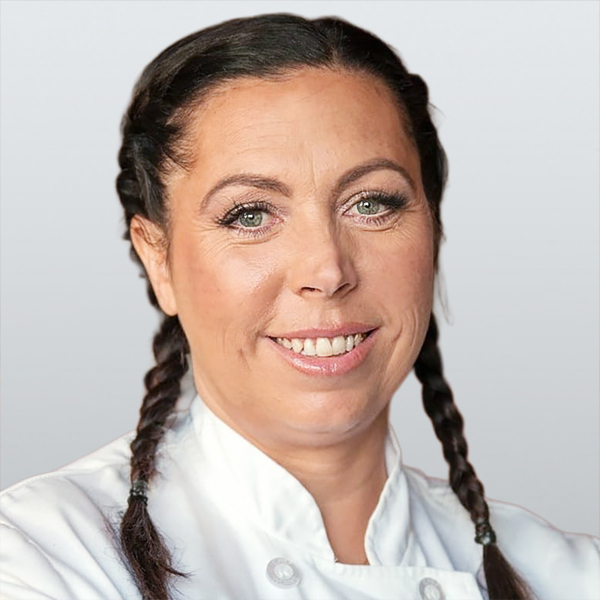
Through jokes and tears, I shared my transformation from a vegan chef in Los Angeles to a regenerative rancher in Texas. I talked about the hardships, the mistakes, the uncomfortable realities, and what it means to choose a life guided by conviction rather than comfort. People laughed, clapped, and at the end, gave me a standing ovation.
I don’t believe that standing ovation was really about anything extraordinary I had said. I think it was about something our world is desperately craving: authenticity. The willingness to stand in front of people without pretending life is easy, that we have everything figured out, or that following our convictions comes without a cost. God has blessed me with the ability to share my life that way, including the messy and painful parts.
During the weekend, Florida Surgeon General Dr. Joseph Ladapo took the stage and acknowledged the audience in a way that perfectly captured the significance of the gathering.
“You are the OGs.”
The original gangsters. The people who were talking about animal fats, cholesterol, fermented foods, raw milk, nutrient density, and traditional diets long before any of those things were fashionable. Long before beef tallow became a beauty product, bone broth became a grocery store staple or people started questioning whether everything we had been told about saturated fat was actually true.
For more than a quarter of a century, the Weston A. Price Foundation has challenged conventional nutritional wisdom. While much of America was replacing butter with margarine, avoiding egg yolks, drinking skim milk, and treating cholesterol as something to eliminate, this organization was asking a different question: What did healthy human beings eat before industrial food became the norm?
The story begins nearly a century ago with a dentist named Weston A. Price.
During the 1920s and 1930s, Price traveled around the world studying populations that had maintained their traditional diets. He visited isolated communities in Switzerland, Indigenous populations in North America, Pacific Islanders, African communities, and others who had not yet fully transitioned to industrialized foods.
He documented dental health, facial development, and physical characteristics, taking thousands of photographs. His observations became the foundation of his 1939 book, “Nutrition and Physical Degeneration.”
What fascinated Price was the difference between people eating traditional diets and those who had adopted modern processed foods.
He found remarkable dietary diversity. Some populations consumed considerable amounts of dairy, others seafood, animal organs, grains or fermented foods. What they shared was not a particular ratio of carbohydrates to fat or protein. They ate foods produced by their environments, prepared through generations of accumulated knowledge.
His research suggested that nutrition was about far more than calories and that the loss of traditional foods could have consequences extending beyond a person’s waistline.
Decades later, Sally Fallon Morell discovered Price’s work.
In 1996, she published “Nourishing Traditions,” coauthored with nutrition researcher Mary Enig. It was part cookbook, part nutritional rebellion, challenging the low-fat dietary advice that had become almost unquestionable in American culture.
In 1999, Fallon Morell founded the Weston A. Price Foundation to bring these ideas to a wider audience.
Think about what was happening in America at that time. Butter was practically considered dangerous. Cholesterol was treated as an enemy. Vegetable oils were marketed as healthier alternatives to traditional animal fats. People were encouraged to eat highly processed substitutes in the name of better health.
Meanwhile, Fallon Morell and the foundation were encouraging people to eat butter, eggs, meat, organ meats, traditionally fermented foods, and properly prepared grains. They also defended access to raw milk and helped consumers connect directly with farmers.
Today, the foundation reports approximately 13,000 members and more than 300 local chapters worldwide. Its chapter leaders help people locate traditional foods and local producers. Its “Wise Traditions” podcast, launched in 2016, has accumulated more than 16 million downloads. There is also a Spanish-language podcast, “Tradiciones Sabias,” bringing these conversations to another audience.
Those numbers tell only part of the story.
The foundation has helped create an entire culture around traditional food, from small dairy farms and fermented-food businesses to families grinding their own grains, making bone broth, and seeking out farmers who raise animals on pasture.
And I am one of the people whose life was profoundly influenced by this movement.
For many years, I was a vegan chef. I owned five restaurants in Los Angeles, and I believed deeply that removing animal products from our diets was the path toward better health and a better planet.
My journey away from veganism was not instantaneous. It involved years of questioning, studying agriculture, working with soil, and eventually raising animals myself. The work of Weston Price, Fallon Morell, and the foundation helped me reconsider assumptions I had held for much of my adult life.
I began to understand that food was not simply a collection of nutrients that could be isolated, measured, and replaced. Food came from living systems. The health of the soil, the health of the animal, the way food was prepared, and the relationship between the farmer and the consumer all mattered.
Eventually, that journey took me from operating vegan restaurants in Los Angeles to raising cattle, pigs, sheep, and chickens on a regenerative ranch in Texas. Today, I milk cows, make cheese, ferment vegetables, cook with animal fats, and serve food grown and raised on our own land.
What strikes me most about the Weston A. Price Foundation is how many of the ideas it defended when they were deeply unpopular are now entering mainstream conversations.
People are reconsidering the role of animal fats. There is growing recognition that cholesterol is biologically essential and that cardiovascular risk cannot be reduced to a single number. The conversation around statins and cholesterol targets has become more nuanced, even as legitimate disagreements remain about where treatment provides the greatest benefit.
We are learning more about the human microbiome and the importance of fermented foods. There is renewed interest in nutrient density, traditional food preparation, and the relationship between agriculture and human health.
And perhaps most importantly, people are beginning to recognize that food cannot be separated from the systems that produce it.
For years, we were encouraged to believe that scientists in laboratories and corporations manufacturing food products could improve upon the nutritional wisdom accumulated by human communities over thousands of years.
The Weston A. Price Foundation asked us to consider whether we had discarded something valuable in our rush toward modernity.
I have spent enough time on both sides of the food debate to know how difficult it can be to question something you have built your identity around. I was a vegan chef who became a regenerative rancher. That transformation required me to admit that some of my most deeply held beliefs about food were incomplete.
Standing in that conference room this weekend, surrounded by people who had spent decades advocating for real food, I felt the significance of what Dr. Ladapo was acknowledging.
These were people who kept the conversation alive when almost nobody wanted to listen. They helped preserve knowledge, connect farmers with families, and create a community that refused to surrender its understanding of food to the latest nutritional trend.
And now, as America rediscovers butter, beef, fermented foods, and the importance of knowing where our food comes from, perhaps we should remember the people who never forgot.
They really were the OGs.
Views expressed in this article are the opinions of the author and do not necessarily reflect the views of The Epoch Times.