Commentary
Yesterday I gaped into a precipice on a farm in Oklahoma that took my breath away. It reminded me of a similar experience a couple of months ago on a farm in Illinois. Here in my Virginia Shenandoah Valley, our hilly farmland eroded long ago when Europeans brought the plow and overgrazing.
In Illinois, I stared at a gully 20 feet deep carved into a nearly flat field. Not a rock in sight. On our farm, a scant post hole usually ends at bedrock just a couple of feet below the soil surface. Yesterday in Oklahoma, standing on the edge of a 15-foot-deep gully etched into nearly flat land, with not a rock in sight, the sheer devastation of post-Native American abuse was nearly unspeakable.
I gaped into the ditch, some 35 feet to 40 feet across at the rim, trying to grasp, as I gaped, the millions of tons of topsoil that had been washed away in a conquistador land-grab mentality. I thought of the good Lutherans, Presbyterians, and Methodists who had no doubt come to this land after pushing out the natives—people, plants, and animals. They no doubt filled church offering plates while unleashing unprecedented erosion on their farms. These deep gulches were not carved by modern excavation equipment; they were incisions cut by water.
They did not exist 500 years ago—at least not in these areas. The Grand Canyon is another story. What changed? Management. Why is this important? I would suggest that our nation’s hydrology, or water wealth, is far more critical than Wall Street or even dysfunctional government. As iconic radio commentator Paul Harvey used to say, “We worry about the wrong things.”
Changing from pre-European management to European management was epochal for the North American landscape. Modern archaeologists and anthropologists have pieced together a picture of native natural ecology. Various scientists differ, certainly, but the big picture is now a consensus.
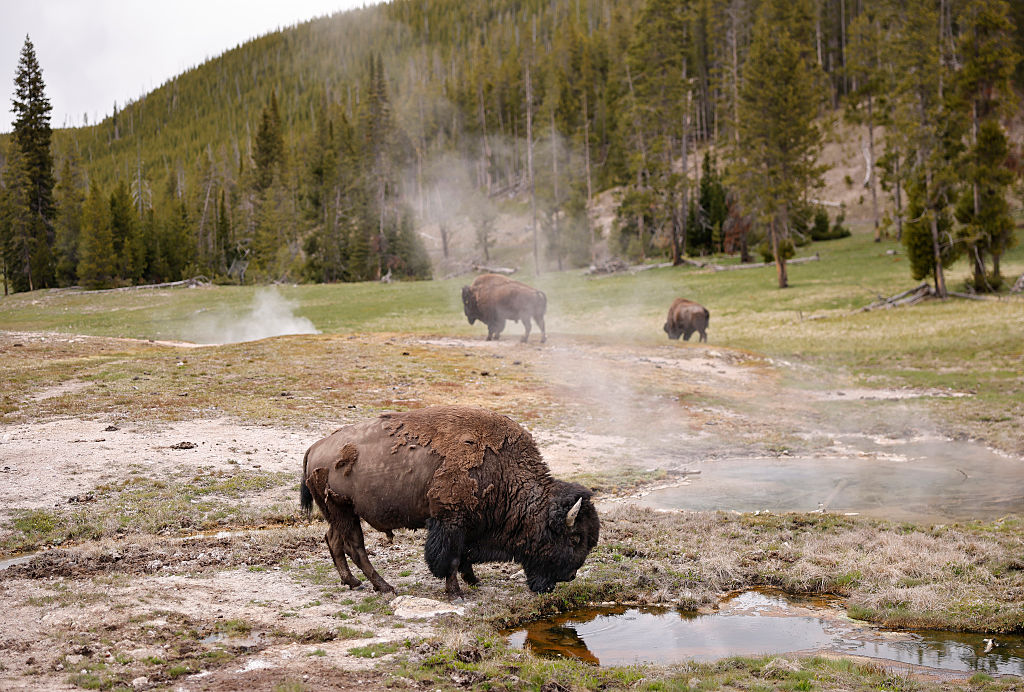
In general, the pre-European landscape was 8 percent to 10 percent water; today it’s less than 4 percent water. Even with massive Army Corps of Engineers dams and lakes, North America has far less water. The three primary reasons are beavers, bison, and biomass.
Some 200 million to 300 million beavers dammed creeks and streams in the headwaters of all regional water drainages. These dams, three feet to five feet high, stopped water cascading down the stream channels and spread it out across the adjoining landscape. We’ve had beavers on our farm from time to time, and they’re mesmerizing engineers. Their capacity to create a perfectly level obstruction, plugging holes and patting the front with clay, creates shallow ponds that allow water to soak into aquifers.
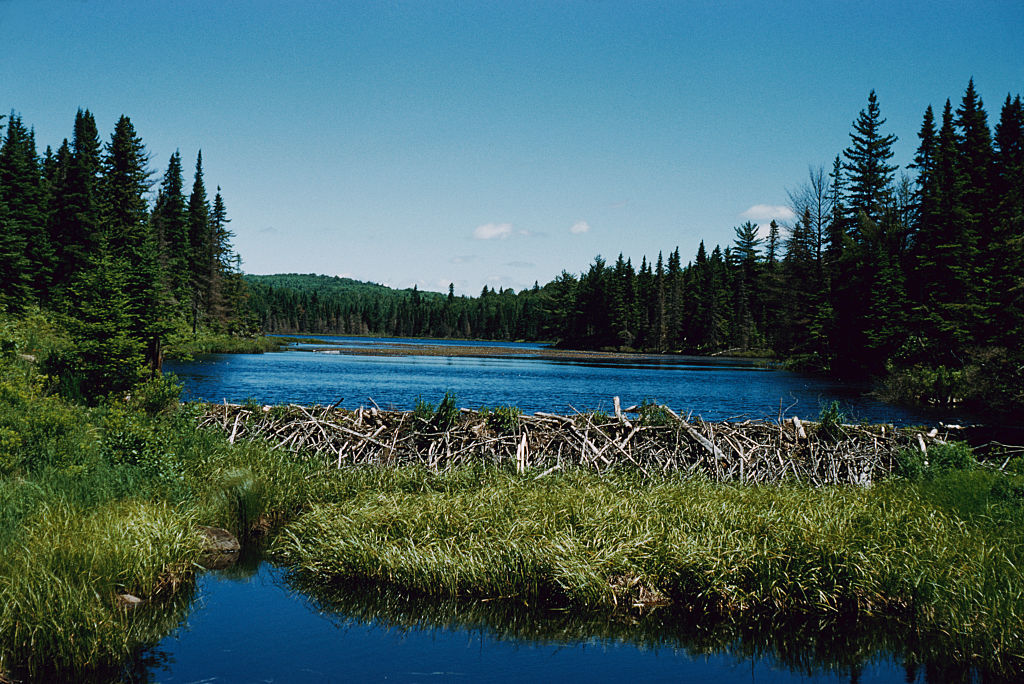 A beaver dam in Algonquin Park, Ontario, Canada, c. 1960. (Norman R. Lightfoot/Getty Images)
The beavers and bison offered physical landscape catchments, or sumps, that caught excessive surface runoff, giving it a chance to soak into the landscape. The vegetation—biomass—added a perennial protective blanket to make hard-hitting raindrops shatter on leaves and stems, atomizing through the forage canopy into a fine mist by the time it landed on the soil surface. All of this created water wealth on that prehistoric landscape.
The secret to proper hydration is threefold: Stop it, spread it, soak it. In direct contrast, European farming and engineering violated every one of these rules. From moldboard plowing to massive monoculture annuals to overgrazing to road building, the Western objective was also threefold: Speed it, channel it, and drain it.
The two giant chasms I witnessed on these two farms testify to water poverty in modern America. While Medicaid fraud in Minnesota makes headlines, our culture—including agriculture—is drying out our landscape. Indeed, even farm programs from yesteryear’s Soil Conservation Service, which incentivized pond building, now consider surface water a liability because it attracts wildlife and waterfowl. We’re told that deer could bring diseases and ducks transmit avian influenza.
An agriculture paradigm and policy that despises water cannot be healthy for any society. Water is the foundation of life. We all know that. Wouldn’t it be judicious if, as a nation, we put some attention on accumulating water rather than getting rid of it?
As a tiny practical exercise, imagine if every interstate highway traversing a valley placed the drainage culvert just below the road surface rather than down in the bottom of the valley. On our farm, this is how we build lanes and access roads, and it’s quite a hydrologic game changer. When engineers cut the top off a hill to build up a valley in order to create a flat roadscape, that fill material in the valley is an effective dam.
A culvert goes underneath that pile of dirt to duct the water away. Rather than placing the culvert in the bottom, it could just as easily be placed near the top. That would let water accumulate on the uphill side of the dam and create a pond. Imagine our highways being center aisles with wings of water on either side. Excavation would be virtually the same; the only difference would be that rather than the runoff water speeding up, channeling, and draining, it would stop, spread, and soak.
But highway engineers are not taught how to increase water wealth. They view water as detrimental. Get rid of it. Farmers installing drainage tile are under the same mentality. The land can be made usable with strategic ponds, such as sumps, and shallow drainage lines rather than deep ones. The No. 1 water-holding sponge is organic matter in the soil, which tillage, chemicals, and monocropping annuals tend to deplete. Nationwide, we’ve gone from 8 percent organic matter on average to about 2 percent. Each percent of organic matter holds 20,000 gallons of water per acre. Add it up. That’s a lot of water.
The bottom line here is that how a nation views its water speaks volumes about how it views life and long-term flourishing. Proper hydrologic function reduces both extremes: flooding and drought. The bison are gone. The beavers are gone. It’s time for humans to step into that deficit and resurrect the water wealth enjoyed by a pre-European landscape. Our grandchildren will thank us.
Views expressed in this article are the opinions of the author and do not necessarily reflect the views of The Epoch Times.