
Commentary
Washington rarely agrees on much. But the Chinese Communist Party’s infiltration of U.S. infrastructure has a way of focusing minds, Republican and Democrat alike. The bipartisan consensus that is forming on Capitol Hill around the risks posed by Chinese ownership and control is overdue, but welcome.
The Chinese Communist Party’s strategy is never to confront the United States head-on. Beijing is too smart for that. Instead, it takes the patient route: embedding itself in our commercial ecosystem, our technology supply chains, and our critical infrastructure over years and decades. By the time that most Americans start paying attention, the access is already built in.
I saw it firsthand during my time at the Department of Homeland Security. What appeared to be routine commercial activity, whether that be Chinese-owned equipment in U.S. ports, cameras on federal facilities, or cranes on military bases, the technology could also serve as a platform for collection architecture intelligence. These devices can transmit location data, usage patterns, and operational statistics back to cloud systems accessible to Beijing. In effect, we were, and in many cases still are, handing our adversary a window into U.S. infrastructure that traditional espionage could never have provided at such scale.
And the risk extends far beyond the federal government.
Products that are fixtures of American daily life are owned or controlled by entities with direct ties to a government that has made no secret of its ambitions. A single Chinese company dominates much of the consumer drone market. Connected vehicles can transmit location data and enable remote access. Chinese components are embedded in the infrastructure supporting America’s artificial intelligence buildout. Even Internet-connected appliances inside our homes can collect sensitive information for the Chinese.
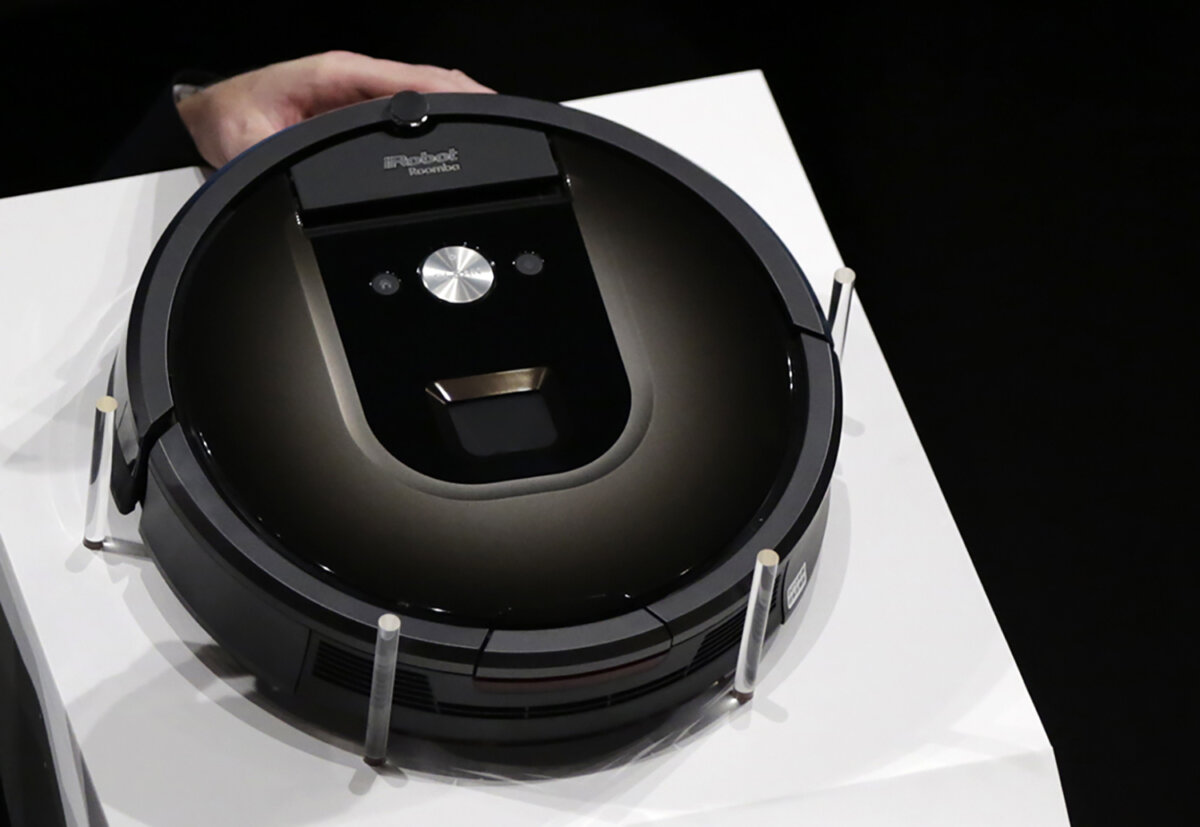
In August, a bipartisan congressional investigation found that Chinese state-owned telecom carriers, operating through U.S.-branded subsidiaries, remain deeply embedded in the American Internet ecosystem. And the Federal Communications Commission recently banned Chinese-owned robotic vacuums from American homes over exactly this kind of risk.
This is the architecture of a Trojan Horse I’ve been sounding the alarm on. It’s built not in a single operation, but assembled over decades through commercial channels that the United States left largely unguarded.
Congress is finally moving to dismantle it, with a degree of bipartisan agreement rarely seen in Washington.
Legislation moving through Congress, including on smart devices, semiconductor export controls, connected vehicles, and grid security, share a common logic: Close the access points before they become weapons. The so-called “spy fridge” bill, requiring manufacturers to disclose when Internet-connected appliances contain cameras or microphones, passed the House 415–9. The MATCH Act moves to cut off Beijing’s access to the semiconductor manufacturing equipment needed to build these devices in the first place. The Connected Vehicle Security Act just cleared committee unanimously—because a Republican from Ohio and a Democrat from Michigan both understand that a car manufactured by a Chinese company with remote access capability is a vulnerability.
What I find notable and encouraging is who is standing together on this. Senators and House members from both parties who agree on little else are united by the recognition that an adversary with embedded access to U.S. infrastructure is a national security emergency requiring urgent action.
We all must come to terms with the uncomfortable reality that many of the commonplace devices operating on government networks and inside critical infrastructure are actively gathering and transmitting data to systems that foreign adversaries can access. This risk spans military installations, commercial ports, power grid infrastructure, and the devices inside American homes.
For too long, the United States granted that access by default without asking questions. When ProPublica revealed that one of the largest government contractors in the country had been using China-based engineers to maintain sensitive Department of Defense systems, the bipartisan outrage was immediate and appropriate. It started a conversation and spurred action we need to be taking.
The American people understand, instinctively, that something is wrong. They’re waiting for Washington to match their sense of urgency. Congress is getting there, but what’s needed now is speed.
This is one of those rare moments when doing the right thing and doing the politically viable thing point in the same direction. Congress should seize it.
From RealClearWire
Views expressed in this article are the opinions of the author and do not necessarily reflect the views of The Epoch Times.