Commentary
I’m not a particularly jealous person. I don’t look at someone else’s house, car, business, or bank account and think, “I wish that were mine.”
But there is something I see in some immigrant communities that makes me wonder what my own family has lost.
It’s not their culture I envy. It’s the sight of an entire family working toward something together.
I see it in Muslim communities here in Texas creating tight networks and circular economies. I spent decades in Los Angeles restaurants, where I watched Oaxacan families help one another find work and opportunity. Across America, Indian families have built networks in the hotel business, and Korean families have built businesses together.
When I see that, I don’t fantasize about being part of their community. I fantasize about my own family being together.
My father farms in Idaho. My mother farms in Hawaii. One brother has restaurants in Los Angeles. Another works in natural foods in Northern California, and his wife works in health and wellness. My sister works on a flower farm in Northern California. And my brother Ryland and his wife, Sarah, are here in Texas with us, helping build Sovereignty Ranch alongside my husband and me.
So part of what I imagine is already happening. I know what it feels like to have family putting their energy toward the same project, and maybe that’s exactly why I can so clearly imagine what it would look like if all of us were doing it.
Sometimes, I imagine the whole family in one place, working on one giant integrated enterprise.
The farms could supply the restaurants. The restaurants could create markets for what we grow. The flowers could supply our events. The natural-food and health experience could help us manufacture and distribute products. Everyone would bring different skills, relationships, ideas, and labor to the same larger project. Our children could grow up inside all of it and someday add whatever gifts they bring.
I think about how extraordinary that could be.
Instead, most of us are scattered thousands of miles apart, each building our own version of the American Dream. Nobody did anything wrong. In fact, we did exactly what American culture taught us to do: go out into the world, find your own path, build your own career, make your own life, become independent.
But having a piece of my family here building something together has made me wonder whether, in becoming so good at building our own lives, we have forgotten how much more we might be capable of building together.
Years ago, I dated a man named Jorge. We weren’t compatible in many ways, but I actually considered marrying him in large part because of his family.
One day, pipes broke at one of my restaurants in Los Angeles. Jorge’s parents showed up. His sisters came. Their husbands came. Suddenly, the whole family was there helping us deal with the problem.
I remember being deeply moved by it.
If I called my father and told him that the pipes had broken at my restaurant, he would probably say: “That’s terrible. Call a plumber.”
Not because he doesn’t love me. He absolutely does. But we were raised differently. We’re independent people. If something breaks in your business, you figure out how to fix it.
Jorge’s family operated from a different assumption: If something happened to one of them, it happened to all of them.
Today, we haven’t stopped needing other people. We’ve just gotten very good at outsourcing our dependence on them.
Our modern community might be an Instacart driver bringing groceries, an Amazon driver delivering something we need, a plumber fixing the pipes, or a washing-machine repairman keeping the household functioning.
We’ve replaced many relationships with transactions.
A transaction is clean. I pay you. You provide something. We’re even.
Community is messier.
I see people romanticizing community online constantly. They want the farm, the garden, children running around outside, fresh eggs, a milk cow, communal dinners, and evenings around a fire.
I’ve lived in intentional community, and now I’m the matriarch of one. There is another side.
Do you still want community when the eggs have to be collected every day? When the cow needs milking? When the pigs get out at 10 p.m. and everybody has to put their boots back on and go catch them?
What about when it’s flooding or freezing? When something expensive breaks? Do you still want community when it requires you to put resources in instead of getting resources out?
The hardest part of building community isn’t getting people to participate. It’s getting people to take ownership.
My husband and I experience this constantly. We farm, ranch, run a restaurant, host events, create jobs, and keep trying to generate enough economic activity for the people around us to make a living.
Sometimes, it feels like we’re expected to bake a pie large enough that everybody gets a piece.
But that’s not community.
Community is everybody bringing something to the table.
Someone grows something. Someone fixes something. Someone starts another business. Someone watches the children. Someone creates a product. Someone brings customers. Someone has capital. Someone has labor.
Not everyone contributes the same thing or the same amount. But everyone understands that the success of the whole partly belongs to him.
And this is where the question becomes much bigger than family or the ranch.
Maybe the largest community Americans have forgotten to participate in is America itself.
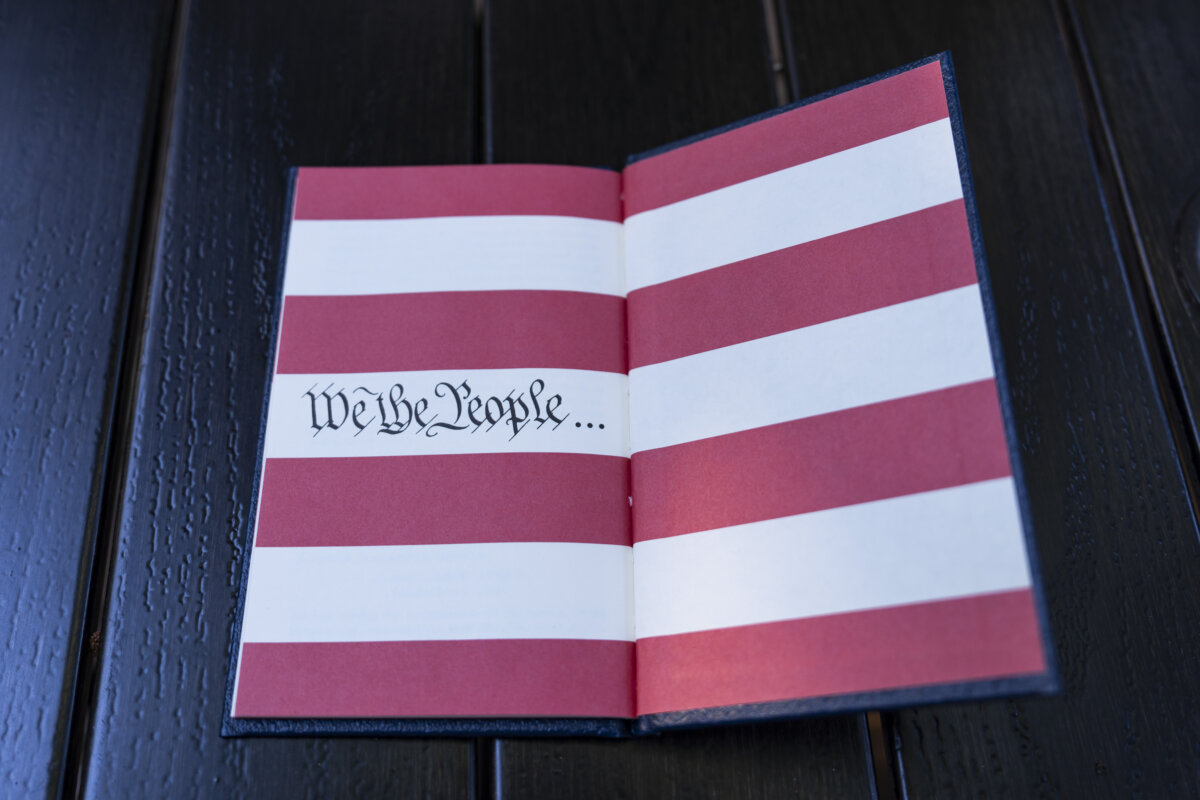
We weren’t simply born into a geographical place where we get to pursue our individual dreams. We inherited a constitutional republic.
The Constitution is the highest law of our land, but it cannot preserve itself. It cannot attend a school board meeting, question an elected official, serve on a jury, challenge government overreach, teach a child civics, build a business, help a neighbor, or strengthen a town.
People have to do those things.
We talk endlessly about our rights, and we should. But a constitutional republic also requires citizens willing to take ownership of it.
Maybe we’ve made the same mistake with America that we make with community. We expect somebody else to keep the whole thing running.
Someone else will protect our freedoms. Someone else will fix the schools. Someone else will grow the food. Someone else will run for office. Someone else will fight the bad law. Someone else will rebuild the town.
Someone else will bake the pie.
My husband grew up in Oaxaca, Mexico. His experience taught him to keep his head down, work hard, take care of his family, and not worry too much about what was happening outside his bubble.
My instinct is almost the opposite. If I think that something is wrong, I want to challenge it. If an authority tells me that I can’t do something, my first question is why.
I don’t want Americans to lose that rebellious streak. I think that it is part of our inheritance.
But independence was never supposed to mean indifference to one another.
Maybe the strength of America was never rugged individualism alone. Maybe it was rugged individuals who understood that they were responsible for families, neighbors, towns, churches, businesses, and ultimately a republic that survives only if ordinary people take responsibility for it.
The American Dream was never a solo project.
It wasn’t one person baking a gigantic pie while everyone else waited for a slice. It was millions of people bringing something to the table.
America doesn’t need less individualism. It needs individuals willing to take ownership of the whole.
We inherited extraordinary individual freedom, but we inherited the responsibility for maintaining it together.
The American Dream was never something someone else was supposed to build for us.
It was always something we were supposed to build together.
Views expressed in this article are the opinions of the author and do not necessarily reflect the views of The Epoch Times.