Commentary
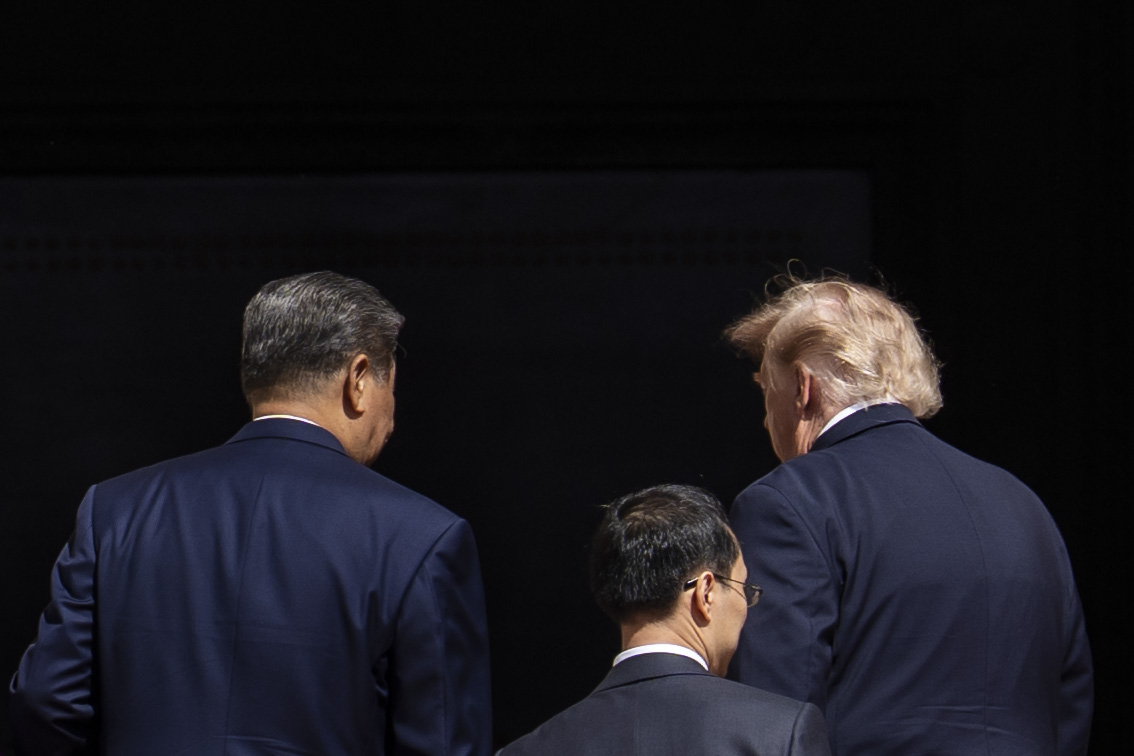
Taiwan remains a red line for Chinese leader Xi Jinping, while U.S. President Donald Trump faces a major test as Beijing exerts pressure. Yet Xi’s latest attempt to draw Washington closer to Beijing’s position yielded no public commitment.
According to China’s official account of the China–U.S. summit last month, Xi urged Trump to oppose “Taiwan independence” and handle the issue prudently, describing it as essential to stable bilateral relations. However, Taiwan was notably omitted from the White House’s list of summit outcomes.
Rather than answering in the language Beijing sought, Trump responded through quieter signals.
Trump Welcomed Xi With a Song Made Famous by a Taiwanese Icon
At the Sept. 24 state dinner for Xi, “The Moon Represents My Heart” was played as guests entered the venue. Taiwanese singer Teresa Teng’s 1977 rendition established it as a foundational classic of modern Mandopop. The choice was also fitting given the timing, just before the Mid-Autumn Festival, in which the moon is a central cultural symbol.
Teng was also well known as an outspoken advocate for democracy and freedom.
During the 1989 Tiananmen Square protests, she appeared at a massive rally in Hong Kong in support of the students in Beijing. She later spoke publicly about the tragedy and her belief that the Chinese people should be free.
That history makes the choice of her signature song politically intriguing.
Trump’s Dinner Table Diplomacy Featured Taiwan-Born AI Leaders
For Xi’s state dinner, the White House assembled more than 30 leading figures from American business and technology. Elon Musk, Tim Cook, Nvidia CEO Jensen Huang, and AMD CEO Lisa Su were seated at the main head table directly alongside Trump, Xi, and their spouses.
Both Huang and Su were born in Taiwan, and their companies depend heavily on the island’s semiconductor manufacturing ecosystem.
That is why I see the seating arrangement as more than ceremonial. The broader message was difficult to miss: The United States and Taiwan are already deeply intertwined economically and technologically.
This is particularly important as Washington works to build more resilient semiconductor supply chains and reduce strategic dependence on China. Taiwan is not a peripheral player in that effort. It is one of the central nodes.
Trump Reminded Xi Which ‘China’ Fought Alongside US in World War II
The third signal came directly from Trump’s remarks at the state dinner.
Trump recalled the World War II alliance between the United States and China, highlighting the Flying Tigers, American volunteer pilots who helped defend China against Japan.
His account was accurate but omitted a crucial distinction: America’s wartime ally was the Republic of China, led by Chiang Kai-shek, not the People’s Republic of China established in 1949 under Mao Zedong.
The Flying Tigers illustrate this distinction. Officially named the American Volunteer Group of the Chinese Air Force, the unit was organized by Claire Chennault, a retired U.S. Army Air Corps captain who advised Chiang.
After the communist victory on the mainland in 1949, Chiang’s government retreated to Taiwan.
Trump could hardly invoke the “Republic of China” alongside Xi without triggering a diplomatic crisis. But he didn’t need to. By celebrating the wartime alliance and honoring the Flying Tigers, he invoked a history forged alongside the Republic of China—the government that actually fought alongside the United States.
The ‘International Waterways’ Agreement Could Have Implications for the Taiwan Strait
The fourth signal is the most consequential if viewed through the lens of a future crisis.
Among the eight outcomes announced after the summit, Washington and Beijing agreed that Iran should honor its commitment not to develop nuclear weapons and that no country or institution should be allowed to impose tolls on international waterways.
On the surface, this is about Iran and the Strait of Hormuz. In reality, I believe it also has implications for the Taiwan Strait.
China has unilaterally asserted sovereignty, sovereign rights, and jurisdiction over the Taiwan Strait, claiming that its waters fall within various maritime zones under Chinese jurisdiction. It rejects the notion that “international waters” exist in the strait.
Beijing’s position has effectively been described by its critics as an attempt to turn the Taiwan Strait into China’s internal waters.
Taiwan, the United States, Britain, Japan and other countries maintain that the Taiwan Strait includes waters in which international navigation rights apply and that ships and aircraft are entitled to freedom of navigation and overflight under international law.
The issue has become even more visible because of the war between the United States and Iran and the crisis surrounding the Strait of Hormuz.
Iran has repeatedly threatened to close or restrict the strait and has proposed charging vessels for passage, while the International Maritime Organization has warned that imposing tolls would establish a dangerous precedent.
Now, consider a war across the Taiwan Strait. If Beijing were to threaten a blockade or demand transit fees from foreign vessels, the principle agreed upon at the summit could help counter any attempt to turn the strait into a controlled, fee-based waterway.
The Message Behind Trump’s Silence
At every summit with Trump, Xi insists on raising the issue of Taiwan. The Chinese leader also made it his top agenda item during Trump’s visit to Beijing in May.
Trump presents himself as a president who seeks peace through strength. He has little patience for endlessly repeated talking points.
Trump has also claimed that Xi assured him China would not attack Taiwan during his presidency. On another occasion, Trump warned that he would bomb Beijing if China were to attack Taiwan.
Meanwhile, Xi faces a serious challenge within his military leadership. His prolonged purges have disrupted the People’s Liberation Army’s command structures, raising questions about its readiness.
These upheavals do not mean the People’s Liberation Army cannot attack Taiwan. But they raise a critical question: How confidently can Xi rely on a military whose senior ranks have been so thoroughly shaken?
By omitting Taiwan from the White House’s summit statement, Trump sent a clear message: He offered no public endorsement of Beijing’s preferred language. Put more frankly, he refused to let Beijing dictate the terms of the Taiwan issue.
Views expressed in this article are the opinions of the author and do not necessarily reflect the views of The Epoch Times.







