
Commentary
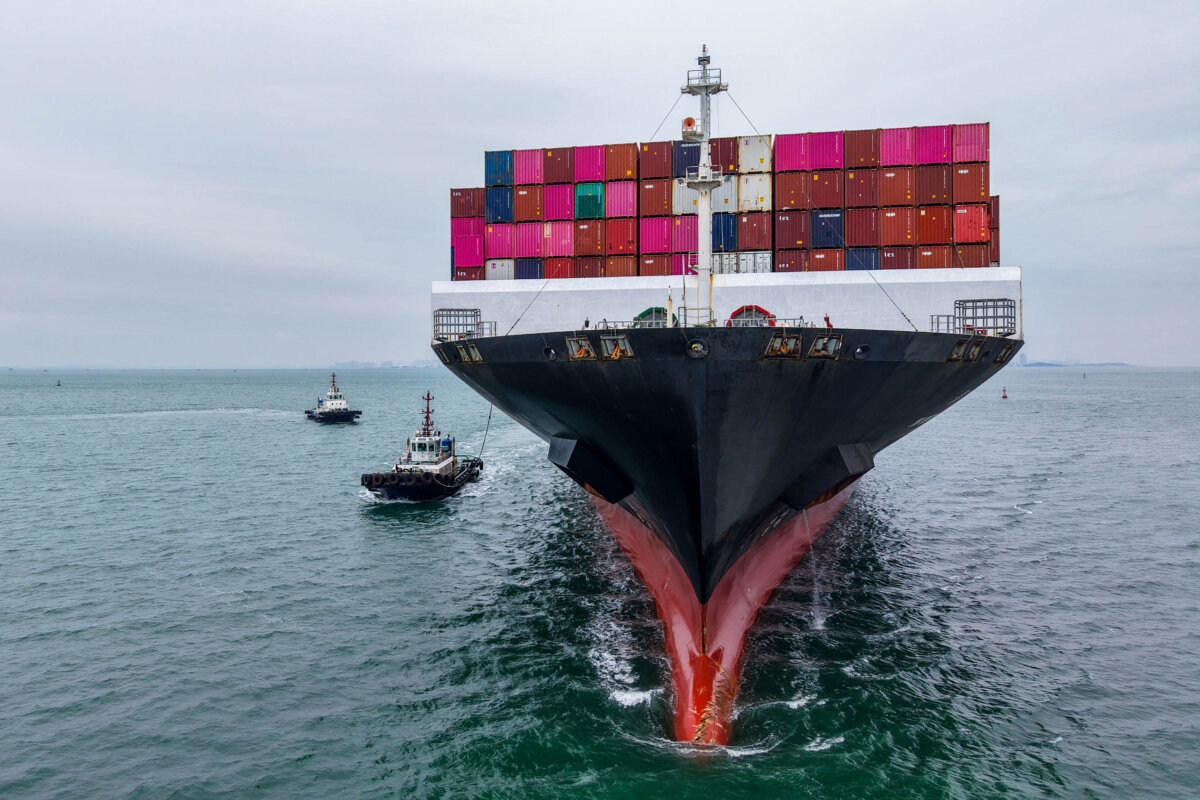
In September 2024, a container ship called Flying Fish 1 left St. Petersburg for China. The roughly 4,800-TEU vessel crossed Russia’s Northern Sea Route in about six days. A year later, the same hull, renamed Istanbul Bridge, was back in the Arctic. The vessel is now operating on Sea Legend’s China–Europe service.
That lineage is concerning. Sea Legend’s rise shows how a young Chinese carrier can convert geopolitical friction into operating knowledge, then carry that knowledge into corridors Beijing has publicly said it wants Chinese companies to develop.
Born in Disruption
Sea Legend was incorporated in Singapore in 2023. Worldwide Logistics’ draft Hong Kong listing documents identify Sea Legend Shipping, Sea Legend Line, and Transfar Shipping as wholly owned subsidiaries within the same logistics group.
Sea Legend became conspicuous during the 2024 Red Sea crisis, when major carriers diverted around Africa to avoid Houthi attacks. Sea Legend moved toward the disrupted China–Red Sea–Turkey trade, unconcerned. Lloyd’s List reported that the company advertised armed guards and what it described as Chinese naval escort protection. The same reporting connected its operating network to Safetrans, which expanded rapidly into Russia trades after mainstream carriers withdrew.
The Ship That Became a Playbook
Flying Fish 1 makes that progression tangible. Safetrans, its operator during the 2024 Arctic voyage, had built business around China–Russia container traffic. The ship’s passage produced experience with Russian permissions, ice conditions, crew preparation, route planning, and the practical limits of moving container traffic across the Russian Arctic.
When the same hull appeared as Istanbul Bridge on Sea Legend’s 2025 Arctic run, the company was drawing from an ecosystem that had already worked Russian ports and tested the ship on the Northern Sea Route. That experience has value because commercial access becomes harder to replicate once competitors leave.
From Trial Voyage to Routine
Beijing described this progression years before Sea Legend existed. China’s official 2018 Arctic Policy encouraged Chinese companies to conduct commercial trial voyages specifically to prepare Arctic routes for “commercial and regularized operation.” The policy also called for greater Chinese navigation, security, and logistical capacity in the region.
Sea Legend is now moving toward that objective. In August, Rosatom said seven Chinese vessels had received permission to transit the Northern Sea Route and described Sea Legend’s program as the first regular China–Europe container service through the corridor, with weekly voyages during the navigation season. Reuters reported Rosatom’s announcement.
Political Access With Deniability
The evidence does not prove that Sea Legend is a PLA logistics front or that Beijing ordered it into the Arctic. However, Worldwide’s disclosures identify Lin Jie as chairman and chief executive. Lin is also a member of the Shanghai Municipal Chinese People’s Political Consultative Conference (CPPCC). Xinhua-affiliated reporting publicly identifies him as a 14th Shanghai CPPCC member. Lin Jie’s CPPCC role is documented here.
That position deserves more than a passing mention. The CPPCC’s own description of itself identifies it as an organization of China’s patriotic united front and a key mechanism operating under Communist Party leadership. More revealingly, a Shanghai CPPCC committee visited Lin at Worldwide Logistics in 2023 and encouraged members to use their professional expertise to contribute to “national diplomacy and Shanghai development.” The Shanghai CPPCC account of that visit.
That does not prove that the CCP directs Sea Legend’s voyages. However, it certainly shows that the company’s senior leadership sits inside a political structure explicitly designed to connect influential private actors with national priorities. This kind of strategic alignment does not require daily operational control, and it is in line with the dual-use philosophy of the CCP and PLA.
Worth Monitoring
Sea Legend has not yet been publicly identified by the U.S. government as a sanctions-evasion entity or PLA front. The Northern Sea Route also remains seasonal, environmentally difficult, dependent on Russia, and commercially tiny compared with Suez. Dubai Tower’s delayed arrival and changed destination underscore how far the service remains from mature liner reliability.
Those limitations matter. They also clarify Sea Legend’s real significance. China’s political system gives Beijing mechanisms for aligning influential private actors with national priorities while allowing those companies to retain commercial credibility and operational flexibility. What looks commercially marginal today can still become strategically useful tomorrow.
Strategic Access Is the Prize
The wider sanctions environment explains why. U.S. Treasury actions have repeatedly identified People’s Republic of China (PRC) companies and logistics networks helping sanctioned Russian entities obtain sensitive and dual-use goods. The Treasury has documented PRC-linked Russian sanctions-evasion networks. The Treasury has also continued targeting China- and Hong Kong-linked companies and vessels moving Iranian petroleum, including China-based ship managers and Chinese import networks. Recent Treasury action documents that shipping architecture.
Sea Legend operates in spaces Western carriers increasingly avoid because the risks are not evenly distributed. Western companies must weigh sanctions exposure, insurance restrictions, legal liability, reputational damage, and political scrutiny. Chinese and Russian operators often face a different calculation, especially when their governments reject or work around the restrictions creating those risks.
That asymmetry creates opportunity. Russia gains commercial connectivity despite Western isolation, while Chinese operators gain access, route knowledge, and operating experience in markets that Western firms are effectively priced or pressured out of. In the Arctic, each Sea Legend voyage makes a difficult corridor more familiar and more usable.
The strategic concern is that Western risk controls can narrow Western access without imposing the same constraints on China and Russia. The result can be a commercial vacuum that strengthens the very competitors those restrictions are intended to pressure.
Views expressed in this article are the opinions of the author and do not necessarily reflect the views of The Epoch Times.