Commentary
Once more, China is removing some of its generals.
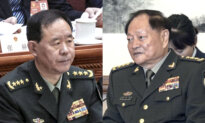
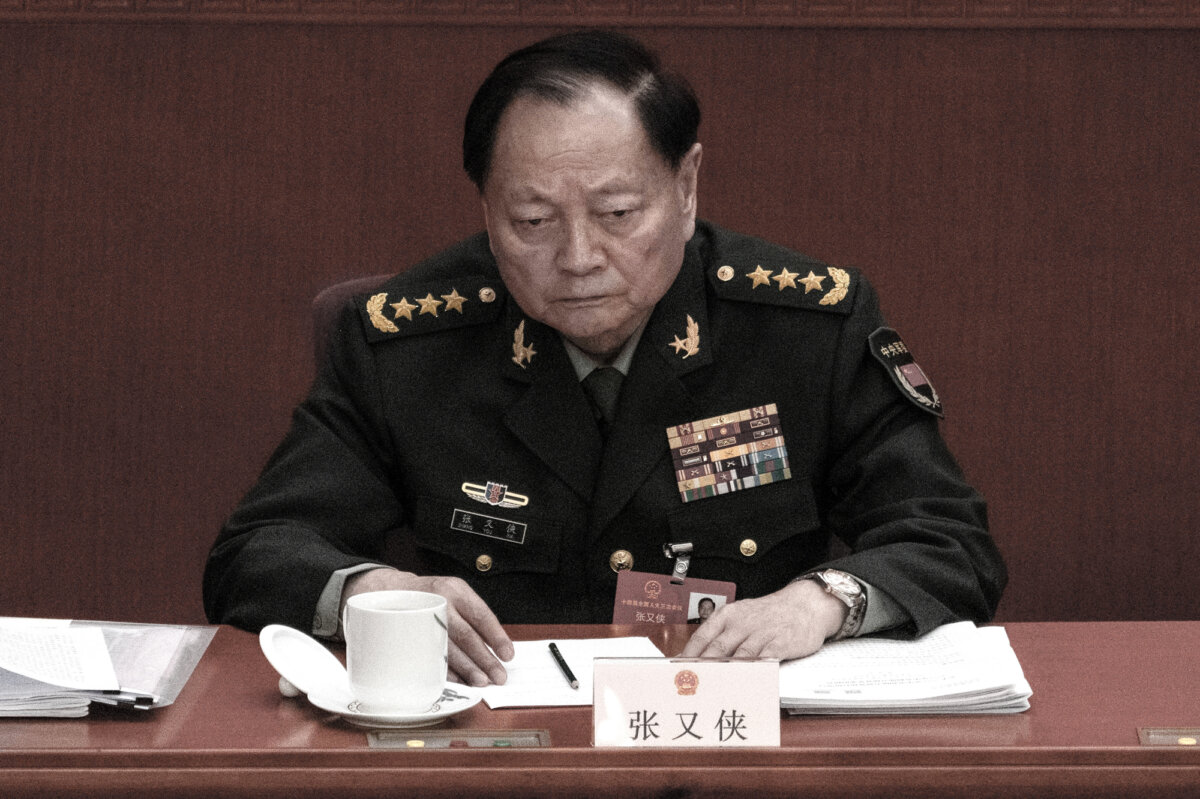
On Sept. 21, Beijing expelled Zhang Youxia, formerly vice chairman of the Central Military Commission, and Liu Zhenli, formerly head of the Joint Staff Department, from the Chinese Communist Party (CCP) and military service. The Chinese authorities claim that they committed serious disciplinary and legal violations.
The Chinese regime has previously carried out purges of its military leaders. According to the Center for Strategic and International Studies, more than 100 senior officers have either been purged or disappeared from public view since 2022, though not all cases have been formally confirmed.
The fundamental problem can be traced to the essential character of a totalitarian form of government.
Totalitarianism cannot tolerate institutions that possess an independent source of authority. When an institution has its own source of authority—such as religion, the family, the law, education, or the military profession—it produces loyalties and standards that are not entirely derived from the ruling party.
Chinese leader Mao Zedong realized from the start that the CCP could not merely have an army to defend China; it needed an army that was fundamentally loyal to the Party. “The Party commands the gun” was an essential feature of the Party’s institutional structure.
Mao dismissed Defense Minister Peng Dehuai after Peng challenged the disastrous Great Leap Forward. Peng had his own military prestige, which he had earned through the revolution and the wars. Hence, when he opposed Mao’s policies, he had an authority that had not been entirely created by Mao.
Soviet leader Josef Stalin had the same problem but on a much larger scale.
The Soviet officer corps had experience, professional relationships, and reputations that did not depend on Stalin personally. In the great purges of the late 1930s, thousands of officers were dismissed, sent to prison, or put to death.
The price became apparent at the time of the Soviet Union’s invasion of Finland in 1939. Poor preparation, logistical problems, inadequate tactics, and strong Finnish resistance were also significant factors. Nevertheless, the Red Army entered the conflict after its senior leadership had suffered huge disruptions and, despite a marked numerical advantage, performed poorly at the start.
Stalin had made his army more politically safe; as for whether he had improved it militarily, that was a different matter.
The crisis of 1989 revealed one thing the CCP would never forget—that when its own survival was at stake, the People’s Liberation Army (PLA) was the regime’s final guarantee. It also showed that obedience could not be taken for granted: High-ranking military officers opposed the use of force before the troops finally entered Beijing.
According to the Center for Strategic and International Studies, six of the seven military-region commanders were replaced between June 1989 and mid-1992.
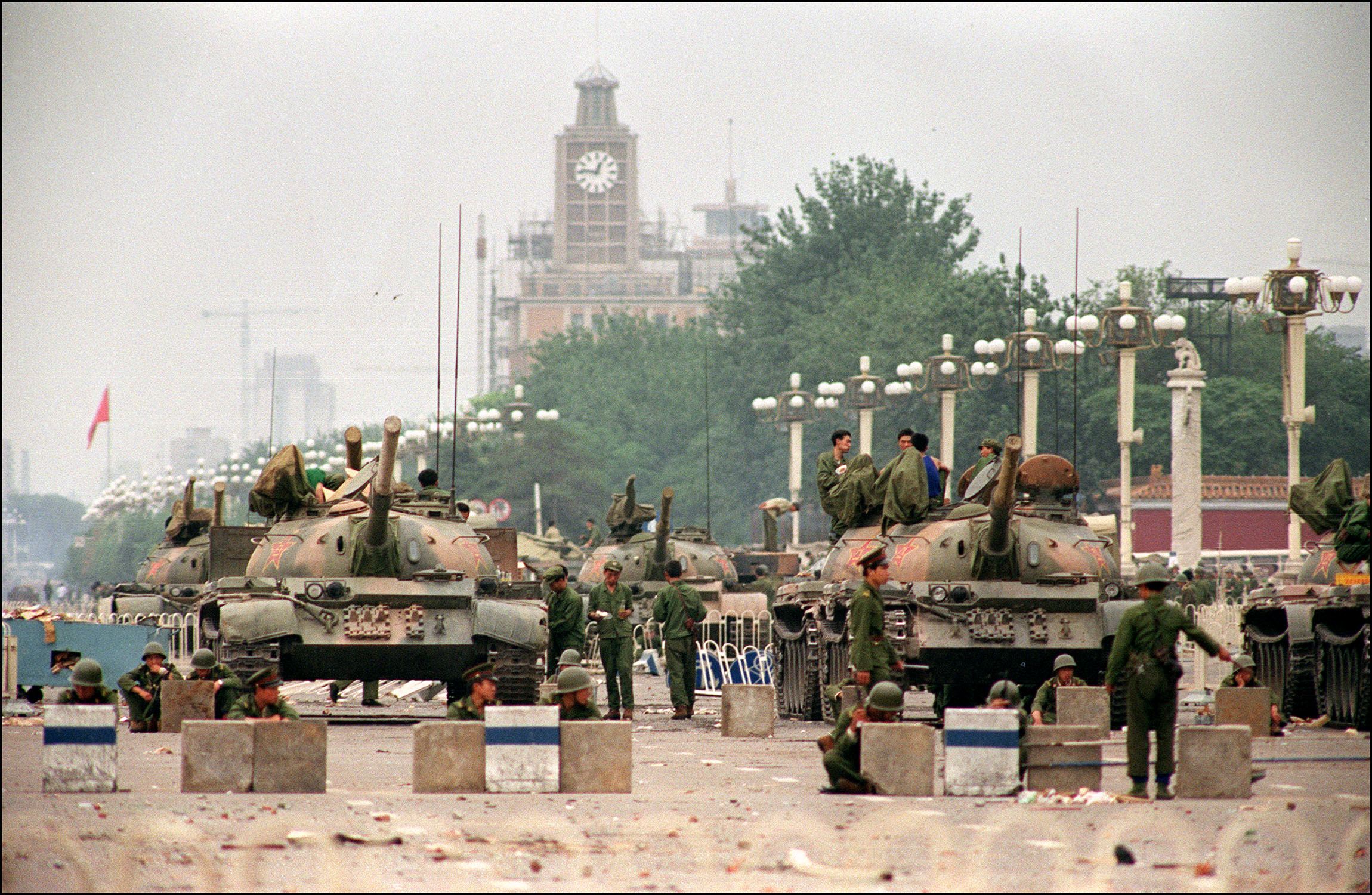 People’s Liberation Army tanks guard the strategic Chang’an Avenue leading to Tiananmen Square in Beijing on June 6, 1989. (Manuel Ceneta/AFP/Getty Images)
Phillip Saunders from the National Defense University maintains that CCP leader Xi Jinping’s present purges cast serious doubts on whether that unwritten agreement still exists in its former form.
Xi has taken more than 10 years to transform the PLA; he has reorganized the commands, strengthened Party supervision, launched a campaign against corruption, and required political loyalty. In 2022, he personally selected six other members of the Central Military Commission, five of whom were later removed.
Consequently, at a certain stage, the issue goes beyond the question of whether Xi has inherited corrupt officials from someone else.
China aims to have an officer corps capable of carrying out highly complex warfare. This calls for technical expertise, quick decision-making, and the ability to make adjustments when plans do not work.
A professional military will always develop its own form of authority. An experienced commander possesses knowledge that a political official lacks. An intelligence officer may come across facts that contradict what senior leaders expect to hear. A theater commander facing a rapidly changing battle may need to act before headquarters has approved each decision.
The Party requires these people to use their judgment.
Exactly this independent judgment is what totalitarian systems instinctively distrust.
Corrupt officers can harm an army, and their removal might improve it. The Red Army eventually learned from its experiences, adapted, and became a powerful fighting force.
If officers are unsure whether professional disagreement will be seen as a lack of political loyalty, then the military will not be able to function properly. A commander should be able to state that an exercise has failed, that a weapon did not perform as promised, or that a plan is flawed. However, if the only safe response is always the one the Party wants to hear, political control may increase even as military understanding declines.
For people who see the human person as having dignity and moral responsibility conferred by God rather than by the state, there is yet another question. Obedience does not remove moral responsibility; the 1989 Tiananmen Square massacre showed what takes place when the professional soldier, the individual human being, and the Party’s need for survival come into conflict.
Finally, totalitarian governments make it clear that these collisions should end in favor of the Party.
China aims to have a military capable of defeating sophisticated foreign enemies but unable to become an independent political force within the country. The more professional the military becomes, the greater its reliance on expertise, sound judgment, and institutional authority—which cannot be obtained merely through political loyalty.
Xi may succeed in making the PLA more obedient.
The more important question is whether the qualities required for unquestioned political obedience can coexist indefinitely with the qualities required for command in war.
Views expressed in this article are the opinions of the author and do not necessarily reflect the views of The Epoch Times.