
Commentary
The new U.S.–Denmark–Greenland agreement does more than expand U.S. Arctic access.
By locking in military rights, restricting rival footholds, and planning for Greenland’s possible independence, it addresses vulnerabilities that the United States has already encountered at Djibouti and Diego Garcia. The approach will leave Russia and China with far less room to maneuver.
When China opened its first overseas military base in Djibouti in 2017, U.S. forces were already entrenched at Camp Lemonnier only a few miles away. Washington had negotiated access through 2034, invested heavily in the installation, and regarded Djibouti as its enduring military hub in Africa.
None of that prevented Beijing from negotiating its own defense agreement, financing nearby port infrastructure, and constructing a military facility. The lesson was uncomfortable: guaranteed U.S. access does not necessarily mean denied adversary access.
Diego Garcia offers a different warning. The strategically indispensable U.S.–UK base has operated for decades, yet the sovereignty dispute over the Chagos Archipelago eventually forced London to negotiate with Mauritius on the legal framework governing the base’s future.
A 2025 treaty sought to guarantee British operational authority for 99 years while recognizing Mauritian sovereignty, but the arrangement has yet to reach the finish line.
Against those experiences, the new U.S.–Denmark–Greenland agreement looks considerably more consequential. Its importance is not simply that the United States receives more Arctic access. It attempts to settle, in advance, the questions that complicated Djibouti and Diego Garcia.
Djibouti: Access Without Exclusion
China exploited that opening. A Chinese state-owned company acquired a 23.5 percent stake in the Port of Djibouti, while a People’s Liberation Army base was constructed adjacent to the Doraleh Multipurpose Port.
Events in Djibouti illustrate a strategic weakness that Greenland now explicitly addresses: A host government can honor U.S. basing rights while simultaneously permitting a competitor to construct infrastructure next door.
Diego Garcia: When Sovereignty Becomes Part of the Basing Equation
Diego Garcia presents nearly the inverse problem. Decades of legal and political dispute over British sovereignty eventually made continued access inseparable from the larger Chagos question. Britain signed a treaty with Mauritius in May 2025, recognizing Mauritian sovereignty while retaining authority over Diego Garcia for an initial 99 years, potentially extendable beyond that.
The treaty contains substantial protections, including restrictions on foreign security forces and development near the base. Yet more than a year later, its implementation remains unresolved.
Diego Garcia is, therefore, less a story of failed basing than one of the strategic cost of unresolved political foundations.
Greenland Is a Preventative Approach
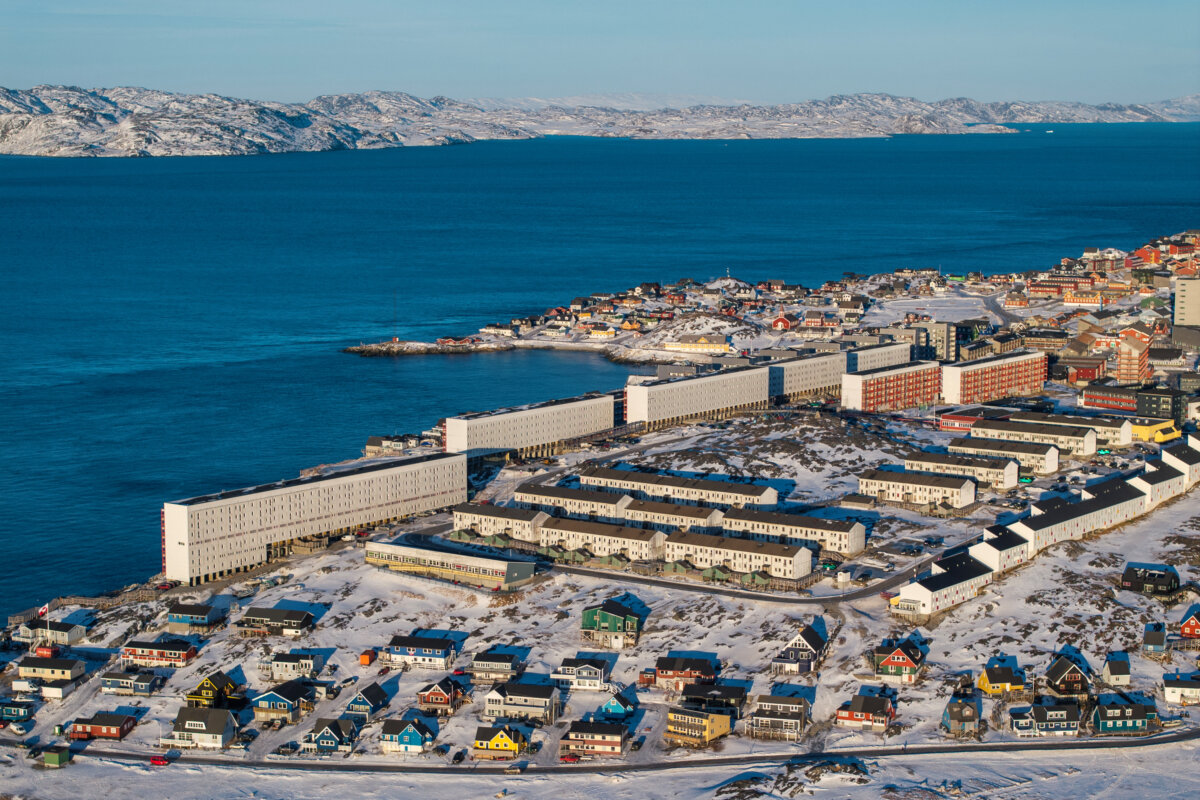
The United States can modernize and expand Pituffik Space Base and establish new national defense areas at Narsarsuaq and Mestersvig. Additional locations can be created through mutual agreement.
U.S. military aircraft receive broad rights to overfly and land throughout Greenland, while U.S. public vessels receive undersea access and movement within Greenlandic territorial waters except where the parties mutually agree otherwise.
The agreement also explicitly connects U.S. access to the development of the Golden Dome homeland-defense architecture.
 (L–R) U.S. President Donald Trump, Prime Minister of Denmark Mette Frederiksen, and Prime Minister of Greenland Jens-Frederik Nielsen hold up the proclamations during the signing of a security pact between the United States, Denmark, and Greenland during the 81st session of the U.N. General Assembly in New York City on Sept. 22, 2026. (Chip Somodevilla/Getty Images)
It strongly addresses the commercial route into strategic influence. Investors from states outside NATO, NATO partner countries, or the European Union can be prevented from acquiring control, significant influence, or sensitive non-public information in sectors where national security or public order is implicated.
Russia Gets a Different Kind of Cold Welcome
Russia’s problem is geography rather than investment. Moscow already possesses Arctic territory, military infrastructure, and the Northern Fleet that China lacks.
Greenland cannot remove those advantages. What it can do is help tighten the western approaches that Russian aircraft, submarines, and ships must use when moving toward North America and the North Atlantic.
The agreement calls for stronger NATO Arctic planning, presence, exercises, and joint intelligence collection. Denmark also commits to strengthening its own land, maritime, air, and space posture. Expanded American access across Greenland ensures an increasingly interconnected northern defense architecture rather than an isolated basing arrangement.
Permanence May Be the Most Important Provision
There is no expiration date on this agreement, preventing another Diego Garcia. Amendments require mutual consent. More significantly, if Greenland exercises its right to independence, Denmark and Greenland commit to ensuring that the future Greenlandic state remains in NATO and assumes the agreement’s existing defense obligations from the date of independence.
There are limits, however. Greenland retains sovereignty protections and its right to self-determination. New U.S. national defense areas beyond those specified still require agreement, and the foreign-investment language is not a blanket ban on Chinese commerce. The agreement also does not enter into force until Denmark and Greenland complete their parliamentary procedures.
Strategic Geography Needs Strategic Contracts
Djibouti demonstrated that a secure U.S. lease can coexist with a Chinese military base down the road. Diego Garcia demonstrated how unresolved questions about sovereignty can eventually affect the future of even the most valuable military installation.
The Greenland agreement expands U.S. military access. It restricts rival military presence and screens strategically sensitive investments. It strengthens NATO integration while also addressing espionage around national defense areas. And it attempts to preserve those arrangements even in the event of possible Greenlandic independence.
None of those measures removes Russia from the Arctic or prevents China from pursuing Arctic influence through Russia, shipping, science, or commerce. They do something more practical—they make one of the Arctic’s most important strategic geographic features considerably harder for either country to exploit.
In doing so, the agreement protects the economic and financial investment that the United States is willing to make while preserving the longstanding diplomatic investment across multiple NATO allies. Finally, and potentially most importantly, it strengthens the Western military position in a vulnerable region.
Views expressed in this article are the opinions of the author and do not necessarily reflect the views of The Epoch Times.