
Commentary
Recently, Commerce Secretary Howard Lutnick went on CNBC and said something so astonishing that I had to listen to it twice.
“One of my favorite things is when people talk about data centers using water,” he said. “The No. 1 product in America that uses water is cattle.” Then came the line that really got me: “Data centers don’t use water. This is propaganda by our adversaries to try to slow us down.”
No, Mr. Secretary.
The propaganda is telling Americans that the cow standing in a pasture eating grass is the environmental problem but that an industrial facility requiring enormous quantities of electricity, water in many designs, transmission infrastructure, servers, cooling equipment, and metals and minerals that first have to be mined from the earth is somehow resource-free.
I voted for President Donald Trump. I want American industry. I don’t want China controlling the technologies that will shape the next century. But “America First” cannot mean data centers first and Americans last, and it certainly cannot require pretending that producing food is the problem.
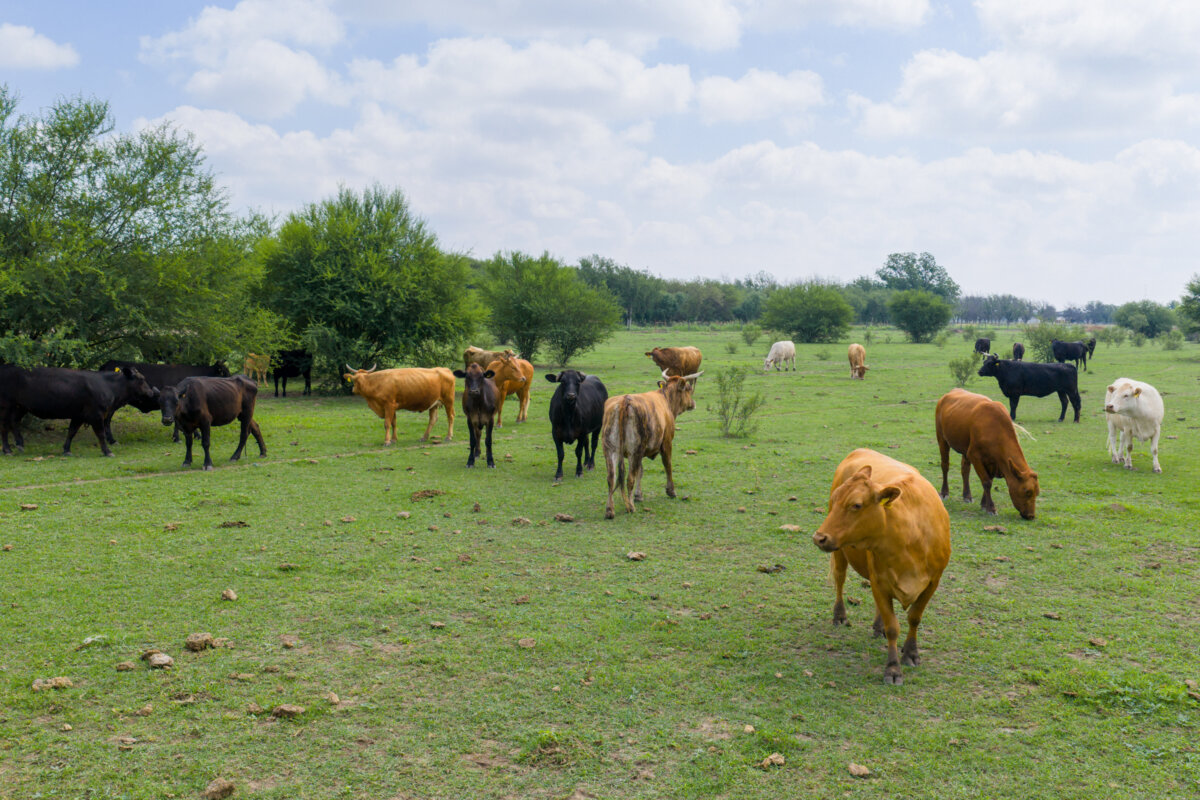
I raise roughly 45 head of cattle in Texas. Most of what they eat grows beneath their feet. Sun shines, rain falls, grass grows, and cattle eat something human beings cannot digest and transform it into milk and meat.
In winter, we buy some hay, primarily from wetter parts of Texas where it can generally be grown without irrigation. Our dairy cows receive some locally grown milo. Some milo in our region is irrigated, and I have no interest in hiding that fact, but much of it is rain-fed.
So how do we arrive at the staggering numbers routinely cited for how much water cattle “use”?
This is where the accounting gets interesting.
Water footprint researchers divide water into categories. “Blue water” is groundwater and surface water—the water coming from aquifers, rivers, and reservoirs. “Green water” is precipitation stored in the soil and used by plants. “Gray water” is an accounting measure related to water pollution.
A University of Nebraska analysis of beef production found that approximately 80 percent of the calculated water footprint of the systems it studied was green water—rainfall. More than 98 percent of the calculated footprint was associated with growing feed.
Think about what that means.
Rain falls from the sky onto a pasture. Grass grows using that moisture. A cow eats the grass. That rainfall can then be assigned to the cow’s “water footprint.”
The cow didn’t pump it from an aquifer. A city didn’t pipe it to the ranch. It wasn’t removed from somebody’s faucet. It rained, and it would have rained on that land whether my 45 cattle were standing there or not.
Yet when Americans hear that producing beef requires some staggering number of gallons of water, how many understand that rainfall falling on grass can be included in that number?
That isn’t a minor technicality. It fundamentally changes what the statistic communicates.
The U.S. Geological Survey provides another revealing way of looking at the question. Its livestock category counts water for livestock drinking, feedlots, dairies, and other on-farm livestock needs, while excluding irrigation used to grow feed.
Under that accounting, all American livestock combined—not merely beef cattle, but dairy cattle, pigs, poultry, sheep, goats, horses, and others—accounted for less than 1 percent of U.S. freshwater withdrawals in the government’s 2015 national assessment.
Now, intellectual honesty requires acknowledging the other side of that statistic. Growing irrigated feed uses real groundwater and surface water, and cattle eat some of it. I don’t dismiss that water simply because it complicates my argument. In fact, it is one of the reasons I believe that American cattle should be eating far more grass and relying less on irrigated grain.
But even feed accounting is more complicated than “water used to grow cattle feed.”
Cattle consume agricultural coproducts. Distillers’ grains remain after producing ethanol. Brewers’ grains remain after producing beer. Corn residue remains after harvesting the primary crop. Those aren’t trivial distinctions. Researchers studying cattle’s water footprint specifically use allocation methods to avoid charging the cow for the entire water footprint of a crop when cattle consume only a coproduct.
In the Nebraska analysis, for example, distillers’ grains were assigned 19 percent of the relevant footprint based on their share of ethanol production revenue, while corn residue was assigned only 5 percent of the corn crop’s footprint. Increasing distillers’ grains in the finishing diet actually reduced the modeled water footprint.
In other words, cattle can take something left over from producing fuel or human food and turn it into more human food.
I am certainly not here to defend the industrial cattle system. I recently wrote extensively about the disturbing phenomenon of lactating steers documented among conventional cattle at slaughter. I believe that there are serious problems with the way most American cattle are raised and finished.
I want more cattle eating grass, not fewer cattle existing.
Of our major meat animals, cattle have an extraordinary ability to produce human food from something humans cannot eat: grass. Commercial chickens and pigs depend overwhelmingly on cultivated feed. A cow can stand on land unsuitable for row crops, harvest cellulose growing from sunlight and rainfall, and transform it into meat and milk while returning manure and urine to the soil.
Could we raise cattle in a better way? Absolutely. We should rely much more heavily on grass and much less on grain. Irrigating thirsty feed crops in dry regions is a legitimate water issue.
But that is an argument for changing how we raise cattle.
It is not an argument against the cow.
And it certainly isn’t an argument for pretending that data centers don’t consume resources.
According to Lawrence Berkeley National Laboratory, U.S. data centers directly consumed approximately 66 billion liters (17.4 billion gallons) of water in 2023. That doesn’t include the indirect water consumption associated with generating the enormous quantities of electricity they require. Berkeley’s researchers separately analyze that upstream water footprint as well.
Data centers vary enormously. Some newer cooling designs can dramatically reduce water consumption. That’s good. We should demand and encourage those innovations.
But “we can build data centers that use much less water” is very different from the Commerce secretary going on national television and declaring that “data centers don’t use water.”
More remarkably, Lutnick himself described them differently last year. In a May 2025 television appearance, while promoting the jobs created by artificial intelligence infrastructure, he said: “These AI things suck water. They need water.”
Last year they sucked water. This year they don’t use water, and apparently questioning that transformation is “propaganda.”
There is an even larger accounting problem here. If we’re going to assign every upstream gallon involved in producing cattle feed to the cow, intellectual consistency demands that we assign the upstream resource requirements of electricity generation, semiconductor manufacturing, mining, transmission infrastructure, and cooling equipment to the data center.
You don’t get to calculate cattle from raindrop to hamburger while calculating the data center from the water meter at the front gate.
What bothers me most is bigger than Lutnick or one ridiculous television statement. Americans have spent decades being taught to feel guilty about the resources required for our own existence. Our cars are the problem. Our air conditioners are the problem. Our gas stoves are the problem. Our hamburgers are the problem. The cows are burping, the cows are drinking, the cows require land.
There is always another reason ordinary human existence is supposedly imposing an unacceptable burden on the planet.
Meanwhile, we are embarking on an unprecedented expansion of industrial computing infrastructure, and apparently we’re supposed to scrutinize the resources required to produce dinner while accepting the resources required for AI without question.
Cattle require lots of land. That’s not the same thing as requiring enormous industrial inputs. In a grass-based system, much of what a cow needs arrives as sunlight and rainfall spread across a biological landscape.
A data center represents almost the opposite model. It can occupy comparatively little land precisely because tremendous resource demands are concentrated onto a relatively small footprint: electricity, transmission capacity, cooling infrastructure, manufactured equipment, mined materials, and, depending on its design and location, substantial water.
A small physical footprint does not mean a small resource footprint.
There is also a distinction so obvious that perhaps we have become too sophisticated to say it aloud: Human beings have to eat. AI is something civilization has decided that it wants. Food is something civilization requires.
Build the data centers. Build American technology. Compete with China. But tell communities honestly what these facilities require. Tell us how much electricity they need, how much water they will consume, what infrastructure must be built, and who is going to pay for it.
Make the argument for AI on its merits.
But don’t point across the fence at the farmer and tell Americans that the cow is the problem.
Lutnick was right about one thing: There is propaganda in this conversation.
Just not where he thinks it is.
Views expressed in this article are the opinions of the author and do not necessarily reflect the views of The Epoch Times.







