
Commentary
Let me begin with clarity.
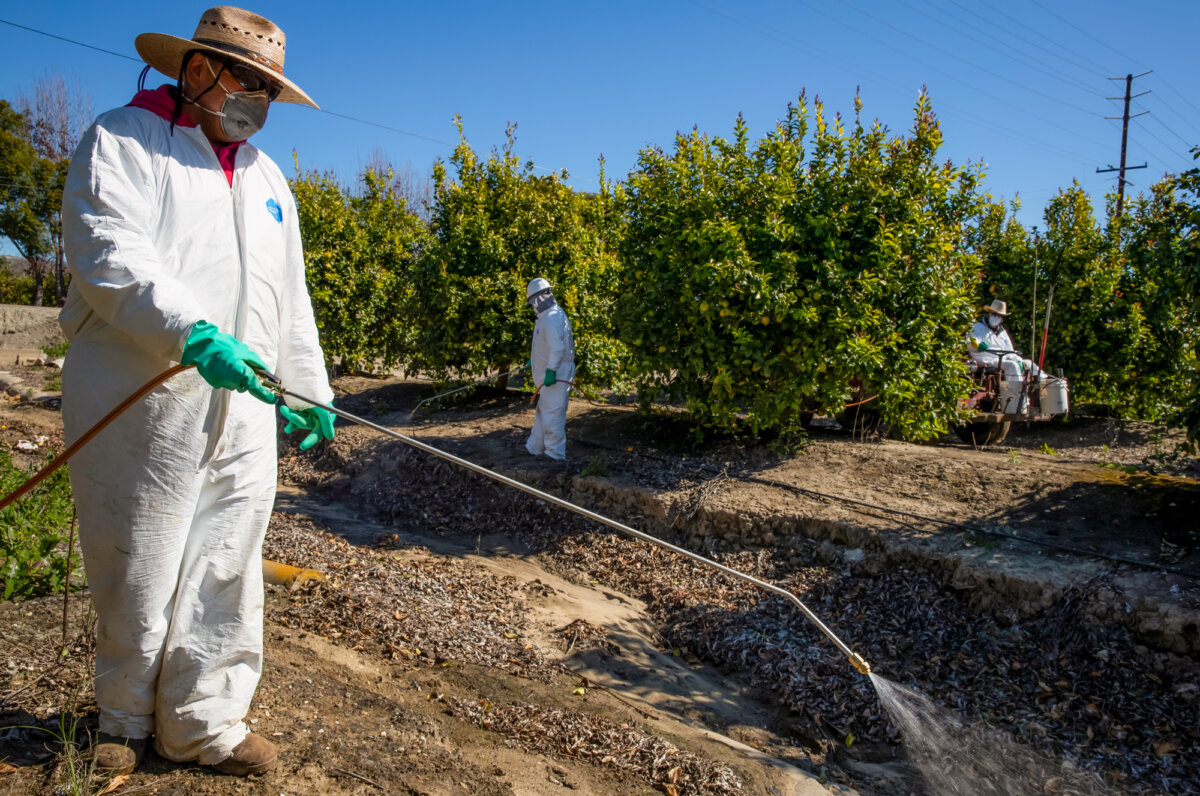
I oppose the widespread use of chemical inputs in our food system. My life’s work centers on building soil biology, integrating livestock, and reducing reliance on synthetic fertilizers and herbicides. I do not believe that we should be using glyphosate at the volume we are using it today.
At the same time, two things can be true.
President Donald Trump recently invoked national security authority to prioritize domestic production of certain agricultural chemicals, including glyphosate. On a narrow strategic level, he is not wrong to identify a vulnerability. U.S. agriculture is heavily dependent on glyphosate, particularly in commodity row-crop production. Portions of the supply chain rely on overseas manufacturing. If that supply were disrupted abruptly, major sectors of U.S. agriculture would face real operational strain.
Food is national security. A system dependent on inputs that we do not fully control is, by definition, vulnerable.
But that reality forces a deeper question: Should we be this dependent in the first place?
If the disappearance of a single herbicide could destabilize large portions of our food production system, that signals fragility. A resilient agricultural system adapts. It does not collapse because one chemical becomes scarce. The long-term solution should be reducing dependency, not cementing it.
We can debate whether invoking national security authority was appropriate. What is more troubling is the liability shield extended to manufacturers operating under this framework.
Bayer, which acquired Monsanto in 2018, has already paid approximately $10 billion to settle tens of thousands of Roundup-related lawsuits alleging that glyphosate exposure caused non-Hodgkin lymphoma. In addition to those payouts, the company has publicly disclosed billions of dollars more—commonly reported in the $6 billion to $7 billion range—reserved to address unresolved and future claims.
That means that the company has already paid out more than it has set aside for the remaining pipeline of litigation.
Corporations do not arrive at those numbers casually. They assess verdict trends, settlement averages, appellate outcomes, and scientific rulings. They model exposure carefully because shareholders demand it. The fact that roughly $10 billion has already been paid demonstrates both the scale of litigation and the seriousness of the legal risk.
Whether $6 billion to $7 billion will ultimately be sufficient remains to be seen. But the history of payouts suggests that the exposure has been substantial.
That context makes the liability shield harder to ignore.
Liability is one of the few mechanisms that pressure corporations to improve safety. Public companies have a fiduciary duty to maximize shareholder value. If harm results in significant financial loss, there is an incentive to reformulate, improve warnings, invest in alternatives, or mitigate risk. If liability is limited or shielded, that pressure weakens.
For years, chemical manufacturers have sought expanded liability protections through state preemption laws and federal legislative channels. Efforts have appeared in state pesticide-labeling debates and in discussions surrounding federal agricultural legislation. When those efforts faced resistance, national security authority became another path.
This is not an argument that glyphosate has no strategic relevance. It is an argument that accountability should not disappear when strategic relevance is invoked.
Regulatory agencies such as the Environmental Protection Agency maintain that glyphosate is safe when used according to label directions. At the same time, the International Agency for Research on Cancer classified glyphosate in 2015 as “probably carcinogenic to humans.” Courts have seen juries award substantial verdicts to plaintiffs alleging harm, although appeals and ongoing litigation continue to shape the legal landscape.
Scientific disagreement exists. Legal disagreement exists. Public trust is divided.
That is precisely why liability matters.
If manufacturers are confident in the safety of their products, the courtroom remains the proper venue to demonstrate that. Shielding liability while litigation continues suggests that protecting production stability is being prioritized over resolving public concern.
This decision also conflicts with the principles many voters associate with the Make America Healthy Again coalition. That movement has emphasized reducing toxic burden, restoring soil health, and rebuilding trust between citizens and institutions. Many supporters believed that accountability would return to food and health systems.
Declaring glyphosate strategically important addresses supply vulnerability. Limiting manufacturer liability addresses corporate exposure. Those are distinct policy choices.
It is possible to acknowledge that our agricultural system currently depends heavily on glyphosate while also insisting that such dependency is a structural weakness. It is possible to support strong national security policy while rejecting special protections that insulate powerful corporations from legal consequences.
If glyphosate’s absence would create instability, that should motivate diversification—expanded crop rotations, integrated livestock systems, mechanical weed management, cover cropping, and investment in regenerative models that reduce chemical reliance. True resilience means decreasing single-point vulnerabilities.
Food security is national security. Soil health is national security. Decentralization is national security.
When liability is removed while chemical dependence remains, we are not strengthening the system. We are protecting scale.
Two realities can coexist. Glyphosate dependency is a strategic vulnerability. Shielding manufacturers from accountability is a policy mistake.
If we want a food system that is secure, healthy, and trusted, accountability cannot be optional.
Views expressed in this article are the opinions of the author and do not necessarily reflect the views of The Epoch Times.