Commentary
The word “isolationist” gets thrown around today like an accusation, as if caring about your own people, land, and future is something to be ashamed of.
But as someone who lives on land, grows food, feeds community, and raises children while watching the slow unraveling of the systems we depend on, I don’t recognize that label.
What I recognize is something instinctual and rooted.
The United States is a democratic republic, not an empire. And yet we increasingly behave like one—spread thin across the globe, deeply invested in everyone else’s problems, while our own foundations quietly erode.
Everywhere I look, I see signs of decline: metabolic illness, hollowed-out cities, veterans sleeping on sidewalks, fentanyl killing our children, and a generation so unhealthy that the majority of young people are no longer fit to serve in the military.
That should stop us cold.
I don’t believe that the answer is more expansion, more intervention, or more money printed to prop up systems that no longer work. I believe that the answer is the opposite. I believe that it is time to hunker down—not in fear but in responsibility.
Farmers and homesteaders understand this without needing a policy paper to explain it. In any real emergency, the priorities are clear: air, water, food, fuel, and the ability to protect what you have built. You do not worry about the neighbor’s problems until your own house is in order. A man must take care of his wife and children before he can take care of the neighborhood. Nations are no different.
All of us should be asking ourselves a simple question in our day-to-day lives: Are our actions serving the natural world that sustains us or an empire that extracts from it? That distinction matters—because empires demand constant expansion, while stewardship asks us to protect the systems that give us life.
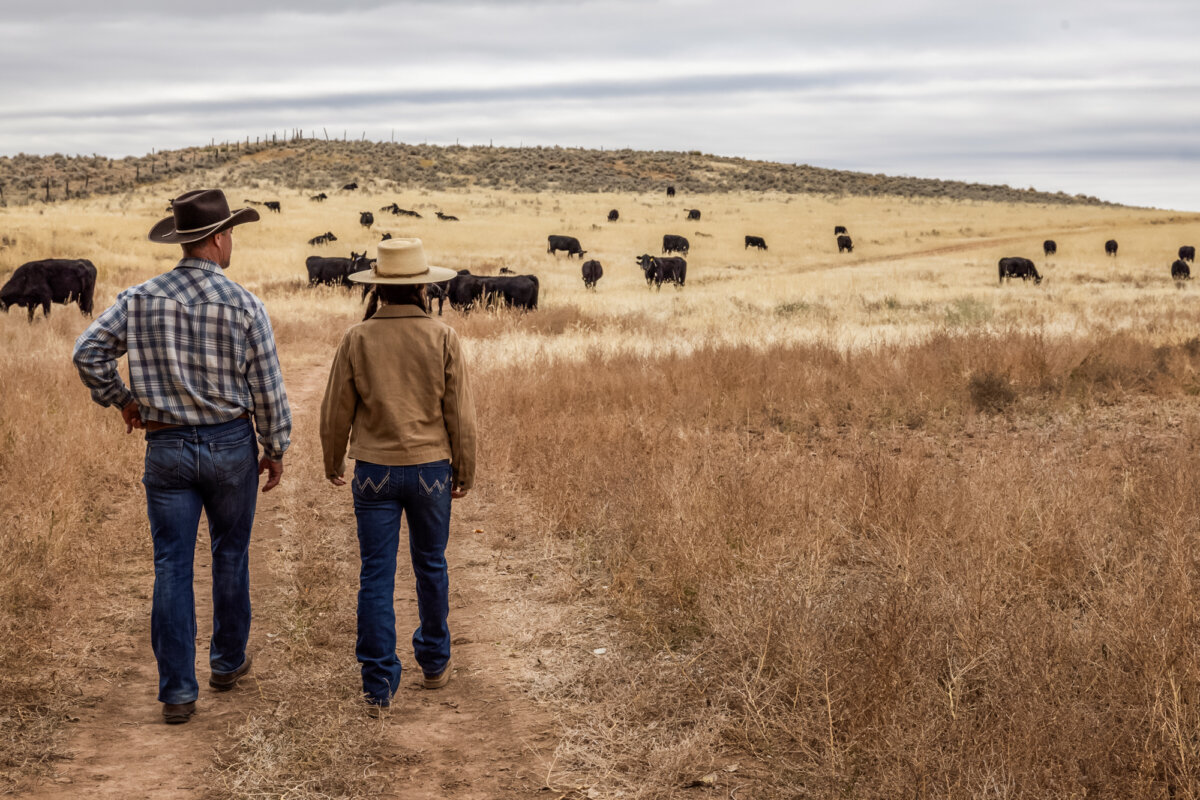
We are sitting on an extraordinary amount of farmland. Nearly two-fifths of this country is agricultural land. We have the capacity to be one of the strongest food-producing nations on Earth—not just in volume but in resilience, nutrition, and diversity. And yet we have dramatically narrowed our food system. Where regions once grew many kinds of crops, we now rely heavily on a small number of commodity crops, propped up by chemical inputs and monocultures that have led to a significant collapse of soil microbiology.
That collapse does not stay in the soil. It shows up in the food, in the animals, and ultimately in human bodies.
At the same time, our cattle herd is near historic lows. Breeding stock has been reduced, which means fewer animals tomorrow, not just today. Protein security is quietly becoming a concern in a nation that once assumed abundance was guaranteed. These are not abstract trends. They are foundational to survival.
Energy tells the same story. We have abundant domestic oil, yet our refining infrastructure was built decades ago to process heavier, sour crude from elsewhere rather than the cleaner, light sweet crude that largely comes from our own land. Updating refineries to better process domestic oil would require serious investment—but we routinely spend far more overseas with little measurable return. We seem willing to fund endless foreign commitments while hesitating to invest in the infrastructure that would strengthen our own independence.
This isn’t about cutting ourselves off from the world. It’s about recognizing that long supply chains are dangerous. They are vulnerable to natural disasters, war, disease, and disruption. A nation that cannot feed or fuel itself without fragile global systems is not strong—it is exposed.
What is truly dangerous is pretending that these risks don’t exist.
There are forces pushing us toward globalism, toward abstraction, toward dependency. But what we need right now is individualism rooted in responsibility. Strong families. Strong communities. Strong farmers. Domestic production that prioritizes nourishment over efficiency alone. Faith restored as a foundation, not an accessory. Freedom paired with accountability, not entitlement.
Empires in decline follow a familiar pattern: expand the war footprint, debase the currency, and distract the population. At roughly the 250-year mark, we should be asking whether we want to follow that same script—or whether we are brave enough to try something different.
What if we came home?
What if we reinvigorated our farming base, diversified what we grow, rebuilt our cattle herds, restored soil life, and became a lean, efficient, nutrient-dense food-producing nation?
What if we secured our borders, cared for our veterans, shortened our supply chains, and invested in domestic energy and infrastructure with the same urgency we bring to foreign conflicts?
That isn’t isolationism. It’s stewardship.
I love this country. But love isn’t blind loyalty—it’s responsibility. And right now, responsibility looks like prioritizing faith, family, food, and country, in that order. If taking care of home first earns me a label, so be it.
I’m just a homesteader asking my nation to buck up and do the same.
Views expressed in this article are the opinions of the author and do not necessarily reflect the views of The Epoch Times.