
Commentary
I was talking with my friend Joel Hollingsworth of Smoke River Ranch. Both of us were standing squarely in the reality of what it now takes to make a living farming in America. We weren’t talking politics or theory. We were talking about labor—real bodies, real endurance, real work—the kind of thing you can’t fix with investors, branding, or better spreadsheets.
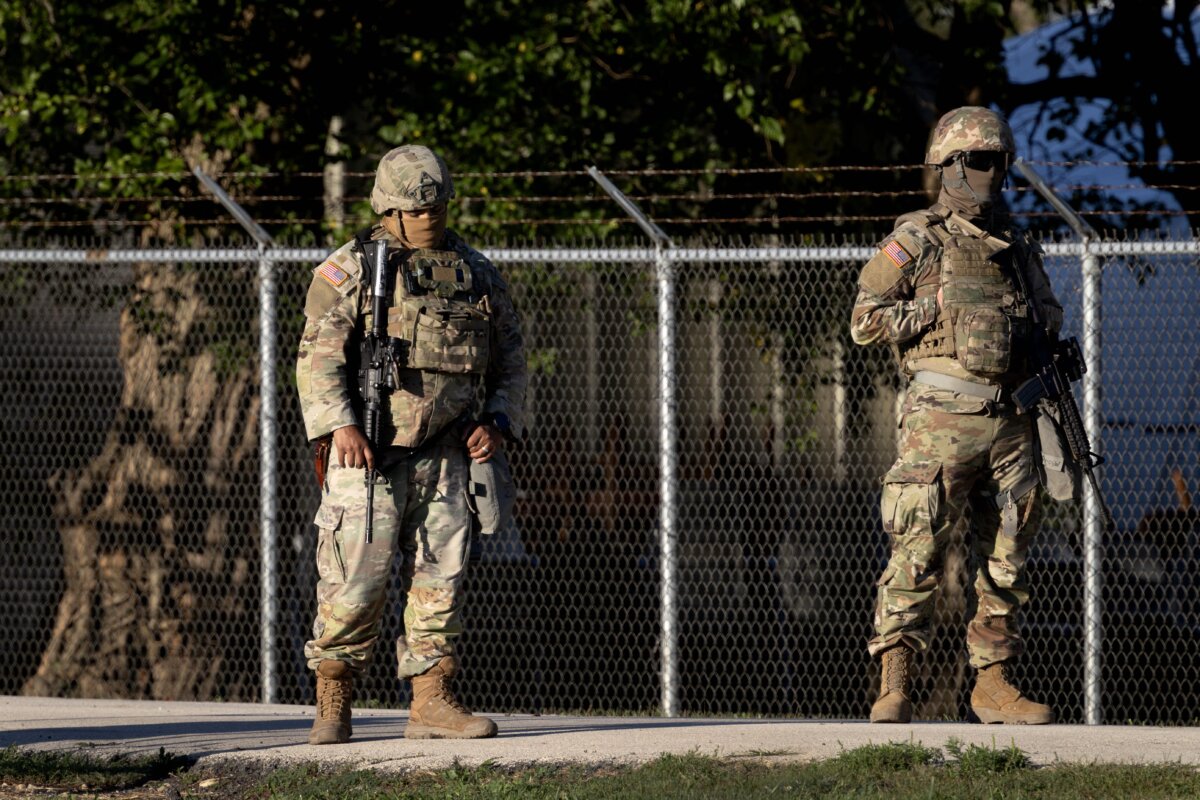
This conversation came on the heels of a recent announcement citing a Pentagon figure that stopped me cold: 77 percent of young Americans between the ages of 18 and 24 are not eligible for military service without a waiver. The reasons vary—physical health, weight, drug use, mental health, and behavioral issues—but the conclusion is the same: Only about 23 percent of young men meet the basic standards to serve.
That number is often framed as a recruiting problem, but it isn’t. It’s a human capacity problem.
If nearly eight out of 10 young men can’t meet the baseline requirements to serve in the military, we need to ask a harder question: Who is capable of doing the work that civilization actually depends on?
Farming isn’t a lifestyle brand. It isn’t sedentary, predictable, or optional. It’s physical, mentally demanding, and relentless. It requires strength, adaptability, observation, and the ability to respond in real time to weather, animals, markets, and machinery. It demands entrepreneurship, humility, and the ability to problem-solve without a manual or a safety net.
If only 23 percent of young men are fit to fight, it’s generous—very generous—to assume that even that many are fit to farm.
I felt this viscerally while walking through a big-box store doing some Christmas shopping. I found myself quietly observing the men around me and asking a simple question: How many of these men could work five to seven days per week on a farm? The answer was unsettling; 30 percent would have been generous.
Hollingsworth put words to what many farmers are feeling but rarely say out loud.
“If 77 percent of them can’t fight, then they can’t farm either,” he said.
“What do we do when the generation is simply missing, and there aren’t enough of them to receive the baton of this industry as the boomers retire? What do I do if I can’t find the help I need?”
That question hangs over nearly every farming conversation today.
A demographic reality magnifies the problem few want to confront. We are living through an inverted population curve: More people are leaving the workforce than entering it. Birth rates are down. Retirements are accelerating. The pipeline of young workers is narrowing at the exact moment we need it to widen.
This isn’t just a farming issue. It’s a society-wide issue.
It’s also the context in which we are racing toward automation, robotics, and artificial intelligence. Not because it’s exciting or innovative, but because we don’t have enough capable human beings. Machines are being positioned as the solution to labor shortages because the labor itself is disappearing.
On our farm, we rely on the agricultural visa program. For 9 1/2 months of the year, we have strong, able-bodied men from Mexico who are eager to work, proud to provide for their families, and grateful for the opportunity. For 2 1/2 months each year, we have no one.
We shouldn’t have to leave the country to find willing, capable workers. Hollingsworth said that plainly, and I agree. But agreement doesn’t change reality. Labor is the one resource you can’t fix with money. You need healthy bodies, present minds, and willing spirits, and those are increasingly hard to find.
This isn’t just a health crisis. It’s also an education crisis.
We’ve raised a generation prepared to be cogs in a corporate machine—trained to sit still, comply, and regurgitate information—but not to think critically, solve real-world problems, or take responsibility when things break. Farming demands exactly what modern education has neglected: observation, adaptability, initiative, and resilience.
A farm doesn’t care about credentials. It cares whether you can think, move, lift, fix, notice, and endure.
All of this is unfolding alongside another reality few are talking about. Over the next 20 years, more than half of U.S. farmland is expected to change hands. This will be the largest transfer of agricultural land in American history.
Historically, transfers of this scale have occurred only as a result of war, collapse, or forced displacement. To our knowledge, there is no precedent for this happening during peacetime. We don’t know how this will go. There is no roadmap, no historical model to reference. We are entering uncharted territory, attempting a generational handoff of the land without enough healthy, capable people prepared to receive it.
The question isn’t simply who will own the land. It’s who will steward it.
Land doesn’t regenerate itself. Food doesn’t come from algorithms. Soil requires intuition, patience, observation, and physical work. If the people capable of that work disappear, no technology will save us.
We’ve been here before, but not like this. During World War II, the draft revealed that roughly 10 percent to 15 percent of men were rejected because of undernutrition or being underweight. That was enough to alarm military leaders and policymakers, leading to the creation of the National School Lunch Program in 1946, grounded in the belief that feeding children well was a matter of national security.
That crisis was real, but it was small compared with today’s crisis.
Back then, the problem was scarcity. Today, it’s abundance without nourishment. Obesity, metabolic disease, addiction, anxiety, and physical fragility have replaced hunger. Nearly four out of five young men are now unfit to serve—not because they lack calories, but because they lack health.
Throughout history, the farmer and the warrior have often been the same man. The one who could defend the land was the one who worked it. Even today, many soldiers return home carrying things they will never speak of, and some find their only peace back in the soil, working with life instead of death.
There is something deeply spiritual that connects the warrior and the farmer. Both require sacrifice. Both require discipline. Both require a willingness to stand between chaos and the people you love.
So if we no longer have men who can farm or fight, a final question must be asked, one we’ve been avoiding: Who protects the women and children?
We can build machines to harvest crops and deploy software to optimize systems, but we can’t automate courage. We can’t outsource responsibility. And we can’t program wisdom, discernment, or moral clarity.
Farming is incredibly hard. It takes desire, love for the land, and a willingness to fight for what is right and for a future that may never thank you. If we want food security, real resilience, and a society capable of defending itself, we must begin telling the truth about where we are and what we’re losing.
Because if 77 percent of our young men can’t fight, and they can’t farm, the question isn’t whether we need more technology; rather, it’s whether we are willing to rebuild the kind of humans no machine can replace.
Views expressed in this article are the opinions of the author and do not necessarily reflect the views of The Epoch Times.