
Commentary
Every empire that inflated its money into meaninglessness eventually collapsed. Rome debased its coins until the silver was nearly gone. France printed assignats backed by confiscated church land until they became worthless. China’s Yuan dynasty flooded the economy with paper notes until people refused to accept them. Whenever money becomes unmoored from real value, the results are the same: corruption, chaos, and collapse.
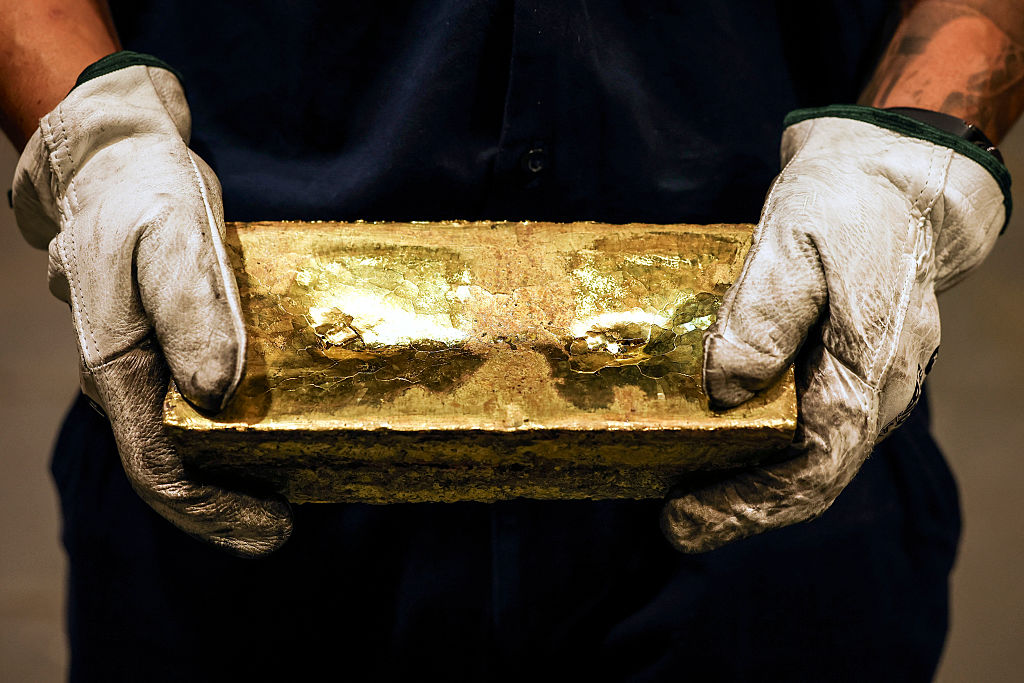
The United States reached its own turning point in 1971, when President Richard Nixon ended the gold standard. From that moment on, the dollar was no longer backed by something that came from the earth. For thousands of years, our currency had been grounded in gold—dug from the ground, limited by its supply, and therefore anchored in reality. When we went off the gold standard, we disconnected our money from the soil beneath our feet.
That act, perhaps more than we realized, ungrounded not just our economy but our culture. We replaced a system tied to the limits of the earth with one tied to the boundlessness of human desire. Money could now be created at will, with no natural constraint. And when money has no roots, it grows recklessly, feeding expansion for expansion’s sake.
If there were still limits on money, there would be limits on what we could build. Instead, we now pave and construct endlessly: shopping malls, parking lots, warehouses, and data centers. This unnecessary spread of infrastructure devours the land and creates real problems for nature. We have lost the restraint that once came from knowing that everything had to be paid for with something tangible.
We understand grounding in our bodies. Walking barefoot on the earth calms our nervous systems and restores balance. We understand grounding in electricity, too, since every circuit requires a grounding wire to stay stable and safe.
It is no coincidence that the word “currency” shares its root with “current.” They both come from the Latin “currere,” meaning “to run” or “to flow.” Both describe movement of energy, one electrical and one economic. And just like an electrical current, money without grounding becomes volatile. When energy flows without a connection to the earth, it sparks instability and chaos. The same is true for currency.
When I first learned about bitcoin, I thought that I had found the future. For a while, I was what you might call a bitcoin maximalist. I believed that digital currency was incorruptible, a kind of electronic gold. I also thought that people who invested in precious metals were stuck in the past. But as I have written more about returning to natural systems, I have begun to wonder whether the old ways of money, those that literally came from the ground, were wiser than we realized.
Some argue that the U.S. dollar is still connected to the earth through oil, since our global monetary dominance has been reinforced by the “petrodollar” system. But that link is political, not physical. Oil comes from the ground, yes, but our money is not measured against barrels of petroleum the way it was once measured against ounces of gold. It is a tenuous connection at best.
Maybe money needs grounding again. Not necessarily a return to the exact gold standard, but a reconnection of value to the real world—to the material, finite, and sacred. We need money that behaves more like nature: self-regulating, cyclical, and honest about limits.
Ungrounded money fuels ungrounded behavior. It encourages endless speculation, the illusion of infinite growth, and a culture of consumption without consequence. When we can create trillions of dollars out of thin air, we stop asking whether what we build, buy, or destroy is worth it.
People often say inflation is complicated, but at its heart it is simple: too much money chasing too few real things. And maybe the reason we chase is because we have forgotten that money was once something of the earth, not just a symbol floating above it.
If nature teaches us anything, it is that growth without balance leads to collapse. Trees that shoot up too fast without deep roots topple in the first storm. Money without deep roots becomes the same: impressive for a time, but ultimately unstable.
Some may say the gold standard was limiting. They are right. It was. That was its strength. Limits create balance. They force discernment. They protect what matters.
Perhaps grounding money again, anchoring it to a rare, finite metal of the earth, could reintroduce a sense of reverence for the real. When money has to answer to nature, we might begin to live within her rhythms instead of against them.
Maybe that is the next great economic revolution. Not a new technology, but a return to the old truth that all value begins in the soil.
Because in the end, ungrounded money behaves like ungrounded people. It sparks, burns out, and forgets where it came from.
It is time we remembered.
Views expressed in this article are the opinions of the author and do not necessarily reflect the views of The Epoch Times.







