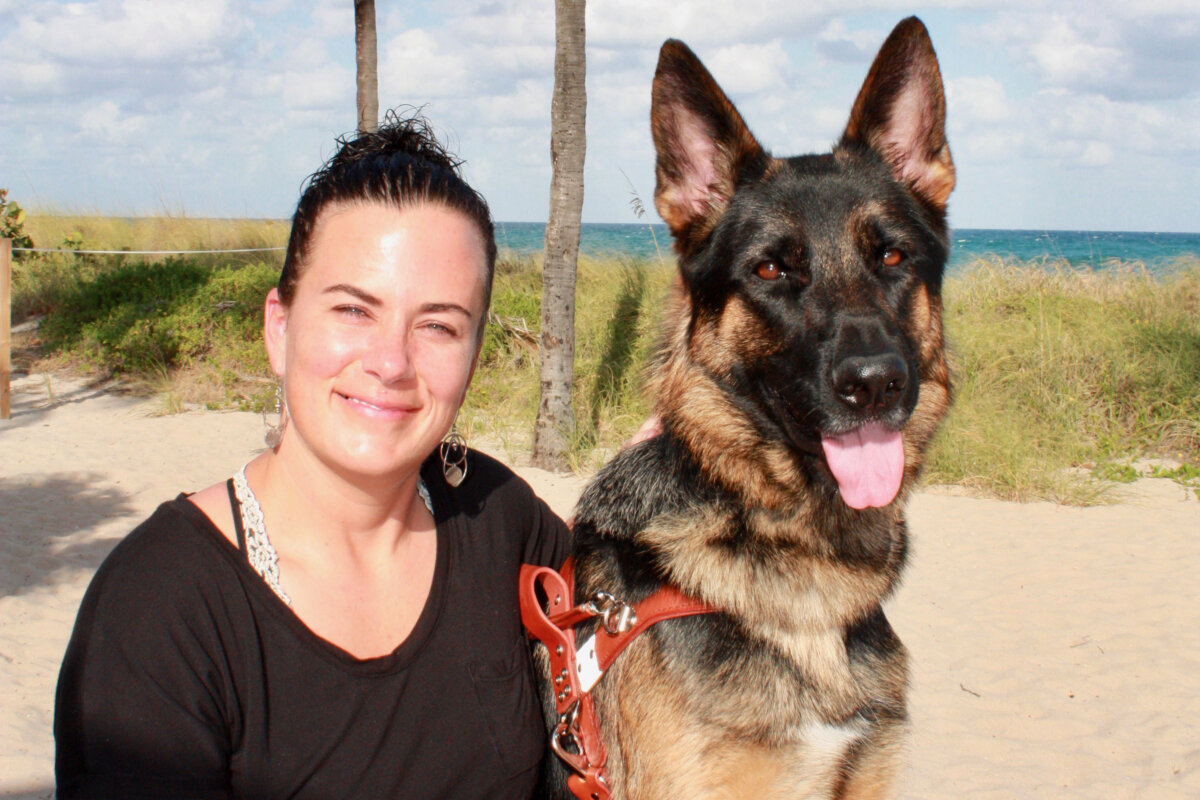

As a brain injury slowly took Army veteran Shawn Cheshire’s sight from her, a debilitating depression took hold.
Through a combination of adaptive sports and treatment for complex post-traumatic stress disorder (CPTSD), the single mother of two eventually began rebuilding her life. This included riding a bicycle across America.
“The sports, the movement, the challenge, the taking care of myself—eating well, getting rest, all aspects of what comes with being a good athlete—was where I could put that pain, that sadness, that isolation,” Cheshire told The Epoch Times in a recent interview. “It became this healthy place for me instead of sitting in it and percolating. I was having this forward momentum.”
Her 3,600-mile 2020 bicycle journey from Oregon to Virginia—and the events leading up to it—are explored in the documentary “Blind AF,” now streaming on Amazon Prime, Apple TV, Tubi, and Documentary+. Its director Gina LeVay also took part in the interview.
In the trip, Cheshire rides a bike for 60 straight days across the United States—the first blind person to accomplish that feat.
“I was scared, tired, worried I wouldn’t be able to do it,” the Texas native recalled. “Not from a physical perspective, but because of the mental focus it took every day. Emotional and mental fatigue is this whole different level of fatigue. As an athlete, I’m really good at pushing myself, but there’s only so much pushing you can do in that.”
To make it through the ride, however, she first had to get out of her own way.
“I had to take a step back and realize that if I was going to get through the ride in its entirety, I needed to learn how to let go of the day before and only focus on the day I was in,” Cheshire said. “Be very present for that day. Do not think about the end. I’ve got this many miles left to go.”
That epiphany could be valuable to Cheshire off the bike as well, when she thinks back to how she got here.
After eight years in the military where she was an armament systems mechanic on AH-1 attack helicopters, Cheshire transitioned to civilian life and trained as a paramedic. Then, in 2009, her world as she knew it was forever altered. A combative patient with dementia pushed her backward in an ambulance, causing the traumatic brain injury that left her with cortical blindness that over the next two years led to total loss of vision.
With encouragement from the Syracuse VA, her mobility instructor, and Team Red, White & Blue, Cheshire threw herself—and her pain—into adaptive sports, starting with paracycling. She went on to compete nationally and internationally in adaptive rowing, biathlon, tandem road paracycling and tandem track para-cycling. She became a 13-time U.S. Paracycling National Champion, representing the United States at the inaugural Invictus Games in London in 2014, and competing for Team USA at the 2016 Paralympic Games in Rio.
After Rio, Cheshire, whose mother and grandfather served in different branches of the military, began pursuing something bigger than medals. She wanted to do things no other blind person had done. She wanted to challenge the assumptions people—including herself—had about people who are blind.
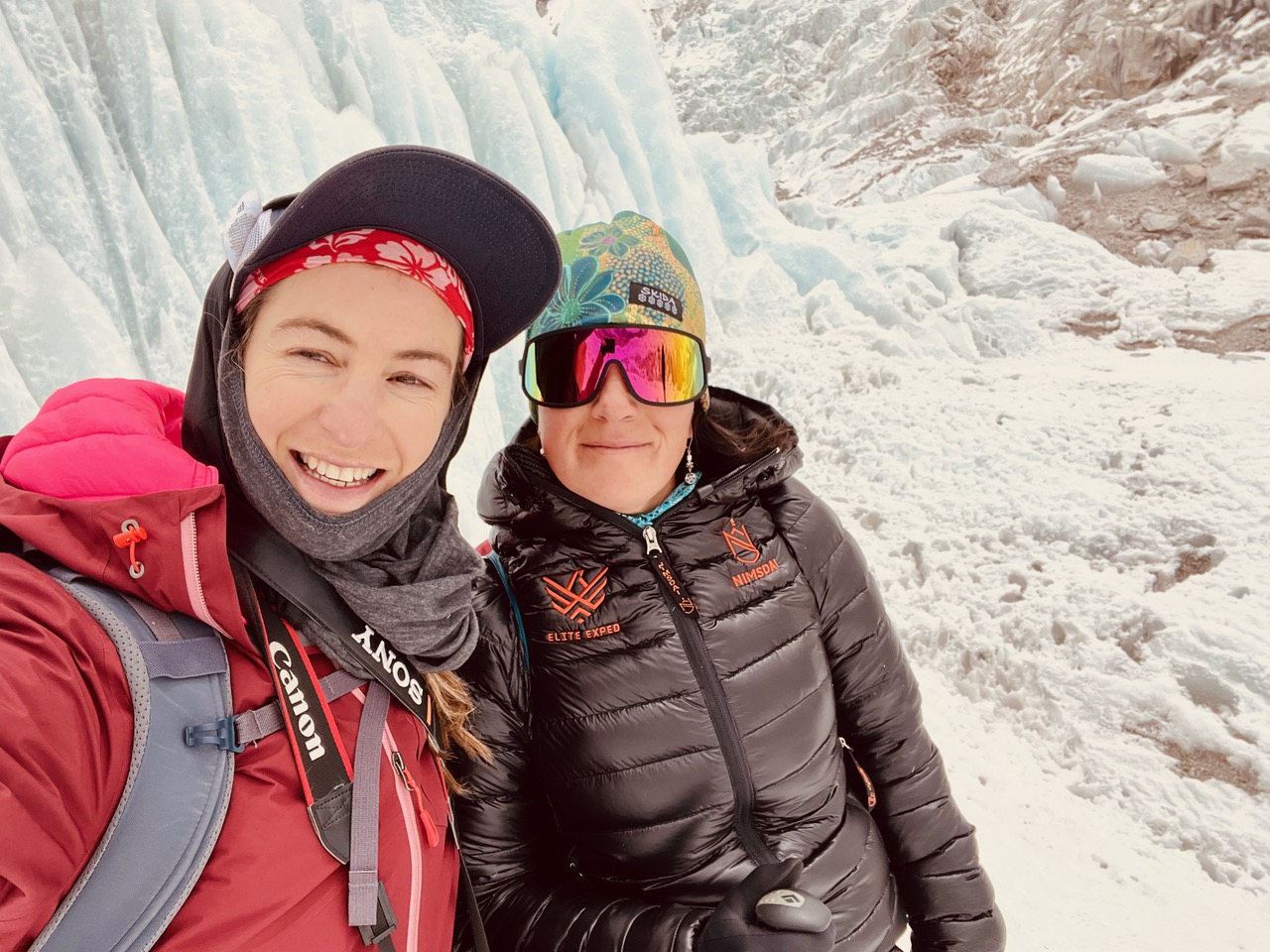 “Blind AF” Director Gina LeVay with Shawn Cheshire at the Khumbu Glacier, above Everest Base Camp, on April 21, 2023. (Courtesy of Tiger Stripe Media)
“Gina found moments off the bike where she could stick me in the middle of a wheat field and I could listen to the wind sounds or sit me in the grass next to a brook of running water or standing in the middle of a field with wild horses and feeling their energy. Those were such powerful moments.”
Finding and creating those experiences was critical, said LeVay, a photographer whose previous work includes the award-winning documentary “The Sandhog Project” about the legendary New York City underground tunnel workers.
“It was very easy for us, the film team, for everybody on the journey, to forget Shawn can’t see anything because Shawn is such a good cyclist. We’re going: ‘Oh my god, the Tetons, they’re so majestic, they’re amazing. Oh my god, a grizzly bear, or this and that and for Shawn, it was a very different experience. She is following sound—the vibrations of the cars, whatever.”
LeVay asked herself, “How can Shawn experience America better?”
The answer was tuning Cheshire in to “the sensory experience—getting off [the bike], touching the wildflowers, meeting people. Through any town, if there were people, I’d be like, ‘Everyone come out and meet Shawn. Because that just gave her that dose of energy and that fuel that she needed. It was also important for her to get off the bike and just to breathe.”
Cheshire is not done with adventuring.
Now facing the added burden of hearing loss, she is aiming for the North and South Pole solo; crossing Greenland; biking solo from Cairo to Cape Town; and hiking and navigating the PCT [Pacific Crest Trail] completely solo.
Making time to visit schools during her trips, she has also become a force for good.
“For kids to see that this is possible when they’re deaf or blind, to see that anything is possible,” said LeVay. “It helps them figure out their own future.”
Cheshire’s message is: “You can do this.”
“One of the important things that I learned through my own mental health journey, is that I have lived through a lot,” she said.
”I may not have control over the things that happen to me, but I have absolute control with how I show up every day. I didn’t know that I could make the choice. That my trauma does not have to define who I am, that I actually can decide who I want to be, which is really empowering.”
Cheshire’s advice to others in the midst of a struggle: “Find a way to just keep stepping forward because at some point it’s not going to be as much. But if you keep moving, you can’t get stuck. No matter how hard it is, just keep trying to push yourself forward—inch by inch, if you have to.”







