
China has pressed Mexico over its tariffs on Chinese goods while leaving out a problem raised by the Mexican side: a persistent and growing trade gap.
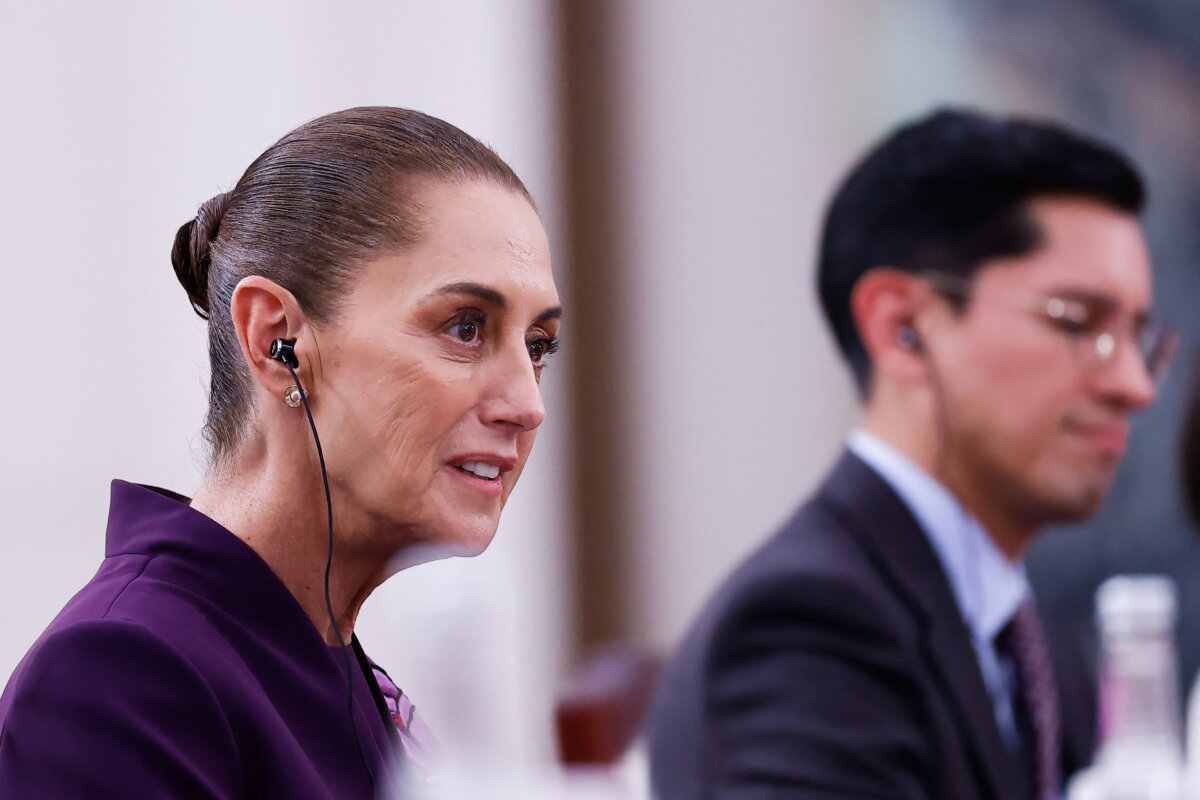
Chinese Commerce Minister Wang Wentao met with Mexican Economy Secretary Marcelo Ebrard on Nov. 23 in Beijing, according to a readout from China’s Commerce Ministry that made no mention of the issue Ebrard raised: China will sell Mexico about $120 billion more in goods than it buys this year.
Instead, Wang told Mexico to shield the relationship from “third-party interference,” without naming the third party.
Mexico’s Economy Ministry gave its own account of the meeting, which did not mention tariffs. It said the two sides agreed to set up a working group to help Mexican exports reach China.
Mexico has joined a growing list of countries pushing back on China’s lopsided trade with the world. It began charging tariffs of up to 50 percent on Chinese goods in January, and now it wants Beijing to buy more Mexican products.
China’s trade surplus passed $1 trillion in the first 10 months of this year, after reaching a record of about $1.2 trillion in 2025, according to Chinese customs data. The United States and the European Union have answered with tariffs and quotas, while Canada has gone the other way, cutting new trade deals with Beijing.
Beijing’s Version
The Nov. 24 Chinese readout said Wang urged Mexico to take China’s tariff concerns seriously, use trade remedies such as anti-dumping duties with caution, and fix problems facing Chinese companies that have invested in Mexico.
According to Beijing, Ebrard said Mexico is willing to hold regular, structured talks with China on tariffs.
The ministry described the talks as candid and in-depth—diplomatic phrasing Chinese readouts often use when the two sides disagree. Its initial summary did not mention Mexico’s requests for farm export approvals or the trade gap, and Beijing acknowledged a new working group only days later, framing it around tariff reductions.
Mexico’s Version
China will ship more than $130 billion in goods to Mexico this year, while Mexican exports to China will come to about $10 billion, according to Mexico’s Economy Ministry.
Ebrard said he wants to “reduce this disparity between imports and exports decisively and quickly,” according to the ministry.
“It’s what’s fair, what’s reasonable,” he said in a video posted on X. He asked Wang to speed up the approvals Mexico needs to export avocados, limes, beef, pork, sorghum and processed seafood to China, some of which Beijing has left pending for a decade.
Ebrard also invited China to move some production to Mexico that it now exports to Mexican buyers. The ministry gave no details on which industries or companies he had in mind.
On Nov. 24, Mexican President Claudia Sheinbaum said selling more Mexican food and raw materials to China is on the table, and that Ebrard stayed in China to keep talking. Asked about a proposal by Chinese leader Xi Jinping for a trade zone in the Pacific, she said it would have to be studied.
China’s Lopsided Trade
The International Monetary Fund (IMF) says China relies on exports because domestic spending is weak. In a February review, the fund said private domestic demand was lackluster in 2025 as a long property slump weighed on households and fueled falling prices.
IMF Managing Director Kristalina Georgieva said last December that low inflation and a weaker real exchange rate have made Chinese goods cheaper abroad, prolonging what she called “an excessive reliance on exports” and worsening imbalances with the rest of the world.
China’s exports have propped up its growth while flooding Europe, Latin America, and other regions with cheap goods and pressuring local industries. Passenger car exports jumped 68 percent in October from a year earlier, while domestic sales fell 27 percent, according to the China Passenger Car Association.
Frank Tian Xie, a business professor at the University of South Carolina–Aiken, told The Epoch Times earlier this year that by selling surplus goods abroad instead of closing factories, China is “essentially exporting its unemployment problem to other countries.”
Beijing rejects the overcapacity label and insists it wants more balanced trade, not a larger surplus. At the September G20 finance ministers’ meeting, China was the only member to refuse to back action against policies that fuel over-reliance on exports.
Starting Dec. 1, the European Union will cap imports of China-made hybrid cars at 191,780 over 200 days, citing a surge that threatens serious injury to European carmakers.
On Nov. 25, the Trump administration proposed new tariffs on China and 13 other economies over what it calls excess factory capacity, with China facing the highest rate. Mexico, whose review is still underway, was left off for now. Washington’s goods deficit with China still came to $131.5 billion in the first nine months of this year, according to Census Bureau data.
The Tariff Fight
Mexico’s tariffs, which cover more than 1,400 categories of goods from countries without trade deals with Mexico—mainly China—took effect on Jan. 1. In March, China’s commerce ministry said the tariffs are trade and investment barriers and that it is authorized to respond.
Washington declined in July to renew the United States–Mexico–Canada Agreement, or USMCA, in its current form, with U.S. Trade Representative Jamieson Greer citing Canada’s pursuit of Chinese investment. Greer has said U.S. neighbors could get preferential treatment if they help shield North America from outside goods, including Chinese goods.
Canada has moved the other way. Prime Minister Mark Carney agreed in January to let up to 49,000 Chinese electric vehicles into Canada each year at a 6.1 percent tariff, down from 100 percent, in exchange for Chinese tariff cuts on canola and other farm products. He said the quota would rise to about 70,000 within five years.
When Carney met Xi in Shenzhen on Nov. 17, Ottawa agreed to tariff relief on more Chinese steel and aluminum in return for lower Chinese duties on Canadian farm and seafood exports. Carney has also said Canada could turn to Chinese automakers if trade talks with Washington break down.
On Nov. 22, Greer told Fox News that Washington views Canada’s pursuit of closer trade ties with China as a bipartisan concern.
Mexico says its tariffs protect its own industry. Beijing has framed them from the start as a favor to Washington. Last December, China’s commerce ministry said senior Mexican officials had suggested the tariffs were meant to serve the USMCA review. When Mexico first floated them in 2025, the Chinese commerce ministry warned that any such increase “would be seen as appeasement and a concession to unilateral bullying.”