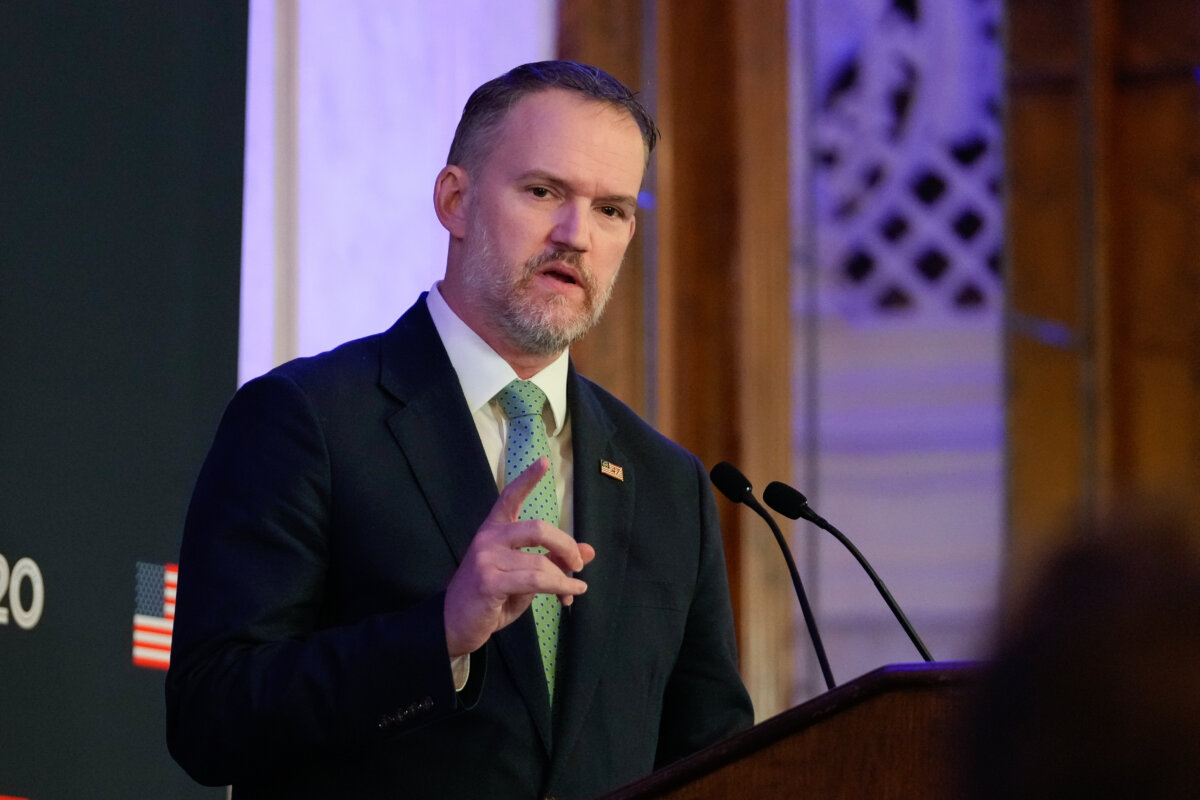

U.S. Trade Representative Jamieson Greer says Washington and Ottawa are nearing a trade agreement while expressing concern over Canada’s recent trade deals with China.
“They are actually having a little bit of a rapprochement on trade with China, importing Chinese vehicles,” he said during a Fox News interview on Nov. 22, adding that Canada also announced it would provide more tariff exemptions on Chinese steel and aluminum products.
Prime Minister Mark Carney visited China last week to attend the Asia-Pacific Economic Cooperation (APEC) Economic Leaders’ Summit in Shenzhen, where he also met with Chinese leader Xi Jinping. The two said they were making progress on the new Ottawa-Beijing “strategic partnership,” with Beijing agreeing to reduce tariffs on Canadian pork and seafood products and Ottawa providing additional tariff relief on Chinese steel and aluminum products.
Earlier this year, Ottawa agreed to allow Chinese electric vehicles to be imported into Canada at reduced tariff rates in exchange for China easing tariffs on Canadian canola and other agricultural products.
Greer said such moves by Ottawa to deepen its trade relationship with Beijing are “a little bit backwards” while Washington is “trying to manage North American trade in autos, steel, and aluminum.”
These are the kinds of issues “that give us some concern and some worry,” Greer said, adding that “I think that’s bipartisan.”
He also said there is a “philosophical difference” between how the United States and Canada approach trade.
“We’re more inclined to fixing the challenges of globalization. They’re more interested in doubling down on globalization,” Greer said.
Greer has previously said the United States is concerned that lowering tariffs on Canadian goods could allow products from other countries to be dumped into the U.S. market, citing China as a non-market economy of particular concern.
“If we’re going to … lower our tariffs and give you the best deal in the world on steel and aluminum, we can’t have Canada be a place where you can get flooded with steel and aluminum from other countries and be used as a back door into the U.S.,” he told CBC News after the collapse of trade talks between Ottawa and Washington on Aug. 21.
Trade Talks
Despite those differences, progress is being made on a U.S.-Canada trade deal, Greer said.
“We’re still having constructive conversations with our Canadian counterparts, and the president and Prime Minister Carney met while we were in China. So that’s a good thing,” he said.
“I think we’ve made a lot of progress. I think we’re fairly close to finding a landing zone.”
Carney met with U.S. President Donald Trump on the sidelines of the APEC summit on Nov. 18. Carney later said that while some progress had been made in the talks, “we’re not there yet” in reaching an agreement.
Trump also told reporters at the White House on Nov. 20 that “work remains to be done” in reaching a U.S.-Canada trade deal.
Greer noted that most trade between Canada and the United States remained unaffected by tariffs.
“The vast majority of goods going back and forth between Canada and the United States still are duty-free, still supporting a lot of jobs on both sides of the border,” he said. “So it’s a more positive story, I think, than people realize.”