China’s military has suspended logistics company SF Express and tea producer Bama Tea from military procurement over alleged violations, as an investigation into corruption within the People’s Liberation Army (PLA) Rocket Force widens to routine purchases.
The two companies were named in separate notices published on Nov. 19 by the PLA’s Procurement Service Center under the Central Military Commission’s Logistics Support Department. Neither notice disclosed the alleged violations or the duration of the suspensions, and the notices did not link the suspensions to the Rocket Force probe.
The notices said both companies were barred from military procurement programs.
SF Express is the largest express logistics service provider in China by revenue, providing domestic and international express delivery.
Bama Tea’s restrictions extend to its natural-person controlling shareholder, Wu Xiaoning, and other companies controlled or managed by Wu or the company’s legal representative. The company’s authorized representatives are also prohibited from representing other suppliers in military procurement activities.
Bama Tea, which sells tea and related products, was listed on the Hong Kong Stock Exchange on Oct. 28, 2025.
The suspensions come amid a broader military procurement investigation that has expanded beyond weapons and military equipment to include routine supplies such as food, pharmaceuticals, and medical supplies.
On Aug. 24, the military procurement website issued a notice soliciting information about procurement violations involving the Rocket Force. It invited suppliers, bid evaluators, procurement agencies, bidding representatives, and military personnel involved in related projects to report suspected violations.
The investigation follows an earlier procurement crackdown launched in July 2023, when the Central Military Commission’s Equipment Development Department sought information about misconduct by experts involved in military equipment procurement evaluations dating back to October 2017.
That earlier initiative focused on weapons and equipment procurement. The latest effort is specifically directed at the Rocket Force and extends into ordinary logistical purchases.
Since the 2023 campaign began, numerous senior military officials, including high-ranking Rocket Force commanders and defense industry executives, have been investigated or removed from their positions.
Between Aug. 28, 2025 and Sept. 1, 2025, the Rocket Force’s Logistics Department issued numerous procurement-related notices, penalizing 74 bid evaluation experts and 116 suppliers, according to a report on Chinese news portal Sohu. The experts lost their eligibility to evaluate military projects, while the suppliers were barred from bidding on military contracts.
In May 2026, China Aerospace System Engineering Co. was banned from participating in military procurement for one year over alleged bid-rigging and collusion in a 2017 project, according to Qilu Evening News.
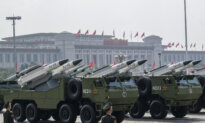
The Rocket Force, established in late 2015, oversees the regime’s strategic missile forces, including its nuclear arsenal. Its procurement system involves sophisticated, high-cost, and highly sensitive military equipment, making the investigation’s expansion into routine logistical supplies particularly notable.
U.S.-based China current affairs commentator Li Linyi told The Epoch Times that the widening investigation indicates that the purge within the Rocket Force remains unfinished, despite the downfall of four consecutive commanders—Wei Fenghe, Zhou Yaning, Li Yuchao, and Wang Houbin.
Li also noted that the investigation’s expanding scope points to deep-rooted corruption within the military. However, procurement abuses are a long-standing institutional problem that cannot be eliminated through purges alone without changes to the system itself, he said.
Tang Bing contributed to this report.