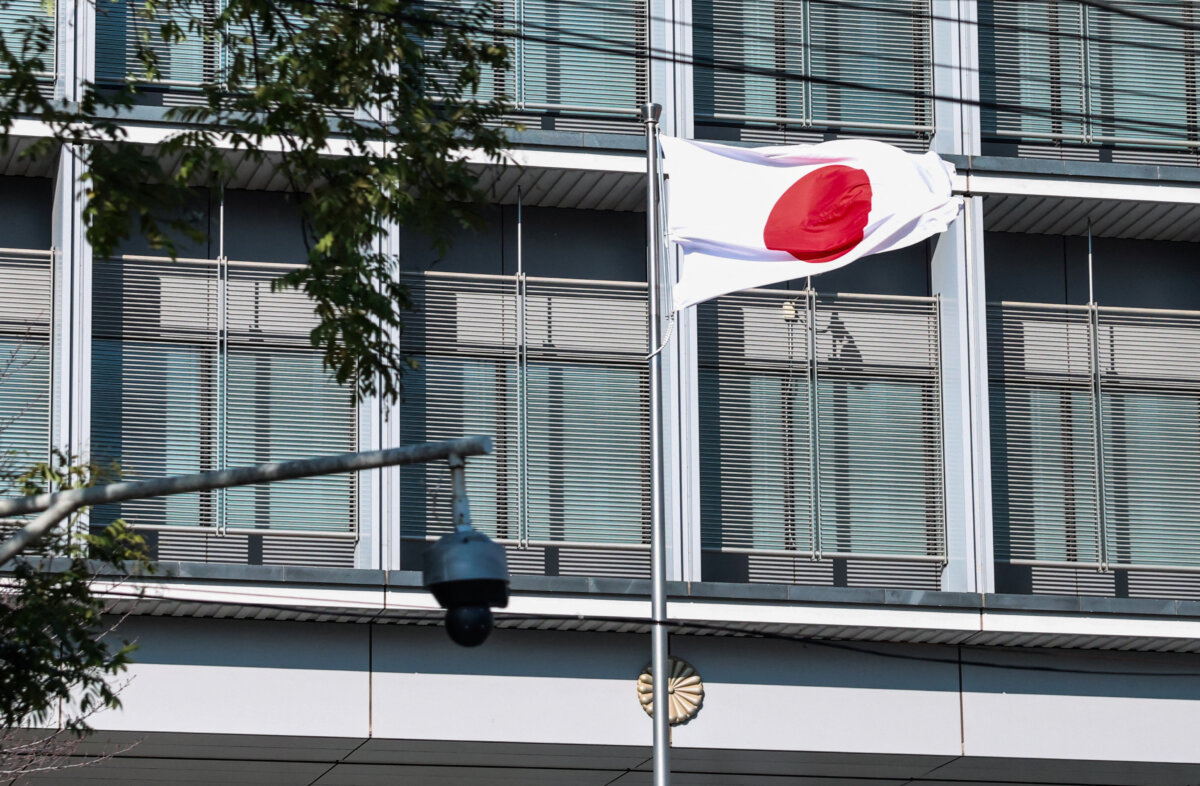

A fictional Japanese contemporary spy drama has attracted fierce attack from central agencies of the Chinese communist regime amid its pressure campaign against Japan, prompting Hello Kitty’s maker to end cooperation with the show.
Analysts say this happened because the show challenged the regime’s narrative and touched a sensitive nerve.
In a video statement in early November, the Chinese regime’s Ministry of National Defense criticized the second season of the popular Japanese spy drama “Vivant,” accusing it of “deliberately misrepresenting historical facts.”
The ministry said the show was “falsely attributing the torture inflicted by the invading Imperial Japanese Army upon Chinese anti-Japanese fighters to the Chinese side,” which the ministry said is an attempt to whitewash Japanese history.
“Vivant,” one of Japan’s most popular shows, is set in the present day and is in its second season, which began airing in July. In the series, a fictional Chinese intelligence agency called “Xinxi” is set as the antagonist, and the show includes scenes in which Chinese agents torture a Japanese operative. In the first season, the hostile nation was not explicitly named.
Guo Jiakun, a spokesperson for the Chinese Ministry of Foreign Affairs, criticized the show for “using cultural products to vilify and smear China, and to spread anti-Chinese sentiment” at a press briefing on Oct. 29 when asked about the spy drama.
The Chinese regime’s national broadcaster CCTV condemned the show on its website in late October.
The Chinese regime’s central agencies’ heavy criticism of the fictional Japanese drama came amid its increasing pressure campaign against Japan since last year when Japanese Prime Minister Sanae Takaichi said in public that Japan could intervene militarily if China were to attack Taiwan, a self-governed democratic island that the Chinese communist regime claims is part of its territory.
In recent days, Japanese media revealed that anime videos that ridiculed the Japanese government, intending to promote internal strife within Japan, were produced by artificial intelligence in China.
The Chinese regime’s Ministry of National Defense also accused Japan on Nov. 13 of abandoning its commitment to peace and challenging the postwar international order through plans to increase defense spending and potentially ease restrictions on nuclear weapons.
In response to the Chinese regime, Tokyo Broadcasting System (TBS), the show’s producer and broadcaster, said it did not intend for the show to fuel geopolitical tensions. “Vivant” is “entirely fictional and has no intention of disparaging any specific country,” Masamine Ryuho, the network’s president, said at a news conference on Oct. 28.
Takaichi has expressed support for “Vivant.” In October, before the Chinese regime intensified its propaganda against the show, she said during an appearance before Parliament that she has recorded episodes of the show and hopes to binge watch the season over the New Year holiday.
In response, Beijing has characterized “Vivant” as a tool used by the Japanese “right-wing government” to wage a “cognitive warfare” campaign, Shen Ming-shih, research fellow at the Division of National Security Research at Taiwan’s Institute for National Defense and Security Research, told The Epoch Times.
Beijing’s unusually strong reaction to “Vivant” reflects broader concerns about national image, historical memory, and geopolitical competition with Japan, Sun Kuo-hsiang, a professor of international affairs and business at Nanhua University in Taiwan, said of the Chinese regime’s response.
“Although the series is fictional, its portrayal of Chinese intelligence agents torturing Japanese operatives challenges the Chinese Communist Party’s preferred narrative of China as a responsible international actor,” Sun told The Epoch Times.
The scenes from the fictional spy drama struck a raw nerve with the Beijing authorities, which triggered systematic backlash, Shen said.
In recent years, the Chinese regime has been vigorously promoting its Counter-Espionage Law, Shen noted. “Portraying Chinese national security agents as being extremely backward and brutal is something the Chinese authorities find completely unacceptable.”
Moreover, international human rights organizations have consistently accused the Chinese regime of employing secret torture and coerced confessions against detainees in Xinjiang and Tibet, as well as Falun Gong practitioners, Shen pointed out. “The imagery in this Japanese drama inevitably brings to mind what China is currently doing in Xinjiang and Tibet. So, the Chinese regime is trying to shift the focus back to the history of World War II in its criticism against the show.”
Linking these fictional torture scenes in a contemporary drama to the atrocities committed by the Japanese military in China more than 80 years ago is a classic tactic used by the Chinese Communist Party (CCP), which attempts to hijack public sentiment through its false historical narrative, Shen said.
“Such framing also delegitimizes criticism by presenting unfavorable portrayals of China as attempts to rehabilitate Japanese militarism,” Sun said of the rhetoric the Chinese regime has used regarding the show.
“The controversy surrounding the show may help divert public attention from independently documented allegations of torture, coercive detention, and human rights violations involving Chinese authorities,” Sun explained. “In this sense, historical memory becomes a political instrument for defending contemporary state legitimacy and controlling international narratives.”
Hello Kitty Maker Cuts Ties
Sanrio, the company behind Hello Kitty, announced at the end of October an end to its cooperation with the show, saying it had determined that the collaboration “contains expressions that are inconsistent with the corporate philosophy of the Sanrio Group.”
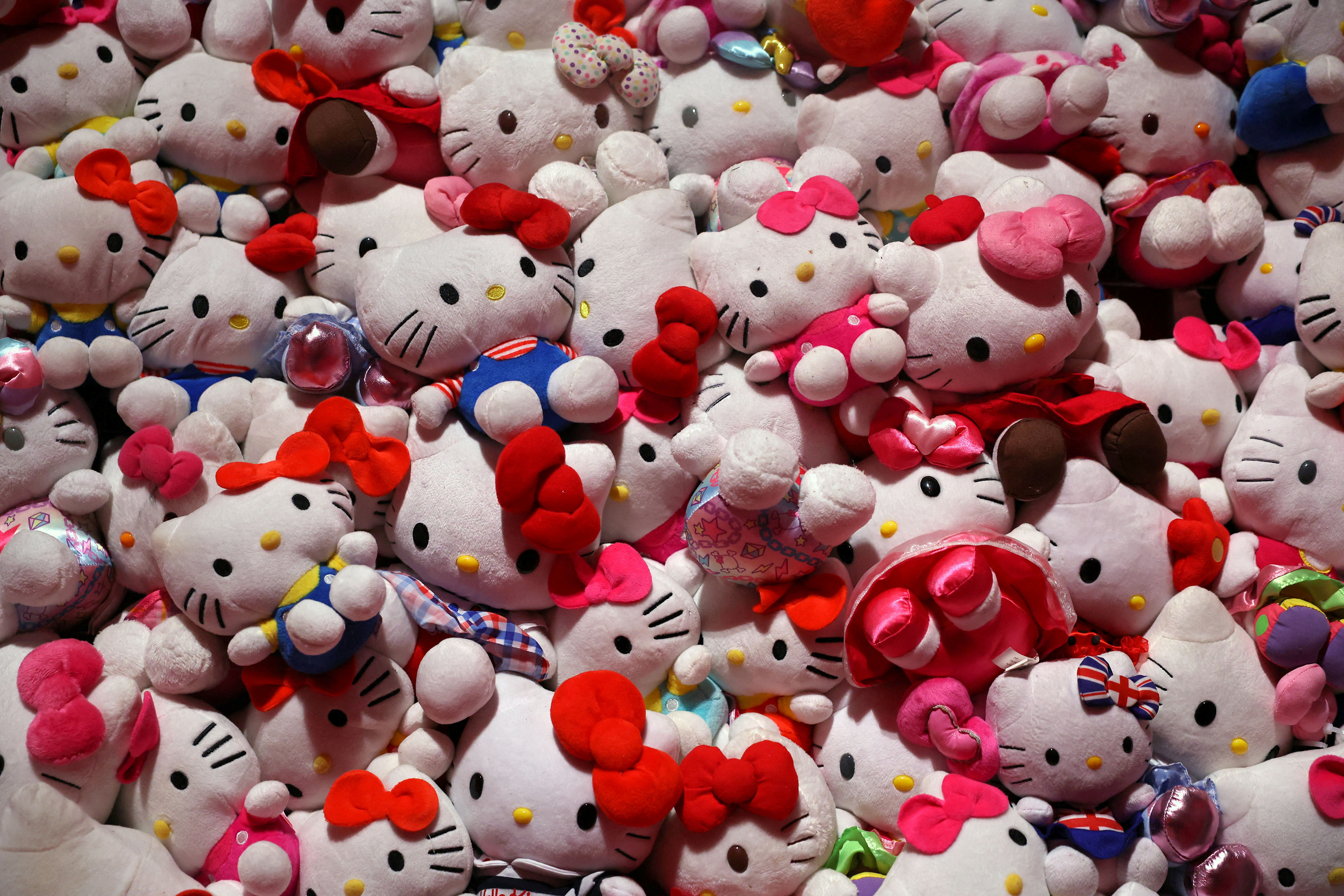 A display of Hello Kitty figures forms part of “Cute,” an exhibition exploring the idea of cuteness in contemporary culture, at Somerset House in London on Feb. 5, 2024. (Toby Melville/Reuters)
China generates nearly 20 percent of Sanrio’s global revenue, making it one of the company’s fastest-growing and most critical markets. China also makes up about 40 percent of its overseas sales.
Sanrio’s decision to terminate its collaboration with the show is a move made for the sake of its own economic and market interests, Shen said. “Hello Kitty holds immense commercial value in mainland China,” he added. “In recent years, the Chinese market has become a primary driver of growth for overseas revenue and IP licensing.”
This is a standard risk-mitigation and damage-control measure taken by multinational corporations to safeguard their substantial commercial interests when confronted with this kind of political risks encountered in China, Shen said.
Beijing’s campaign against “Vivant” can be interpreted as an effort to shape Japanese public discourse, reinforce historical grievances, and raise the political and commercial costs of portraying China unfavorably, Sun pointed out.
“The episode therefore illustrates how nationalism, market access, and cultural diplomacy can interact to produce indirect economic pressure, potentially encouraging foreign businesses to exercise greater self-censorship when dealing with politically sensitive subjects involving China,” he said.
Luo Ya and Reuters contributed to this report.