A regime insider close to the Chinese Communist Party (CCP) leadership says former military official Zhang Youxia was removed because he disagreed with Chinese leader Xi Jinping on Beijing’s ability to wage war against Taiwan, rather than because he sought to challenge Xi’s control of the military.
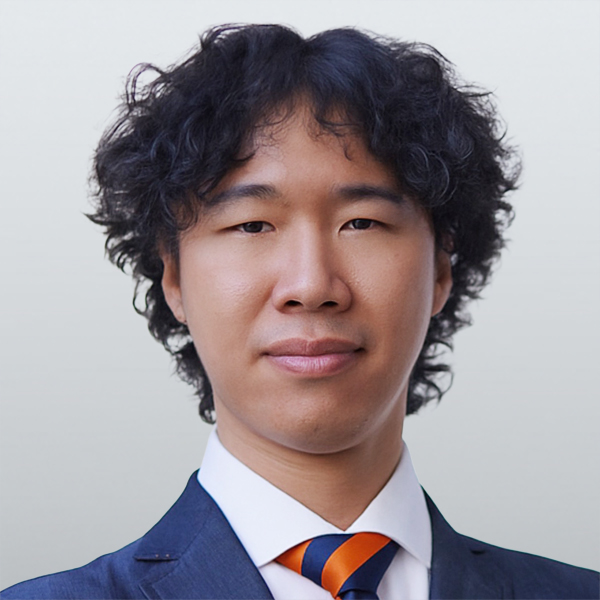
The insider spoke to The Epoch Times under the pseudonym Tang Ming out of fear of reprisal. He said Zhang had become increasingly aware of corruption in China’s military procurement and weapons systems while overseeing military equipment. He believed the military was not prepared for a major conflict over Taiwan, particularly one that could draw in the United States and Japan.
Tang told The Epoch Times that Zhang’s concerns created a fundamental disagreement with Xi, who has pressed for the military to strengthen its capabilities.
“Why doesn’t Zhang Youxia advocate going to war? Do you think he genuinely cares about the Taiwan issue? He doesn’t. [But] he understands that the military system, the current military system, is incapable of fighting Taiwan,” Tang said.
Zhang, a former vice chairman of the CCP Central Military Commission, was among 33 senior officials expelled from the Party at the Fifth Plenum of the 20th Central Committee, which concluded on Oct. 29.
The Chinese regime announced an investigation into Zhang in late January, citing “serious violations of discipline and law,” but has given few details.
Tang offered an alternative explanation for Zhang’s downfall, disputing speculation that he had attempted to wrest control of the military from Xi.
“Zhang Youxia was not, as the outside world says, trying to seize military power. No. He could never control that power,” Tang said.
He described tensions involving Zhang as competition among military personnel networks rather than a direct challenge to Xi’s authority.
“These things are just power struggles among people of equal standing. He wasn’t trying to take power from Xi Jinping. As soon as he showed even a little sign of emerging, Xi Jinping took him down,” Tang said.
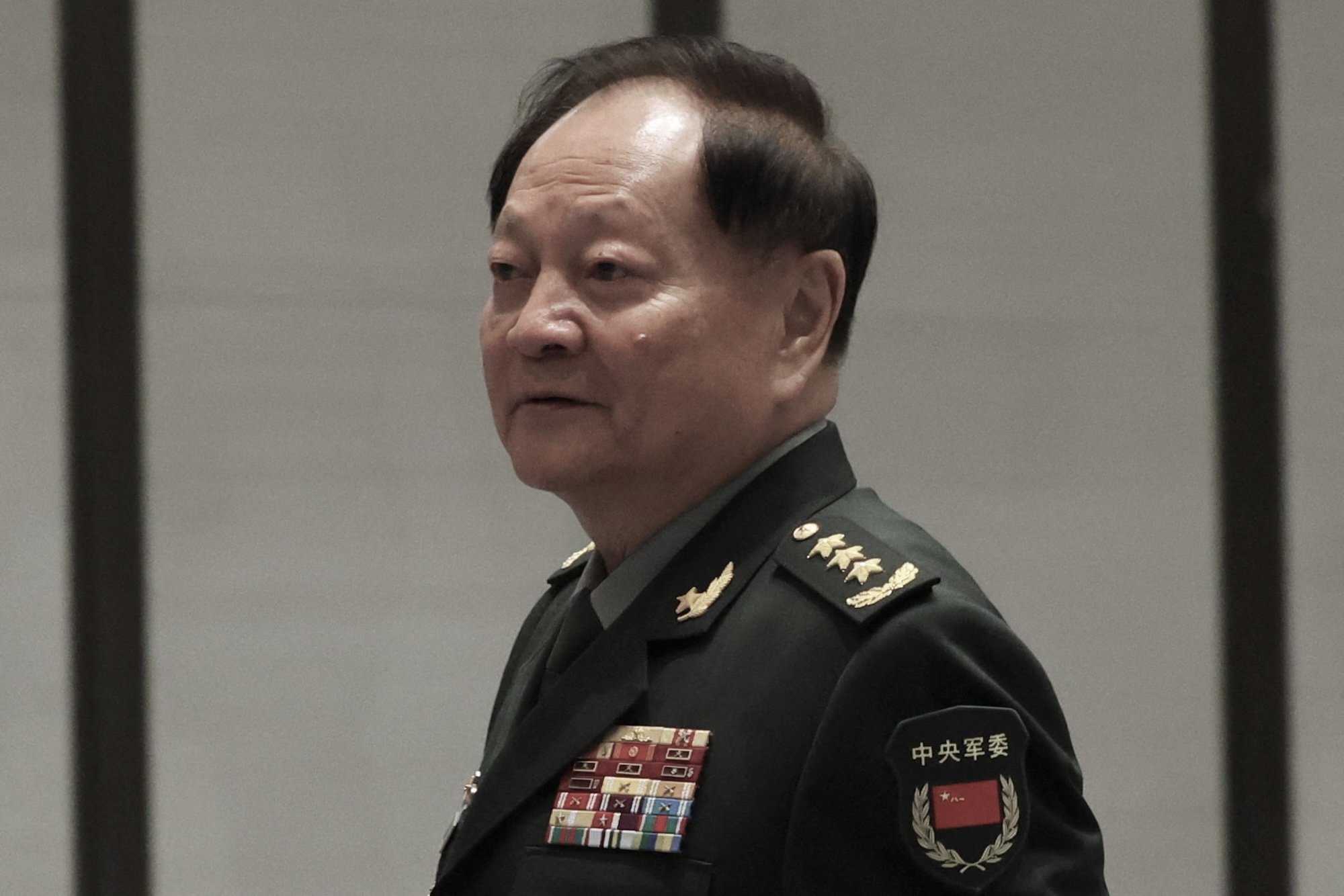 Chinese Central Military Commission Vice Chairman Zhang Youxia attends an official event in Qingdao, China, on April 22, 2024. (Florence Lo/Reuters)
Concerns Over Military Readiness
Tang said Zhang’s opposition was rooted in his knowledge of corruption in military procurement, including issues involving missile launch vehicles and fuel supplies.
Tang said Zhang did not believe China was incapable of launching an attack on Taiwan. Rather, he questioned whether the military could sustain a prolonged conflict if other countries intervened.
“Can China’s equipment and weapons fight Taiwan? They can. But if Japan, the United States, and other countries assist Taiwan, China cannot sustain a prolonged war,” Tang said. “If a war really breaks out and drags on for several years like Russia’s, the CCP would collapse after two years.”
He said Zhang understood the military’s weaknesses and feared being held responsible if a war ended in defeat.
“Zhang Youxia’s biggest problem is that he knows the people under him and the entire military are corrupt,” Tang said. “He cannot carry out this task, so he resists it. He doesn’t want to do it because he is afraid the problems will be exposed once he does.”
Tang’s account could not be independently verified by The Epoch Times.
Alleged Intelligence Leaks
Tang also said that the purge of China’s military and defense industry involved more than procurement corruption, alleging that sensitive military information had been passed to the United States.
He specifically cited information concerning nuclear weapons, aircraft carriers, and missile systems.
“Those were not just procurement problems. The procurement problems were actually minor. A lot of China’s secrets concerning nuclear weapons, aircraft carriers, and missiles, especially those involving the Rocket Force, were sold to the United States,” Tang said.
He suggested that commercial partnerships and international business dealings could create opportunities for sensitive information to leak.
Tang also alleged connections between telecommunications company Huawei and former Xinjiang Party chief Ma Xingrui, who previously held senior positions in China’s aerospace sector. He suggested that business and family networks linked to military and government contracts could have exposed sensitive information.
The allegations of intelligence leaks and Huawei’s involvement also could not be independently verified.
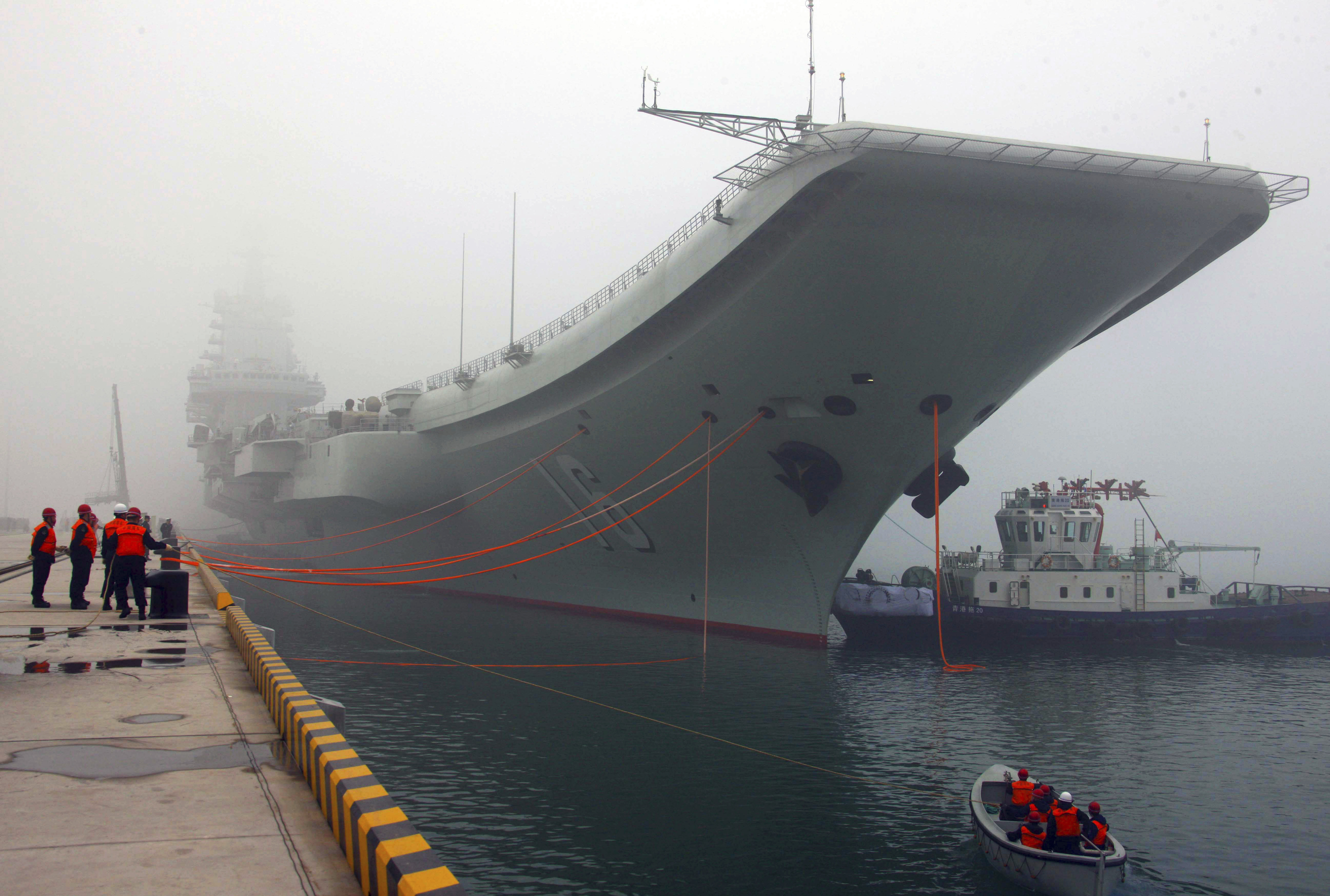 Chinese regime’s first aircraft carrier, the Liaoning, is anchored in the northern port in Qingdao, east China’s Shandong Province, on Feb. 27, 2013. (Wu Dengfeng/Xinhua via AP)
Defense Industry Purges
The crackdown has also extended to executives from China’s state-owned defense industry.
At the Oct. 29 plenum, the CCP confirmed the expulsion of several former defense industry executives, including Yuan Jie, former chairman of China Aerospace Science and Industry Corp., and former China State Shipbuilding Corp. chairmen Wen Gang and Lei Fanpei. Some had left their leadership positions years earlier, but their Party disciplinary decisions were not announced until the recent meeting.
Tang said delays in announcing disciplinary actions could reflect the political standing of those under investigation, the scope of the cases, and the time needed by the CCP’s anti-corruption watchdog to complete its investigations.
“Some people are not important to the CCP, and their cases have little political impact. In such circumstances, authorities sometimes do not report them,” he said.
He added that investigations involving senior officials could be prolonged if they risk implicating more powerful figures.
The full extent of the ongoing military and defense industry purges, and whether they primarily reflect concerns about corruption, military readiness, or political consolidation, remains unclear.
Leng Feng and Liu Yun contributed to this report.