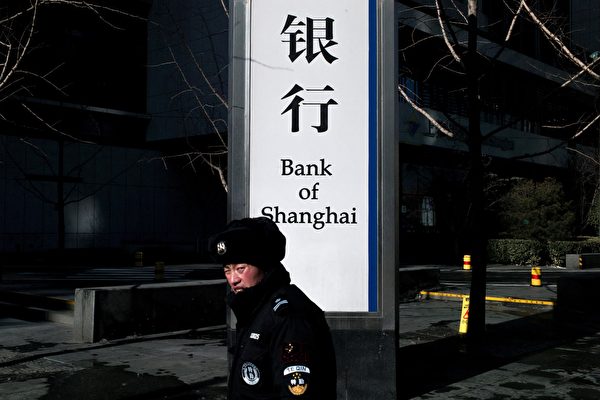
The debt crisis engulfing businessman Yao Zhenhua’s Baoneng Group has exposed broader risks in China’s financial system, with the Bank of Shanghai reporting a 92.77 percent year-over-year plunge in third-quarter profit amid efforts to recover billions of yuan in unpaid loans linked to the conglomerate.
Baoneng owes the Bank of Shanghai at least 12.9 billion yuan ($1.9 billion) for loans issued between 2018 and 2020, according to Chinese financial news outlet Caixin. Despite court judgments and enforcement proceedings, the bank has struggled to recover the money due to having no assets available for repayment.
Analysts told The Epoch Times the case illustrates deeper problems in China’s state-directed economy, where politically connected businesses can accumulate enormous debts, while banks and local governments struggle to bear the consequences when investments fail.
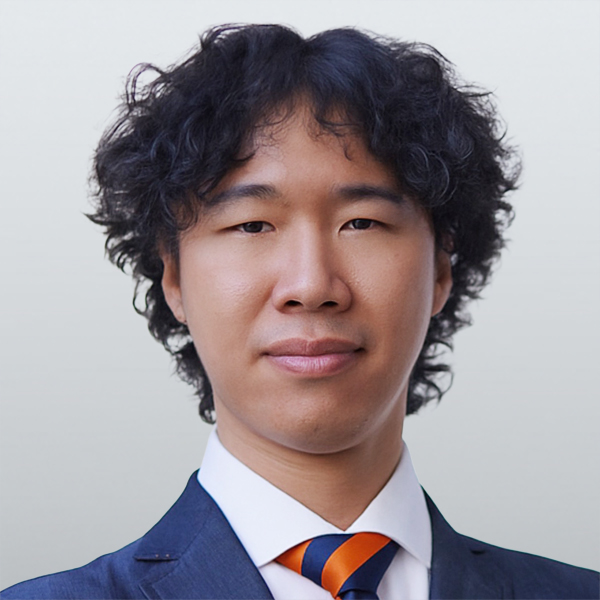
U.S.-based China current affairs commentator Wang He told the publication that the rise of businessmen such as Yao reflected a broader pattern of aggressive capital operations during China’s economic expansion.
He said some businesspeople used financial markets and leveraged borrowing to gain control of major companies.
“From Yao Zhenhua’s business experience, it is not unreasonable to call him a barbarian,” Wang said.
Yao earned the nickname “barbarian” in 2015 after Baoneng used funds raised through its insurance businesses to acquire a major stake in property developer China Vanke, triggering a high-profile takeover battle.
Vanke founder Wang Shi publicly opposed the move, saying that Baoneng’s credit was insufficient.
Baoneng subsequently expanded into other industries, including automobile manufacturing, investing an initial 6.6 billion yuan in Qoros Auto. However, the investment failed, and the company’s Changshu factory and core assets failed to attract buyers at a second judicial auction in January 2026, according to Chinese media Jiemian News.
Wang He said that businessmen such as Yao did not operate independently of China’s political system.
“Behind Yao Zhenhua’s earlier rise, there are political forces supporting him, and he may even have been someone else’s front man,” he alleged.
Wang He described the Chinese regime’s business environment as one in which political connections, government intervention, and weak legal protections can allow well-connected entrepreneurs to accumulate substantial wealth while leaving financial institutions exposed to losses.
Government Support, Shifting Policies
Canada-based Chinese entrepreneur and council member of the Chinese Private Entrepreneurs’ Rights Protection Alliance Sun Jinliang offered a related explanation, arguing that the Chinese regime’s involvement in business decisions can create risks for private companies.
Local governments often encourage investment in industries they consider strategic, sometimes signaling that projects have official backing and urging banks to provide financing, Sun told The Epoch Times.
However, when policies change or investments fail, regime authorities can distance themselves from the consequences.
“Chinese Communist Party officials verbally support you. However, if you fail, the government takes no responsibility. It will say that you, the entrepreneur, made the investment, that this is a market economy, and that the risks must be borne by the business and the individual,” Sun said.
Yao himself accused local officials of improperly handling Qoros Auto assets in a January video, alleging that they had undervalued the company’s assets and conducted an improper judicial auction.
Sun warned that mounting regime debt, corporate borrowing, and bank bad loans could combine into a broader financial crisis. China’s property downturn has further weakened the ability of households and businesses to repay loans, while declining property values have reduced the collateral available to lenders.
Wang said regime authorities’ concern should not be limited to Yao or Baoneng, but to the possibility of similar failures emerging across the country.
“If there were only one Yao Zhenhua, he would not become a ticking time bomb for a financial crisis,” Wang said. “What the authorities fear is not one or two Yao Zhenhuas, but if 1,000 Yao Zhenhuas emerged at once. Then the situation would become impossible to contain.”
Tang Bing and Yi Ru contributed to this report.