The Chinese regime stepped up security in the cities of Beijing, Shanghai, and Hangzhou on Oct. 31 for Halloween, as large numbers of young people gathered in costumes, with some carrying satirical messages about China’s social and economic hardships.
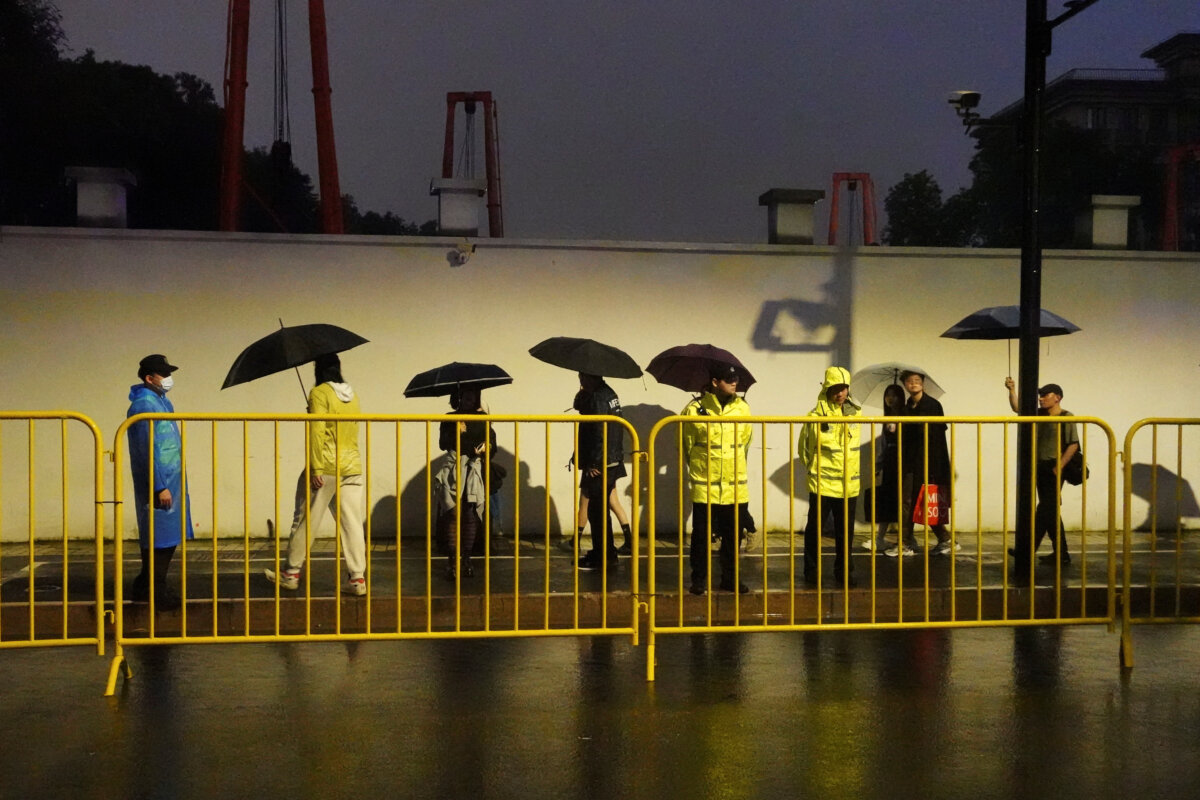
Police were heavily deployed around popular gathering spots, while some entertainment venues prohibited Halloween-themed costumes and accessories.
Halloween has become a sensitive occasion in China since 2023, when young people in Shanghai used elaborate costumes and street gatherings to express their discontent over issues including unemployment, pandemic restrictions, and regime policies.
Police Presence and Halloween Restrictions
In Shanghai, popular gathering areas such as Changle Road, Yuyuan Road, and South Shaanxi Road attracted crowds on Oct. 31, although Chinese netizens widely reported a conspicuous police presence on social media.
Fuxing Park had posted a notice saying some nighttime attractions would be temporarily closed from Oct. 30 to Nov. 3 for lighting equipment maintenance, according to state-run outlet The Paper. Metal crowd-control barriers, police vehicles, and officers were also stationed along nearby streets.
Several residents spoke to The Epoch Times on condition of anonymity out of fear of reprisal.
A Shanghai woman said that police patrols had increased in several areas.
“Some sections of Shanghai have restrictions. Halloween was still quite lively in Shanghai this year,” she said.
In Beijing, security measures were also heightened around the CCP’s Fifth Plenum, which concluded on Oct. 29.
A Beijing-based journalist told The Epoch Times on Oct. 31 that security restrictions had prevented public Halloween gatherings around the capital.
“Yesterday, due to the security presence for the Fifth Plenum, people didn’t really go out. I went to the embassy district and looked around. There were police everywhere, and there wasn’t anyone holding Halloween activities. The security restrictions weren’t lifted until midnight on Nov. 1,” he said.
The journalist said he had nevertheless visited a nightclub recommended by a friend, where the atmosphere was lively, and he did not encounter police inspections.
Two Beijing nightclubs had announced restrictions on Halloween costumes. On Oct. 30, the nightclub PILLBOX said themed costumes, cosplay outfits, related makeup, masks, and head coverings would be prohibited that week, citing “on-site safety and comprehensive technical reasons.”
Another nightclub, DADA, reminded customers not to come “dressed in Halloween-related costumes this weekend.”
The Beijing journalist also said he had witnessed police interfering with a Reuters reporter as they attempted to conduct street interviews.
“The police wouldn’t let him conduct interviews. They were driving the reporter away while warning interviewees that they couldn’t accept interviews from foreign media,” he said.
Costumes Satirize Social and Economic Problems
Despite the restrictions, some young people used their costumes to satirize China’s economic and social issues.
The journalist said participants mocked employment practices, corporate messaging, and economic pressures.
One participant satirized American AI company Anthropic’s Claude chatbot and its restrictions on Chinese users with a mock conversation:
“Are you a Chinese user?”
“Yes.”
“Sorry, you can’t use this.”
The journalist said the costumes reflect the growing frustrations of China’s young people as they face economic and employment pressures.
“I feel that young people have been repressed for a long time and need to release their emotions through activities like this,” he said.
In Hangzhou, China, videos circulating online appeared to show police taking away a person dressed as Japanese superhero character Ultraman Tiga, prompting criticism on Chinese social media.
A Hangzhou-based individual told The Epoch Times that the local shopping complex and surrounding streets were overwhelmed by crowds, with large numbers of police and special police officers deployed.
The Beijing journalist said he had also seen people dressed as the Buddhist figure of compassion Guanyin and the Chinese god of wealth Caishen being turned away by police.
Fang Xiao, Luo Ya, and Gu Xiaohua contributed to this report.







